Best Montessori Baby Toys
*We may earn a commission for purchases made using our links. Please see our disclosure to learn more.
The Montessori method has transformed early childhood education with its emphasis on independence, hands-on learning, and respect for a child’s natural development. When it comes to selecting toys for babies, the Montessori approach offers a refreshing alternative to the overwhelming array of flashy, battery-operated options flooding the market. Montessori baby toys prioritize simplicity, natural materials, and purposeful design that encourages exploration, concentration, and skill development at each developmental stage.
Unlike conventional toys that often overstimulate with lights, sounds, and excessive features, Montessori-inspired toys allow babies to be active participants in their play rather than passive observers. These thoughtfully designed items support sensory development, fine and gross motor skills, hand-eye coordination, and cognitive growth while fostering independence and confidence. The beauty of Montessori toys lies in their ability to grow with the child, offering different learning opportunities as developmental milestones are reached.
“The hands are the instruments of man’s intelligence. The child needs to manipulate objects and to gain experience by touching and handling.”
– Dr. Maria Montessori, The Absorbent Mind
Key Takeaways
- Montessori baby toys emphasize natural materials like wood, cotton, and metal rather than plastic
- Simple designs encourage focused exploration and prevent overstimulation
- Age-appropriate toys should match developmental stages and promote specific skills
- Open-ended toys allow for creative play and multiple uses over time
- Montessori principles value quality over quantity, with fewer, well-chosen toys
- Toys should promote independence and allow babies to be active learners
- Safety is paramount, with considerations for size, materials, and construction
Top Montessori Baby Toy Recommendations
MLYEY Wooden Rattles Set


The MLYEY Wooden Rattles Set is a beautifully crafted 7-piece Montessori toy collection designed for babies ages 7 to 24 months. Made from natural, unpainted beech wood, each piece is carefully polished to ensure a smooth, safe surface for little hands. The set includes classic Montessori essentials—such as interlocking discs, a bell roller, and a sound cube—helping babies develop grasping skills, hand-eye coordination, sensory awareness, and early problem-solving. With gentle rattling sounds and perfectly sized pieces, this set supports natural exploration and growth, making it one of the best Montessori baby toys for early development.
When searching for the Best Montessori Baby Toys, the MLYEY Wooden Rattles Set stands out as a top choice for parents who prioritize natural materials and developmental value. This 7-piece collection includes classic Montessori tools such as interlocking discs, a wooden bell roller, a ring rattle, and a sound cube—each designed to support early learning through hands-on exploration.
- Durable Material: Made from sturdy, natural beech wood with no harmful paints.
- Development-Focused: Encourages grasping skills, sensory play, and curiosity.
- Complete Set: Includes 7 Montessori-inspired toys suitable for ages 7–24 months.
- Wood Can Crack: May develop cracks if dropped or during shipping.
- Not Water-Safe: Cannot be soaked or cleaned with harsh methods.
- Adult Supervision Needed: Small parts and rattles require monitoring.
Adena Montessori Object Permanence Box

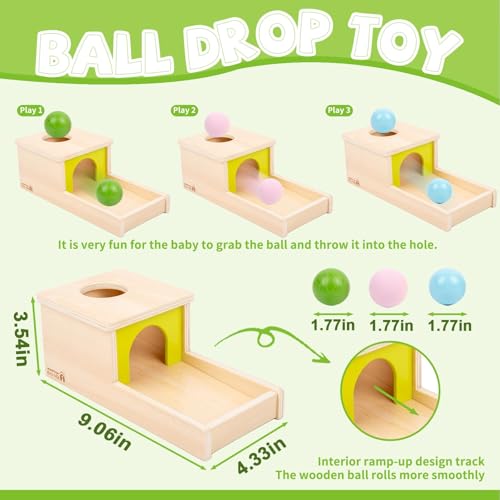

The Adena Montessori Object Permanence Box with Tray and Three Balls is a classic Montessori learning tool designed for babies 6–12 months. This set teaches object permanence—a key developmental milestone—by helping infants understand that objects still exist even when out of sight. With three differently textured balls (wooden, plastic, and soft EVA), babies enjoy a rich sensory experience while practicing grasping, dropping, and hand-eye coordination. Sturdy, engaging, and thoughtfully designed, this Montessori box supports early focus, fine motor development, and cognitive growth, making it a favorite among parents and educators.
The Adena Montessori Object Permanence Box is widely considered one of the Best Montessori Baby Toys for supporting cognitive development during a child’s first year. Designed for infants ages 6–12 months, this classic Montessori material teaches one of the most essential early learning concepts—object permanence. As babies drop the ball into the opening and watch it reappear on the tray, they begin to understand that hidden objects still exist, strengthening memory and logical thinking.
- Supports Key Milestones: Teaches object permanence and boosts early cognitive development.
- Multi-Sensory Play: Includes wooden, plastic, and soft balls for varied tactile experiences.
- Durable Build: Made with sturdy materials designed for active infant play.
- Small Parts for Young Babies: Requires close supervision during play.
- Ball Size Variations: Different textures may wear differently over time.
- Limited Play Variety: Primarily focused on one core developmental concept.
Adena Montessori 8-Pack Sensory Balls Set


The Adena Montessori 8-Pack Sensory Balls Set offers a fun, engaging, and development-focused collection of textured balls designed for infants and toddlers. Suitable for ages 6–12 months and 1–3 years, each ball features a unique texture, color, and feel, encouraging babies to explore through touch, sight, and movement. Made from soft, non-toxic rubber and stored in a stylish white woven basket, the set supports fine motor development, sensory growth, cognitive stimulation, and early exploration. Safe, durable, and perfectly sized for small hands, this sensory ball bundle is an excellent addition to any Montessori-inspired playroom.
For parents searching for the Best Montessori Baby Toys, the Adena Montessori 8-Pack Sensory Balls is an excellent choice for both infants and toddlers. Designed to deliver a full multisensory experience, this set features eight vibrant balls—each with its own unique texture, pattern, and material. From ridges and bumps to soft squeezable surfaces, these balls invite babies to explore with their hands, improving tactile awareness and encouraging curiosity.
- Rich Sensory Variety: Includes 8 differently textured, colorful balls for multisensory learning.
- Motor Skill Boost: Encourages grasping, squeezing, throwing, and hand-eye coordination.
- Safe & Soft: Made from non-toxic, baby-friendly rubber that’s easy to clean.
- Softer Balls May Deform: Some textures may dent over time with heavy squeezing.
- Limited Sound Features: Not all balls offer auditory stimulation.
- Basket Can Warp: Woven basket may lose shape with rough handling.
mushie Stacking Rings Toy (Rustic)
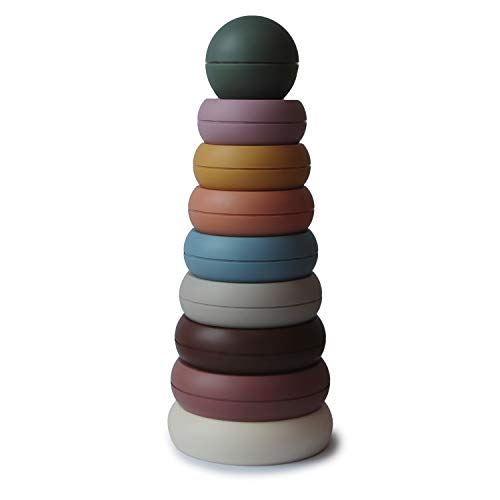


The mushie Stacking Rings Toy (Rustic) is a beautifully crafted, Danish-made stacking set designed to support early developmental milestones. Made from 100% BPA- and phthalate-free plastic, these rings are safe, smooth, and perfectly sized for babies beginning to explore stacking, grasping, and sorting. With muted hygge-inspired colors and a clean Scandinavian design, the toy blends style with function—helping little ones strengthen motor skills, coordination, and problem-solving abilities starting around six months. Durable, lightweight, and visually engaging, this stacking set is both a learning tool and a stylish addition to any Montessori-inspired home.
Among the Best Montessori Baby Toys, the mushie Stacking Rings (Rustic) stand out for their blend of thoughtful design, safe materials, and developmental purpose. Designed and manufactured in Denmark, this stacking set features muted, earthy tones inspired by the Danish Hygge aesthetic, making it both an engaging learning tool and a stylish addition to any nursery.
- Safe Materials: Made from BPA- and phthalate-free plastic for worry-free play.
- Development-Focused: Builds fine motor skills, coordination, and early problem-solving.
- Aesthetic Design: Soft, modern colors fit beautifully in Montessori-style spaces.
- Plastic Material: Not as natural-feeling as wooden Montessori alternatives.
- Lightweight Rings: May topple easily compared to heavier stacking sets.
- Limited Sensory Variety: Texture and material are consistent across all rings.
Understanding Montessori Principles for Baby Toys
The Montessori philosophy, developed by Dr. Maria Montessori over a century ago, centers on the belief that children learn best through self-directed, hands-on experiences within a prepared environment. When applied to baby toys, these principles translate into specific characteristics that distinguish truly Montessori-aligned options from conventional alternatives.
Natural Materials Matter
Montessori educators strongly prefer toys made from natural materials such as wood, metal, cotton, wool, and silk. These materials offer authentic sensory experiences, providing varied temperatures, textures, and weights that help babies understand the physical world. Wood, in particular, features prominently in Montessori environments due to its durability, natural beauty, and pleasant tactile qualities. Natural materials also tend to be more environmentally sustainable and safer, avoiding the chemicals sometimes found in plastics.
Simplicity Over Stimulation
Modern toy manufacturers often compete to create the most stimulating products possible, packing toys with lights, sounds, and multiple features. Montessori philosophy takes the opposite approach, recognizing that babies learn best when they can focus deeply on one activity or concept at a time. Simple toys with clear purposes allow babies to concentrate, experiment, and master skills without distraction. This approach respects babies’ developing attention spans and supports the cultivation of focus, a crucial life skill.
Reality-Based Play
Montessori toys tend toward realistic representations rather than fantasy characters or cartoon imagery. This stems from the understanding that babies are working to understand their actual world before they’re ready to explore imaginary ones. Toys depicting real animals, people, and objects help babies build accurate mental models of their environment. This doesn’t eliminate imagination but rather grounds it in reality first.
Developmental Stages and Appropriate Toys
Selecting appropriate Montessori toys requires understanding the developmental stages babies progress through during their first two years.
Birth to 3 Months
During the earliest months, babies are developing visual tracking, beginning to focus on objects, and gaining control over their arm movements. Appropriate toys for this stage include high-contrast visual mobiles (black and white patterns), soft cloth balls they can eventually grasp, and simple wooden rattles. The Montessori approach recommends introducing one or two items at a time, mounted or placed where babies can observe them during alert periods.
3 to 6 Months
As babies gain better control over their hands and begin reaching and grasping intentionally, toys should support these emerging skills. Wooden grasping toys, fabric balls, and simple teethers made from natural materials become relevant. Babies at this stage benefit from toys they can explore with their mouths, as this remains a primary way they investigate objects. Tummy time becomes increasingly important, and toys placed just out of reach encourage reaching, pivoting, and eventually crawling.
6 to 12 Months
This period brings explosive development in mobility, fine motor skills, and cognitive abilities. Appropriate toys expand to include object permanence boxes, simple cause-and-effect toys, stacking rings, and containers for filling and dumping. Babies become more intentional in their play, repeating actions to master skills. Push toys may be introduced as babies pull to stand and begin cruising. Musical instruments like drums or simple xylophones support both motor development and auditory exploration.
12 to 24 Months
Toddlers continue refining motor skills while developing problem-solving abilities and beginning symbolic thought. Appropriate toys include more complex puzzles with knobs, simple shape sorters, threading toys, and realistic toy versions of everyday objects. Walking babies benefit from push toys, pull toys, and items for carrying. The focus shifts toward toys supporting independence in practical life skills, such as child-sized tools for cleaning or gardening.
Key Features of Quality Montessori Baby Toys
When evaluating potential toy purchases, certain features distinguish truly Montessori-aligned options from those simply marketed with Montessori language.
Purposeful Design
Each Montessori toy should have a clear educational purpose, targeting specific developmental skills. Rather than trying to teach multiple concepts simultaneously, effective Montessori toys isolate particular learning objectives. A stacking toy focuses on size relationships and sequencing. A shape sorter emphasizes spatial reasoning and problem-solving. This isolation of difficulty allows babies to master one skill before adding complexity.
Self-Correcting Elements
Many classic Montessori materials include self-correcting features that allow children to identify and fix their own errors without adult intervention. For babies, this might mean stacking rings that only fit on the post in a certain way or puzzle pieces with unique shapes that only fit in their designated spots. These features support independence and build confidence as babies realize they can achieve success through their own efforts and adjustments.
Open-Ended Possibilities
While Montessori toys often have primary purposes, the best options also allow for open-ended play that grows with the child. Simple wooden blocks might be grasped and mouthed by young babies, knocked together to create sounds by older babies, and eventually used for stacking and building by toddlers. This versatility provides better value and reduces toy accumulation while supporting creativity and imagination.
Creating a Montessori Play Environment
Selecting appropriate toys represents just one aspect of implementing Montessori principles at home. The environment where toys are presented significantly impacts how babies engage with them.
Toy Rotation
Rather than overwhelming babies with all available toys simultaneously, Montessori educators recommend keeping only a few carefully selected items accessible at once. The remaining toys can be stored and rotated in periodically, which renews interest and allows focused engagement. This practice also makes cleanup more manageable and teaches babies that play areas should be orderly and organized.
Accessibility and Independence
Toys should be stored on low, open shelves where babies can see and access them independently once mobile. This arrangement communicates respect for the child’s ability to make choices and promotes autonomy. Baskets or trays can organize related items together while maintaining visual clarity. The goal is creating an environment where babies can initiate their own play without needing adult retrieval services.
Beauty and Order
Montessori environments emphasize aesthetics, recognizing that beautiful, orderly spaces invite engagement and care. Displaying toys attractively on shelves rather than in toy boxes, choosing items with pleasing natural finishes, and maintaining organization all contribute to an environment that supports concentration and respect for materials. Even babies respond to the peaceful quality of well-organized spaces.
Safety Considerations
While Montessori toys typically emphasize natural materials and simple designs, safety must always remain the primary concern when selecting items for babies.
Size Appropriateness
Small parts pose choking hazards for babies who explore extensively with their mouths. All toys should be larger than the standard 1.25-inch test cylinder, which approximates the size of a young child’s throat. Be particularly cautious with items that could break apart or have removable components.
Material Safety
Natural materials are generally preferable, but they must still meet safety standards. Wood should be smooth and splinter-free, finished with non-toxic, baby-safe stains or oils. Fabrics should be free from harmful chemicals, and metals should not contain lead or other dangerous substances. Look for toys that comply with ASTM and CPSC safety standards.
Construction Quality
Poor construction poses safety risks regardless of materials. Check that toys are well-assembled, with no sharp edges, loose parts, or weak joints that could break during use. Quality construction also ensures toys withstand the vigorous exploration babies naturally engage in.
Benefits Beyond the Baby Years
Investing in quality Montessori toys for babies provides benefits that extend well beyond infancy.
Durability and Sustainability
Well-made wooden toys can last through multiple children and even generations. Unlike plastic toys that often break or wear out quickly, quality natural materials maintain their integrity and beauty over time. This durability represents better long-term value while reducing environmental impact through decreased consumption.
Foundational Skill Development
The skills developed through Montessori toy play—concentration, problem-solving, fine motor control, and independence—form foundations for future learning. Babies who practice focused engagement with purposeful materials develop attention spans and persistence that serve them throughout life. The hands-on learning approach aligns with how children naturally develop understanding.
Aesthetic Appreciation
Exposure to beautiful, natural materials from infancy cultivates aesthetic appreciation and discernment. Children who grow up with quality, thoughtfully designed objects develop different expectations and relationships with their belongings than those surrounded primarily by disposable plastic items.
Common Misconceptions About Montessori Toys
Several misconceptions about Montessori toys can confuse parents seeking appropriate options for their babies.
Misconception: All Wooden Toys Are Montessori
While Montessori environments favor wooden toys, not every wooden toy aligns with Montessori principles. A wooden toy with electronic components, fantasy characters, or overly complex features doesn’t become Montessori simply because of its material. The design philosophy and educational purpose matter as much as the material.
Misconception: Montessori Toys Are Expensive
While some Montessori materials carry premium price tags, the philosophy actually encourages having fewer, well-chosen toys rather than extensive collections. Many household items can serve Montessori purposes—wooden spoons, metal bowls, fabric scraps, and natural objects all provide rich exploration opportunities at minimal cost. The investment focuses on quality over quantity.
Misconception: Babies Need Lots of Toys
Montessori philosophy directly challenges the notion that more toys equal better development. Babies benefit more from deeply engaging with a few appropriate items than from superficially interacting with dozens of options. The curated approach prevents overwhelm and supports sustained focus.
Integrating Montessori Toys Into Daily Life
Montessori principles extend beyond designated play times into all aspects of daily life with babies.
Practical Life Activities
As babies grow into toddlerhood, involving them in real household activities provides some of the most valuable learning experiences. Child-sized tools for sweeping, dusting, or gardening allow toddlers to participate meaningfully in family life while developing coordination, concentration, and independence. These practical life activities embody Montessori principles as fully as any purchased toy.
Observation and Following the Child
The Montessori approach emphasizes careful observation of individual children to understand their current interests and developmental needs. Rather than imposing predetermined activities, caregivers watch to see what captures a baby’s attention, then provide appropriate materials supporting that interest. This “following the child” ensures toys and activities remain relevant and engaging.
Balancing Freedom and Limits
Montessori environments offer freedom within carefully prepared limits. Babies have the freedom to choose among available toys, to work with materials for as long as they wish, and to repeat activities as often as desired. However, limits exist around safety, respect for materials, and consideration for others. This balance supports healthy development of both autonomy and self-regulation.
Conclusion
Selecting Montessori baby toys represents an investment in developmental foundations that will serve children throughout their lives. By prioritizing natural materials, simple designs, and purposeful learning objectives, these toys support babies’ innate drive to explore, understand, and master their environment. The Montessori approach respects babies as capable individuals, providing tools that allow them to be active participants in their own development rather than passive consumers of entertainment.
Quality over quantity, simplicity over stimulation, and reality over fantasy—these principles guide toy selection in ways that honor how babies naturally learn. While the market constantly promotes new products promising accelerated development, the time-tested Montessori approach reminds parents that babies need not elaborate technology but rather appropriate materials that support focused engagement and skill mastery.
Creating a Montessori-inspired environment for babies doesn’t require purchasing every specialized material or transforming an entire home. Starting with a few carefully selected toys, organizing them accessibly, and observing how a baby engages with them provides a strong foundation. As parents gain confidence with the approach, they can gradually expand options while maintaining the core principles of simplicity, beauty, and purpose.
The long-term benefits extend far beyond infancy. Children who develop concentration, independence, and problem-solving skills through Montessori toy play carry these capacities into preschool, elementary school, and beyond. The aesthetic appreciation and respect for quality materials cultivated in early childhood influence lifelong consumption patterns and values. Most importantly, the message underlying Montessori toy selection—that children are competent, capable individuals worthy of respectful support—shapes positive self-concepts and confident approaches to learning.
Frequently Asked Questions
What age should you start with Montessori toys?
Montessori principles can be applied from birth, though the specific toys evolve with developmental stages. Newborns benefit from simple visual mobiles with high-contrast patterns, while slightly older babies engage with grasping toys and rattles. The key is selecting items appropriate for current abilities while offering slight challenges that encourage skill development. Even very young babies can engage meaningfully with carefully chosen Montessori materials.
Are Montessori toys better than regular toys?
Montessori toys offer distinct advantages, particularly in supporting focused concentration, purposeful learning, and independence. Their simple designs prevent overstimulation while natural materials provide authentic sensory experiences. However, “better” depends on individual family values and goals. Families prioritizing child-directed learning, environmental sustainability, and skill mastery often find Montessori approaches align well with their priorities, while others may prefer different toy philosophies.
Can you mix Montessori toys with conventional toys?
Families need not adopt an all-or-nothing approach to Montessori principles. Many successfully incorporate Montessori-inspired toys alongside more conventional options, perhaps keeping different toy types in separate areas. The key is being intentional about selections and observing how children engage with various materials. Some families find that once they introduce quality Montessori toys, children naturally gravitate toward them, showing less interest in overstimulating alternatives.
How many toys should a Montessori baby have?
Montessori philosophy emphasizes quality over quantity, recommending fewer toys that are carefully selected for developmental appropriateness. A baby might have only 4-6 toys accessible at once, with others stored for rotation. This limited selection prevents overwhelm and encourages deep engagement with each item. The exact number matters less than ensuring each toy serves a clear purpose and receives focused attention rather than being lost in clutter.
Do Montessori toys help with development?
Research supports that hands-on, sensory-rich experiences with purposeful materials support cognitive development, fine and gross motor skills, concentration, and problem-solving abilities. Montessori toys are specifically designed to target these developmental areas through appropriate challenges that allow babies to practice emerging skills. While babies can certainly develop normally with various toy types, Montessori materials offer intentional support for specific developmental milestones while fostering independence and confidence.