Best Baby High Chair: Complete Guide for Parents

*We may earn a commission for purchases made using our links. Please see our disclosure to learn more.
Choosing the right high chair is one of the most important decisions parents make when preparing for their baby’s feeding journey. A quality high chair serves as more than just a place for meals—it becomes a central hub for family bonding, early learning, and developing healthy eating habits. With countless options flooding the market, from minimalist designs to feature-packed convertible models, selecting the perfect high chair can feel overwhelming. The right choice depends on various factors including available space, budget, desired features, and how the chair will adapt as the child grows. This comprehensive guide explores everything parents need to know about selecting a high chair that combines safety, functionality, and longevity.
“The high chair is one of the most underestimated pieces of baby equipment in terms of safety importance. Parents often focus on cribs and car seats but overlook that children spend significant supervised time in high chairs during a developmental stage when they’re learning to move and reach.”
— American Academy of Pediatrics
Key Takeaways
- Safety certifications and a five-point harness system are non-negotiable features for any high chair
- Ease of cleaning should be a top priority, with removable trays and wipeable surfaces being essential
- Convertible high chairs offer better long-term value by adapting from infancy through toddler years
- Space-saving designs work well for smaller homes, while full-size chairs provide more stability
- Height adjustability allows the chair to fit different table heights and grow with the child
- Budget considerations should balance upfront cost with durability and multi-year usability
Best Baby High Chairs
Stokke Tripp Trapp Oak High Chair 2

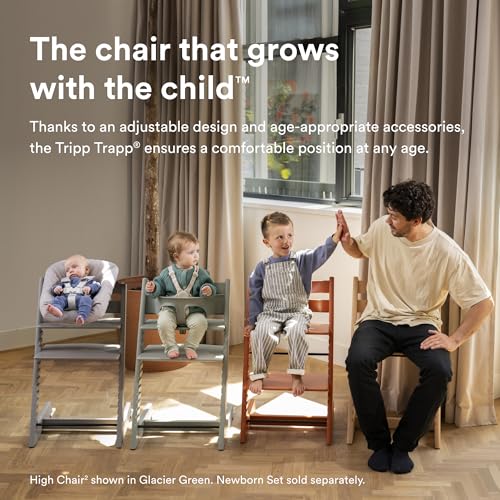

The Stokke Tripp Trapp Oak High Chair 2 is often considered one of the best baby high chair options for parents who value safety, ergonomics, and long-term use. Crafted from durable oak wood, this high chair brings your baby right to the family table, encouraging interaction and healthy development from 6 to 36 months with the included Baby Set and removable five-point harness.
- Adjustable Design: Seat and footrest adjust easily to maintain ergonomic support as your child grows
- Sturdy Construction: Solid oak wood frame supports up to 300 lbs for long-term durability
- Family-Friendly Height: Pulls your baby up to the table to promote bonding and shared meals
- Premium Price: Higher cost compared to standard baby high chairs
- Accessories Sold Separately: Some add-ons like trays are not included
- No Foldable Frame: Takes up a fixed footprint in dining spaces
When searching for the best baby high chair, parents often want more than just a seat — they want safety, comfort, and longevity. The Stokke Tripp Trapp Oak High Chair stands out because it adapts to your child’s growth, from babyhood into adulthood, without sacrificing stability or style.
Graco EveryStep 6-in-1 High Chair

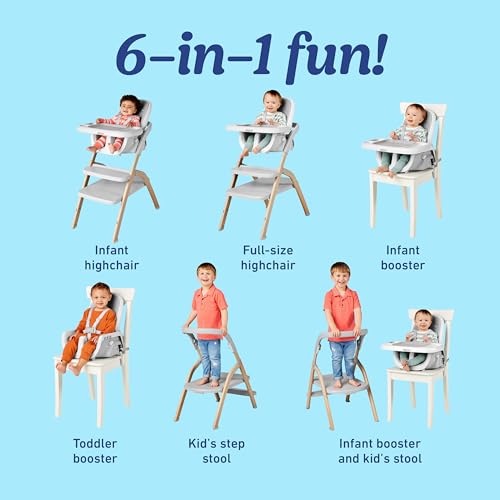

The Graco EveryStep 6-in-1 High Chair is an all-in-one solution for parents looking for the best baby high chair that grows with their child. Designed for infants through toddlers and even big kids, this convertible chair offers six seating stages, from a secure infant high chair to a booster and step stool, making it a long-term investment for family dining.
- Convertible Design: Six growing stages from infant to step stool for long-term use
- Adjustable Fit: Four height positions ensure optimal comfort at any dining table
- Easy Maintenance: Wipe-clean seat and dishwasher-safe tray insert simplify cleanup
- Heavier Build: At 21.8 lbs, less portable than ultra-light high chairs
- Higher Price Point: More expensive than standard high chairs
- Assembly Required: Initial setup can be time-consuming
For families seeking the best baby high chair that truly adapts to growing children, the Graco EveryStep 6-in-1 is an excellent choice. Its versatile design transitions from infant high chair to toddler booster and even a kid’s step stool, supporting your child through multiple stages of growth.
Ingenuity SmartClean Trio Elite 3-in-1 High Chair


The Ingenuity SmartClean Trio Elite 3-in-1 High Chair is a versatile option for parents searching for the best baby high chair that grows with their child. Designed for babies 6 months and up, it converts from a classic high chair to a toddler seat and a chair-top booster, supporting multiple stages of development and family dining needs.
- 3-in-1 Convertible Design: Transitions from high chair to toddler seat and booster for long-term use
- EasyClean Tray: Dishwasher-safe, BPA-free tray simplifies post-meal cleanup
- Portable & Comfortable: Removable foam insert and wheels for comfort and mobility
- Weight Limit: Maximum capacity of 50 lbs may not fit older toddlers
- Moderate Size: Slightly bulkier than ultra-slim high chairs
- Manual Adjustments: Recline and mode changes require some effort
For parents who want a flexible, practical option, the Ingenuity SmartClean Trio Elite 3-in-1 High Chair ranks among the best baby high chair options for growing families. Its three convertible modes—from high chair to toddler seat to chair-top booster—adapt seamlessly as your child develops, while maintaining safety and comfort with a 5-point harness and cushioned EVA insert.
Cosco Kids Simple Fold High Chair


The Cosco Kids Simple Fold High Chair is a practical and budget-friendly choice for parents looking for the best baby high chair for everyday use. Designed for babies 6 months and up, up to 50 lbs, it features a foldable design that makes storage and portability effortless, perfect for travel or small living spaces.
- Compact & Portable: Folds quickly without removing the tray, ideal for small spaces or travel
- Easy Cleanup: Wipeable seat pad and dishwasher-safe tray insert simplify maintenance
- Fun Design: Playful monster print keeps kids engaged during meals
- Limited Long-Term Use: Maximum weight of 50 lbs may not suit older toddlers
- Basic Adjustability: Fewer recline and growth-stage options than premium chairs
- Plastic Construction: Less premium feel compared to wood or metal high chairs
Offering fundamental features without unnecessary extras, this economical choice delivers safety and functionality at an accessible price point. The three-position tray adjustment accommodates growing babies, while the six-height positions ensure compatibility with most dining tables. The vinyl seat wipes clean in seconds, and the dishwasher-safe tray insert simplifies post-meal cleanup. The chair meets all current safety standards and includes a three-point harness. While it lacks some premium features, it provides reliable performance for daily feeding needs. Other affordable options worth considering include Dream On Me portable models and INFANS convertible designs. Price range: $45-$70.
Understanding High Chair Safety Standards
Safety stands as the paramount concern when selecting any baby product, and high chairs are no exception. In the United States, high chairs must meet standards established by the Consumer Product Safety Commission and ASTM International. These regulations cover stability requirements, restraint systems, and construction quality to prevent common hazards like tipping, entrapment, and falls.
The five-point harness represents the gold standard for high chair safety, securing the baby at both shoulders, both hips, and between the legs. This system prevents children from standing up or sliding out from under the tray. Three-point harnesses offer less security but may suffice for older toddlers who demonstrate good sitting behavior. Never rely solely on the tray to keep a child secure, as trays are designed for feeding convenience rather than restraint.
Stability features include a wide base that extends beyond the seat footprint, preventing the chair from tipping when a child leans or pushes against it. Chairs with four legs should have anti-tip designs, while models with a central support must distribute weight properly. Locking mechanisms on foldable chairs need to engage completely and resist accidental collapse. Regular inspection of these safety features ensures continued protection as components experience wear from daily use.
Material Considerations and Durability
High chairs come constructed from various materials, each offering distinct advantages and drawbacks. Wooden high chairs exude timeless elegance and exceptional durability, often lasting through multiple children and even generations. They typically feature simpler designs without electronic components or complex mechanisms that might fail. However, wood requires more careful cleaning to prevent water damage and staining, particularly in crevices and joints.
Plastic and metal combination chairs dominate the market due to their lightweight construction and easy maintenance. These materials resist moisture and clean up with simple wiping, making them ideal for the messy reality of baby-led weaning and self-feeding. The downside includes potential for wear on plastic components and a less refined aesthetic that some parents find unappealing. Quality varies significantly among plastic chairs, with premium models using thicker, more durable plastics than budget alternatives.
Metal frames with fabric seats offer a middle ground, combining structural strength with comfort. The fabric components usually remove for machine washing, though they may stain over time despite cleaning efforts. Some parents keep backup fabric sets to rotate during washing or replace worn pieces. Metal construction generally provides excellent longevity, though paint or coating may chip with rough use.
Cleaning and Maintenance Realities
The ease of cleaning a high chair directly impacts daily quality of life for parents. Babies and toddlers create impressive messes during meals, with food finding its way into every crevice, fold, and joint. A high chair that takes fifteen minutes to clean after each meal becomes a source of frustration, while one that wipes down in two minutes encourages more relaxed mealtimes.
Seamless construction without cracks, crevices, or fabric pleats provides the easiest cleaning experience. Smooth plastic or wood surfaces allow quick wiping with a damp cloth. Removable trays that fit in the dishwasher eliminate scrubbing stuck-on food. Some models feature multiple tray layers, with a dishwasher-safe insert covering a permanent base tray.
Seat padding presents a cleaning challenge across many models. While cushions provide comfort, they trap food particles and liquids, requiring frequent washing. Machine-washable covers simplify this task, though they still need removal, washing, drying, and reinstallation. Some parents opt for minimal or no padding, adding a thin towel for comfort when needed. This approach sacrifices some coziness but dramatically reduces cleaning time.
Hidden areas beneath the seat and around the base collect surprising amounts of debris. Chairs that lift apart or have accessible undersides make thorough cleaning possible. Models with permanently attached components may accumulate grime in unreachable spots over months of use. Regular deep cleaning prevents buildup, but design plays a crucial role in making this feasible.
Size and Space Requirements
High chairs occupy significant floor space, making size considerations critical for many households. Full-size traditional high chairs provide maximum stability and feature sets but require permanent floor space allocation. These models work well in spacious kitchens or dining rooms where the chair can remain set up between meals.
Foldable designs collapse to a few inches thick, storing in pantries, closets, or against walls when not in use. This functionality proves invaluable in apartments or homes where every square foot matters. The trade-off involves daily setup and takedown, which some parents find inconvenient, particularly during busy meal preparation times. The folding mechanisms must be robust enough to withstand hundreds of cycles without loosening or breaking.
Hook-on chairs attach directly to tables, eliminating floor space requirements entirely. These portable options work wonderfully for travel and dining out, though they demand sturdy tables with appropriate edge thickness and structure. Weight limits tend to be lower than traditional chairs, and not all tables accommodate their clamping mechanism safely. They suit occasional use or as a secondary option but may not serve as a primary high chair for daily meals.
Compact designs with smaller footprints split the difference, offering more features than hook-on models while consuming less space than full-size chairs. These often include basic height adjustment and tray functionality in a streamlined package. They may sacrifice some stability or feature breadth but provide practical solutions for space-constrained homes.
Adjustability and Growth Potential
The ability to adjust a high chair’s configuration extends its useful life and improves comfort throughout developmental stages. Height adjustment represents the most common and valuable feature, allowing the chair to align with various table heights or position the child at optimal levels for parent feeding. Quality models offer six to ten height positions with secure locking mechanisms.
Footrest adjustability supports proper posture by providing a stable surface for a child’s feet rather than letting them dangle. This seemingly minor feature significantly impacts comfort during longer meals and supports healthy sitting habits. As children grow, the footrest moves down to maintain appropriate positioning. Some advanced models include depth adjustment as well, moving the seat closer to or farther from the tray.
Convertible high chairs that transform into different furniture pieces offer the greatest growth potential. These evolve from infant high chairs with full support and trays into toddler chairs that pull up to regular tables, and sometimes into youth chairs or stools for school-age children. While the initial investment exceeds basic models, the per-year cost becomes economical when a single chair serves from six months through elementary school.
Reclining features benefit younger babies who haven’t developed full trunk control, allowing them to join family meals safely before sitting independently. However, pediatricians recommend feeding babies in upright positions to reduce choking risk, making recline functions more suitable for supervision and interaction rather than active feeding. As the baby develops, the chair adjusts to fully upright positioning.
Tray Features and Functionality
The tray serves as the primary interface between child and high chair during meals, making its design crucial for functionality. One-handed operation allows parents to place or remove the tray while holding a baby in the other arm, a seemingly simple feature that proves invaluable during daily use. Trays that require two hands or multiple steps to operate become sources of frustration.
Multiple tray positions accommodate a growing child and different activities. Closer positions suit younger babies and contained feeding, while farther settings provide space for self-feeding toddlers. Some models include four or more tray depths, fine-tuning the fit as the child develops. Complete tray removal enables pulling the chair directly to a table, transitioning from high chair to table seating.
Dishwasher-safe tray inserts represent a major convenience feature. These removable top layers lift off for machine cleaning while a base tray remains attached to the chair. After meals, parents simply place the dirty insert in the dishwasher rather than hand-washing. The base tray requires only occasional wiping since it doesn’t contact food directly.
Raised edges and rim designs contain spills and prevent plates or bowls from sliding off the tray onto the floor. Deep wells catch liquids before they overflow, though nothing completely prevents determined toddlers from creating floor messes. Built-in cup holders keep drinks accessible while reducing tipping, though their effectiveness varies with cup design and child determination.
Additional Features Worth Considering
Beyond core functionality, various additional features enhance convenience and usability. Wheels or casters enable easy movement between rooms, allowing the high chair to roll from kitchen to dining room or follow parents around the house. Locking mechanisms prevent unwanted rolling during meals, with quality locks engaging securely to eliminate any play or movement.
Storage compartments or baskets underneath the seat provide convenient space for bibs, utensils, and cleanup supplies. Having these items within arm’s reach streamlines mealtime preparation and cleanup. However, these storage areas can collect fallen food and require regular cleaning to prevent becoming grime repositories.
Adjustable or removable crotch posts prevent the child from sliding forward under the tray. Fixed posts integrate into the seat design permanently, while removable options allow parents to eliminate this barrier for older toddlers transitioning to regular seating. The crotch post should be narrow enough to avoid discomfort but substantial enough to prevent slipping.
Toy attachments or activity trays entertain children between bites or occupy them while parents prepare food nearby. These accessories convert the high chair into a play station, extending its utility beyond meals. However, pediatric feeding specialists often recommend keeping toys separate from mealtimes to avoid distraction and promote focus on eating.
Price Ranges and Value Assessment
High chairs span an enormous price spectrum, from basic models under fifty dollars to designer chairs exceeding five hundred dollars. Budget chairs provide essential safety and functionality without extras, serving adequately for families who prioritize affordability or need temporary solutions. These typically feature simpler construction, fewer adjustments, and basic materials but meet all safety standards.
Mid-range options between one hundred and two hundred dollars offer enhanced features like better adjustability, improved materials, and easier cleaning. This category includes many best-selling models that balance quality with accessibility. Families planning to use one high chair for multiple children often find this range offers optimal value, providing durability for extended use without luxury pricing.
Premium high chairs command high prices through exceptional build quality, extensive adjustability, and refined aesthetics. Wooden convertible models that serve from infancy through school age justify their cost through years of service, potentially outlasting several budget chairs. Designer collaborations and specialty materials also push prices upward, appealing to parents who prioritize home decor integration or specific aesthetic preferences.
The true value assessment considers cost per year of use rather than initial purchase price. A three-hundred-dollar chair used for five years across two children costs thirty dollars per child-year. A seventy-dollar chair replaced after eighteen months costs nearly fifty dollars per child-year. Durability, adaptability, and planned family size all factor into this calculation.
Common Mistakes to Avoid
Many parents purchase high chairs based primarily on appearance or reviews without considering their specific needs and space. A chair that works perfectly in a spacious suburban home may prove impractical in an urban apartment. Similarly, features that delight one family create frustration for another based on different routines and priorities. Careful consideration of individual circumstances prevents buyer’s remorse.
Underestimating the importance of cleaning ease leads to daily aggravation. A beautiful chair with intricate details and fabric components may photograph well but require extensive maintenance. Parents juggling multiple responsibilities rarely have time or energy for fifteen-minute post-meal cleanups. Prioritizing wipeable surfaces and removable, dishwasher-safe components over aesthetic appeal proves wise for most families.
Overlooking growth and adaptation features results in premature replacement needs. A basic infant high chair may serve admirably for a year but then require upgrading as the toddler outgrows it. Investing slightly more in adjustable or convertible options extends the useful life significantly. Planning for at least three to four years of use when selecting a chair ensures better value.
Failing to verify safety certifications and recalls before purchase puts children at risk. The Consumer Product Safety Commission maintains a database of recalled products that should be checked before buying, especially when purchasing secondhand. Ensuring the chosen model meets current safety standards and hasn’t been recalled protects against preventable accidents.
Making the Final Decision
Selecting the best baby high chair ultimately requires balancing multiple factors according to individual family needs and circumstances. Creating a prioritized list of must-have features versus nice-to-have additions helps narrow the overwhelming array of options. Safety features always top the priority list, followed by cleaning ease and basic functionality.
Testing chairs in person when possible provides valuable insights that online research cannot replicate. Manipulating the tray mechanism, adjusting height settings, and assessing stability give concrete information about daily usability. Many baby supply stores maintain floor models specifically for this hands-on evaluation.
Reading verified purchase reviews from parents who have used chairs for several months or years reveals real-world performance beyond marketing claims. Pay particular attention to reviews mentioning durability, ease of cleaning, and how well the chair accommodated a growing child. Patterns across multiple reviews carry more weight than individual extreme opinions.
Considering future needs prevents shortsighted purchases. Families planning multiple children benefit from investing in durable chairs that will serve repeatedly. Those with limited space must prioritize compact or foldable designs regardless of other desirable features. Budget constraints may necessitate choosing fundamental safety and functionality over premium materials or extensive features.
Conclusion
The journey to finding the best baby high chair combines practical considerations with personal preferences, balancing safety requirements against lifestyle needs. While no single chair suits every family perfectly, understanding the key features and trade-offs empowers parents to make informed decisions. A well-chosen high chair becomes a beloved piece of baby equipment, supporting not just meals but also family bonding, learning experiences, and cherished memories. Whether opting for a budget-friendly basic model, a space-saving foldable design, or a premium convertible chair, the right choice provides years of reliable service while keeping little ones safe and comfortable during the important transition to solid foods and family meals.
Frequently Asked Questions
When should a baby start using a high chair?
Most babies are ready for a high chair between four and six months of age when they develop sufficient head and neck control to sit upright with support. The key milestone is the ability to maintain a stable seated position, which ensures safe eating and reduces choking risk. Some parents begin using reclining high chairs for supervised interaction during family meals before the baby starts solids, though feeding should only occur when the child sits upright. Consulting with a pediatrician provides personalized guidance based on individual developmental progress.
How long can a child use a high chair?
Traditional high chairs typically serve children from six months up to three years of age, or until they reach the manufacturer’s weight limit, usually between 40 and 50 pounds. However, convertible models extend this timeline significantly, transforming into booster seats or youth chairs that accommodate children up to 250 pounds in some cases. Many toddlers transition to regular chairs with booster seats around age three, though some continue using high chairs longer if they prefer the security and containment these provide during meals.
Are expensive high chairs worth the investment?
The value of expensive high chairs depends on specific family circumstances and priorities. Premium chairs often justify their cost through superior durability that withstands multiple children, convertible designs that serve for many years, and easier cleaning that saves time daily. Families planning to use one chair extensively or pass it down may find the investment worthwhile. However, budget-friendly options that meet safety standards can serve perfectly well for families needing only basic functionality for a shorter duration. The key is matching the investment to actual usage and longevity needs.
What’s the difference between a high chair and a booster seat?
High chairs are standalone pieces of furniture with their own legs or base, tray systems, and independent stability. They don’t require attachment to other furniture and can be used anywhere. Booster seats strap onto regular dining chairs, elevating the child to table height and sometimes including their own trays. Boosters save space and cost less but depend on stable adult chairs for support. Many families use high chairs for younger babies who need more containment and security, transitioning to booster seats as toddlers develop independence and table manners.
How do you clean a high chair thoroughly?
Thorough high chair cleaning involves multiple steps beyond simple tray wiping. Remove all detachable components including trays, seat pads, and harness straps for separate cleaning. Dishwasher-safe parts go directly into the machine, while others require hand washing with warm soapy water. Use a soft brush or old toothbrush to clean crevices and joints where food accumulates. Wipe down the frame and base, checking underneath and behind for hidden debris. Allow all components to dry completely before reassembly to prevent mold growth. Perform this deep cleaning weekly or biweekly depending on usage, with daily quick wipes maintaining cleanliness between thorough sessions.