Best Bottle Warmers for Babies
*We may earn a commission for purchases made using our links. Please see our disclosure to learn more.
Feeding a baby is one of the most important parts of early parenthood, and having the right tools makes a significant difference. A bottle warmer takes the guesswork out of heating breast milk or formula to the right temperature, saving time during those exhausting middle-of-the-night feedings. Whether a parent is returning to work and relying on stored breast milk or using formula from day one, a reliable bottle warmer is a worthy investment.
This guide covers everything needed to know about the best bottle warmers available today, including how they work, what features matter most, and how to choose the right one for any family’s lifestyle.
“Breast milk should never be microwaved. Microwaves heat unevenly and can create hot spots that burn an infant’s mouth, and may also damage beneficial proteins and antibodies in the milk.”
— American Academy of Pediatrics (AAP)
Key Takeaways
- Safety first: The ideal milk temperature for a baby is around 98.6°F (37°C), matching body temperature. Overheating can destroy nutrients in breast milk and burn a baby’s mouth.
- Warming method matters: Different warmers use steam, water bath, or dry heat. Each has pros and cons depending on how fast a parent needs milk warmed and what type of bottle they use.
- Compatibility is crucial: Not all warmers fit every bottle or bag size. Always check compatibility before purchasing.
- Convenience features add up: Auto-shutoff, digital displays, and keep-warm settings can be game-changers during nighttime feedings.
- Budget vs. features: Entry-level warmers work fine for basic needs, while premium models offer more precision and versatility.
Best Bottle Warmers for Babies
Philips Avent Premium Fast Bottle Warmer (SCF358)


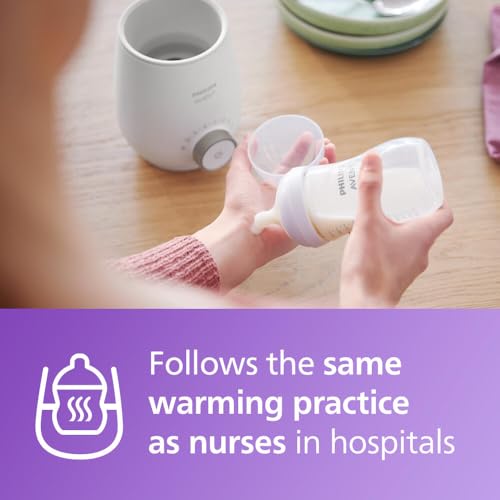
The Philips Avent Premium Fast Bottle Warmer is a strong contender for parents searching for the best bottle warmers for everyday use. Designed with Smart Temperature Control and water bath technology, it helps warm bottles gently and evenly rather than overheating spots in the milk. This makes it especially useful for parents who want a more reliable way to prepare bottles during busy daytime feeds or late-night routines.
Among the best bottle warmers available for parents who want dependable performance at home, the Philips Avent Premium Fast Bottle Warmer stands out for its thoughtful features and user-friendly design. Its Smart Temperature Control helps take the guesswork out of warming, while water bath technology supports a gentler, more even heating process. The automatic shut-off is another welcome feature, especially during hectic feeding schedules.
- Smart Temperature Control: Helps warm milk more evenly and reduces the risk of overheating.
- Water Bath Technology: Provides gentle warming that is often preferred over harsher heating methods.
- Automatic Shut-Off: Adds safety and convenience for busy parents.
- Higher Price Point: Costs more than many basic bottle warmers.
- Countertop Design: Better suited for home use than travel or on-the-go feeding.
- Single-Purpose Appliance: Takes up space for a task some parents may only use for a limited stage.
Baby Brezza Smart Baby Bottle Warmer

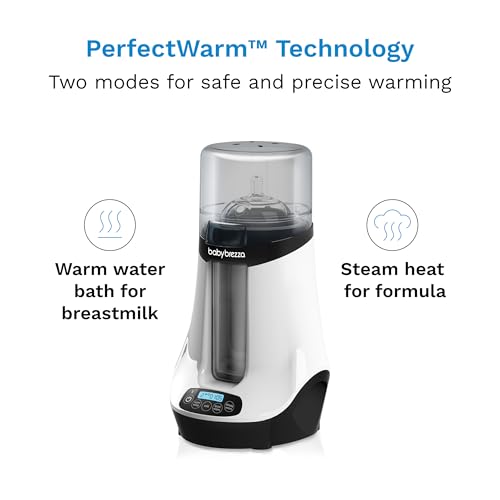

The Baby Brezza Smart Baby Bottle Warmer is a modern option for parents looking for the best bottle warmers with more flexibility and tech-friendly features. Built to warm both breast milk and formula at different temperatures, it is designed to support a more tailored feeding routine instead of using a one-setting approach. It also includes a defrost function, which can be especially helpful for parents who store frozen milk and want an easier way to prepare feeds.
For parents comparing the best bottle warmers, the Baby Brezza Smart Baby Bottle Warmer offers a more advanced option with features aimed at convenience and flexibility. It is designed to warm breast milk and formula at different temperatures, which can be helpful for families who want more control over how each feed is prepared. The added defrost function also makes it practical for parents using stored frozen milk.
- Different Warming Settings: Designed for both breast milk and formula with more specific temperature control.
- App Connectivity: Adds convenience for parents who like smart features in their routine.
- Universal Fit: Works with a wide range of bottles and milk bags.
- More Expensive Option: Costs more than many simpler bottle warmers.
- Tech May Feel Unnecessary: App features may be more than some parents need.
- Larger Learning Curve: Extra settings can make it less straightforward at first.
Kiinde Kozii Baby Bottle Warmer


The Kiinde Kozii Baby Bottle Warmer is often considered by parents searching for the best bottle warmers for gentle, steady warming. Designed for breast milk, infant formula, and baby food, it focuses on a more careful warming process rather than rushing through feeds with high heat. That makes it especially appealing for parents who prioritize a slower, more controlled approach for stored milk and everyday bottle prep.
Among the best bottle warmers for parents who prefer gentle warming over speed, the Kiinde Kozii Baby Bottle Warmer stands out as a more specialized option. It is designed to warm breast milk, infant formula, and baby food, making it a practical choice for families who want one appliance that stays useful through different feeding stages. Its focus on gradual warming can appeal to parents who want a more controlled process for everyday feeds.
- Gentle Warming Approach: Designed to warm breast milk and formula more gradually.
- Versatile Use: Can be used for bottles, breast milk, formula, and baby food.
- Good for Multi-Stage Feeding: Useful beyond the newborn stage because it can also warm baby food.
- Higher Price: Costs more than many basic bottle warmers.
- Not the Fastest Option: Parents who want very quick warming may prefer another model.
- Bulky for Minimalists: May feel less ideal for small kitchens or simple feeding setups.
Dr. Brown’s MilkSPA


Dr. Brown's MilkSPA Breast Milk and Bottle Warmer is a practical option for parents comparing the best bottle warmers for everyday feeding. Designed for both breast milk and bottles, it aims to provide a convenient warming process that fits into regular home use without feeling overly complicated. Its appeal lies in offering a balance between useful features, recognizable brand trust, and a price point that stays within reach for many families.
Among the best bottle warmers for parents who want a dependable home-use option, Dr. Brown’s MilkSPA Breast Milk and Bottle Warmer offers a solid middle ground between simplicity and convenience. It is designed to handle breast milk and bottle warming in a way that fits everyday feeding routines, making it a practical choice for parents who want a dedicated appliance rather than relying on less consistent methods.
- Breast Milk Friendly: Designed with breast milk warming in mind, which can appeal to pumping parents.
- Trusted Brand: Comes from a well-known baby product brand many parents already recognize.
- Everyday Convenience: Suited for regular bottle-warming needs at home.
- Not the Cheapest Option: Costs more than some very basic bottle warmers.
- Home Use Focus: Better for countertop use than travel or portable feeding setups.
- Limited Appeal for Minimalists: Parents who want a very simple, low-tech routine may prefer a more basic model.
How Bottle Warmers Work
Bottle warmers generally fall into three main categories based on their heating method:
- Steam-based warmers: use steam heat to warm bottles quickly. They tend to be faster than water bath models but require careful monitoring to avoid overheating. Most come with a timer or automatic shutoff to prevent this issue.
- Water bath warmers: circulate warm water around the bottle, providing more even and gentle heating. This method is widely considered one of the safest for breast milk because it reduces the risk of hot spots.
- Dry warmers: use heated surfaces or air to warm milk more slowly. They are often portable and convenient for travel but can take longer than other methods.
Understanding these differences helps narrow down the right choice based on daily routine and feeding schedule.
What to Look for in a Bottle Warmer
Warming Speed
Speed matters enormously at 3 a.m. when a baby is crying and hungry. Some warmers heat a bottle in as little as 60 seconds, while others take five minutes or more. Fast warming is a key priority for many parents, though it should never come at the expense of safety.
Temperature Control and Consistency
Consistent, accurate temperature control is one of the most important features in any bottle warmer. Models with digital thermometers or precision heating elements give parents confidence that milk is never too hot or too cold. Some high-end models even allow users to set a specific target temperature.
Bottle Compatibility
Not every warmer works with every bottle. Wide-neck bottles, angled bottles, and different brand sizes may not fit in all warmers. Parents who have a preferred bottle brand should verify compatibility before making a purchase. Warmers that also accept breast milk storage bags are a bonus for pumping parents.
Auto-Shutoff and Safety Features
A warmer with an auto-shutoff feature prevents milk from being overheated if a parent forgets about it during a hectic moment. This is not just convenient but a safety necessity. Some models also include alerts or beeps when warming is complete.
Keep-Warm Function
A keep-warm function holds milk at the ideal temperature for a set period after the warming cycle ends. This is particularly useful for parents whose baby does not always feed at the exact moment milk is ready.
Ease of Cleaning
Bottle warmers can develop mineral buildup over time, especially with hard water. Models with wide openings and removable parts are easier to descale and clean. Some are dishwasher safe, which is a huge bonus for busy households.
Size and Portability
Countertop space is precious in a nursery or kitchen. Compact models are better suited for smaller spaces. For parents who travel frequently, a portable or car-powered bottle warmer is worth considering.
Types of Bottle Warmers
Countertop Bottle Warmers
These are the most common type and offer the most features. They plug into a standard outlet and sit on a countertop or bedside table. Many come with digital displays, multiple settings, and extra accessories. They are ideal for home use.
Portable and Travel Bottle Warmers
Designed for on-the-go feeding, these warmers are typically battery-powered, USB-charged, or designed to plug into a car’s 12V outlet. While they may not warm milk as quickly as countertop models, they are indispensable for parents who travel or commute regularly.
Bottle Warmer and Sterilizer Combos
Some models combine warming with sterilization capabilities, offering a dual-purpose solution that saves both money and counter space. These are practical for parents who want an all-in-one feeding station.
Smart Bottle Warmers
A newer category of warmers connects to a smartphone app, allowing parents to monitor and control the warming process remotely. Some smart models learn a baby’s feeding schedule and begin warming at the right time automatically.
Steam vs. Water Bath: Which Is Better?
The debate between steam and water bath warming comes down to priorities. Steam warmers are faster, typically warming a bottle in under two minutes. However, they can heat milk unevenly if not used properly. Water bath warmers take a bit longer but are gentler and more consistent, making them the preferred choice for parents storing precious breast milk.
For formula users, speed might be the top priority, making steam warmers a solid choice. For exclusively pumping parents or those with a stash of frozen breast milk, a water bath warmer may be the better investment.
Tips for Using a Bottle Warmer Safely
Getting the most out of a bottle warmer requires following a few safety guidelines:
Always test the temperature of milk on the inside of the wrist before feeding. Even with the best warmer, it is good practice to double-check.
Never reuse milk that has already been warmed and partially consumed. Bacteria from a baby’s saliva can multiply in warmed milk.
Do not leave milk warming for extended periods. Even with a keep-warm function, milk should not sit at elevated temperatures for more than two hours.
Descale the warmer regularly, especially in areas with hard water. Mineral deposits can affect performance and hygiene.
Follow the manufacturer’s instructions carefully. Every model is different, and the user manual provides the most accurate guidance for safe use.
When to Buy a Bottle Warmer
A bottle warmer is not strictly necessary, but it becomes very useful in specific situations. Parents who plan to breastfeed but also introduce a bottle, those returning to work and storing pumped milk, or those using formula as a primary feeding method will all benefit significantly from having one.
For those who plan to feed babies only at room temperature or prefer to use a bowl of warm water, a bottle warmer may not be essential. However, for those who value consistency, speed, and convenience, it is a worthwhile addition to any feeding setup.
Conclusion
Choosing the best bottle warmer comes down to understanding individual needs and priorities. Factors like warming speed, bottle compatibility, safety features, and budget all play a role in finding the right match. Whether opting for a basic countertop model or a high-tech smart warmer, the goal remains the same: getting safe, perfectly warmed milk to a hungry baby as quickly and easily as possible.
With so many reliable options available, parents can feel confident that a little research will lead them to a warmer that fits seamlessly into their daily routine.
Frequently Asked Questions
1. Are bottle warmers safe to use for breast milk?
Yes, bottle warmers are generally safe for breast milk as long as they do not overheat it. Water bath warmers are especially recommended for breast milk because they heat more evenly and gently, helping preserve the milk’s natural antibodies and nutrients.
2. How long does it take a bottle warmer to heat a bottle?
Warming time varies by model and method. Steam warmers can heat a bottle in as little as 60 to 90 seconds, while water bath warmers typically take three to eight minutes. Portable warmers may take longer depending on the heat source.
3. Can a bottle warmer be used for frozen breast milk?
Some bottle warmers are designed to handle frozen milk, but not all. It is best to thaw frozen breast milk in the refrigerator overnight before using a warmer. Always check the product specifications to see if the model supports warming frozen milk directly.
4. Is it safe to leave a bottle in the warmer while it keeps warm?
Most experts recommend not leaving milk in a keep-warm setting for more than 30 to 60 minutes. While the feature is convenient, prolonged heat exposure can break down nutrients in breast milk and increase the risk of bacterial growth in formula.
5. Do bottle warmers work with all bottle brands?
Not always. Compatibility depends on the shape, size, and neck width of the bottle. Wide-neck bottles and some angled designs may not fit in every warmer. Parents should check the warmer’s compatibility list before purchasing, especially if they already have a preferred bottle brand.