Nanobébé vs. Comotomo: Which Baby Bottle Wins?
*We may earn a commission for purchases made using our links. Please see our disclosure to learn more.
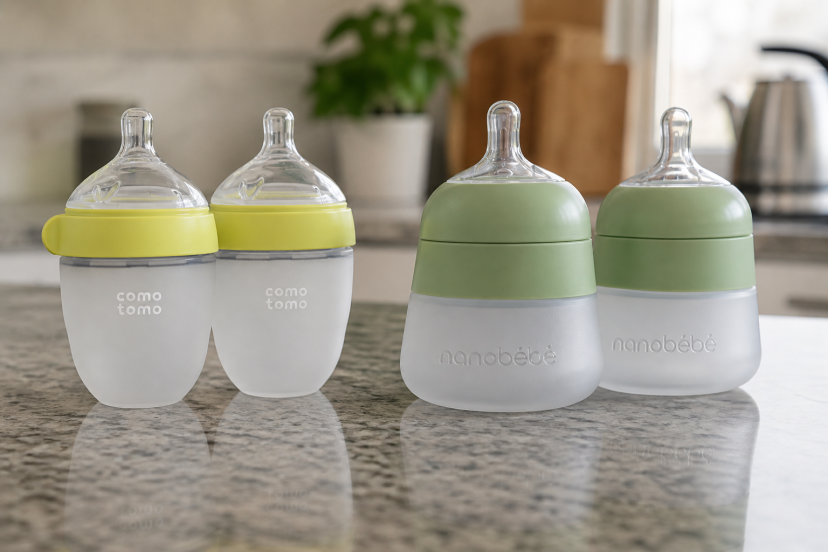
Choosing the right baby bottle can feel overwhelming. This is especially true when you want to support a smooth transition between breastfeeding and bottle feeding. Nanobébé and Comotomo often appear on parents’ shortlists. Each brand promises a breast-like feeding experience, avoids BPA and harmful chemicals, and has earned loyal followings among nursing parents.
However, these bottles take very different approaches to solving the same problem.
This article breaks down what to know before buying. It covers design, materials, ease of cleaning, anti-colic performance, and overall value.
“The best bottle mimics the breast in shape and flow. Look for a wide-base nipple that encourages a wide latch, similar to how a baby latches onto the breast.”
— MomLovesBest, Baby Bottle Guide
Key Takeaways
- Nanobébé features a concave, breast-shaped design that warms breast milk up to three times faster than standard bottles, helping preserve nutrients.
- Comotomo uses soft, squeezable medical-grade silicone to closely mimic the tactile experience of breastfeeding.
- Both bottles are BPA-free and designed to minimize nipple confusion in breastfed babies.
- Comotomo has a wider mouth opening, making it easier to hand-wash without a bottle brush.
- Nanobébé offers a wider, more stable base than Comotomo, which may tip over more easily because of its narrow bottom.
- Nanobébé uses a triple-vent anti-colic system; Comotomo uses a dual-vent design.
- The best choice depends largely on feeding habits, lifestyle, and how the baby responds.
Nanobébé vs. Comotomo: Recommended Products
Comotomo Silicone Baby Bottle Gen 2


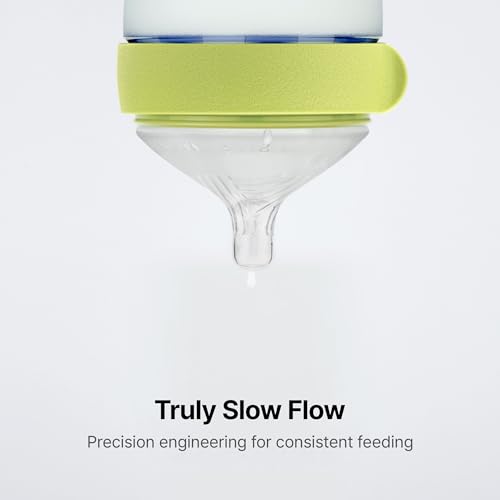
Comotomo Silicone Baby Bottle Gen 2 is designed for newborn feeding and breast-to-bottle transition. This 5 oz double pack features soft silicone bottles, true slow-flow nipples for babies 0–3 months, and dual anti-colic vents to help support smoother feeding.
A soft silicone bottle made for newborns, Comotomo Gen 2 focuses on gentle feeding and easier breast-to-bottle transition. Its slow-flow nipple and dual anti-colic vents make it a practical option for parents looking for a flexible, baby-friendly bottle for the first few months.
- Newborn-Friendly: Slow-flow nipple is suited for early feeding.
- Soft Silicone Feel: Flexible bottle design feels gentle and easy to hold.
- Anti-Colic Vents: Dual vents help reduce excess air intake.
- Small Capacity: 5 oz size may not last as baby grows.
- Higher Price Per Bottle: Costs more than many basic plastic bottles.
- Limited Age Range: Best suited for newborns and younger babies.
Nanobebe Flexy Silicone Baby Bottle Set


The Nanobebe Flexy Silicone Baby Bottle Set is a complete feeding solution perfect for new parents. This all-in-one set includes 5oz and 9oz bottles, anti-colic pacifiers, and a bottle brush—everything needed for convenient feeding and cleaning. Made from BPA-free silicone, the bottles feature unique 360° triple-vented nipples to reduce colic and keep baby latched comfortably. A thoughtful gift for baby showers or registry essentials.
Nanobébé’s Silicone Baby Bottle Flexy Set is designed for comfortable, everyday feeding. The set includes soft silicone bottles in 5 oz and 9 oz sizes, anti-colic nipples, a bottle brush, and pacifiers. Its flexible design supports an easy grip, while the anti-colic nipples help make feeding smoother for babies.
- Complete Set: Includes bottles, pacifiers, and brush—ideal for new parents.
- Advanced Anti-Colic: Triple-vented nipples minimize gas and feeding discomfort.
- Multiple Sizes: Offers both 5oz and 9oz bottles for growing babies.
- Higher Price Point: More expensive than single-bottle purchases.
- Bulky Packaging: Full set may take up more storage space.
- Nipple Learning Curve: 360° design may take time for some babies to adjust to.
Design and Materials
The most immediately noticeable difference between these two bottles is how they look and feel.
Comotomo uses 100% medical-grade silicone for both the nipple and bottle body. This gives it a soft, flexible, and squeezable feel that closely resembles breast tissue. Its wide, rounded body and ultra-wide neck create a distinctive shape that many babies adjust to naturally. The bottle comes in 5 oz and 8 oz sizes, with green and pink colour options.
Nanobébé, on the other hand, is shaped more like an upturned bowl or a hollowed dome. The concave, half-moon design was developed specifically with breast milk in mind. The wide, flat structure spreads milk into a thin layer, which allows it to cool more rapidly after pumping, reducing the risk of bacterial growth. When it is time to warm the milk, that same thin layer heats the liquid more evenly and significantly faster than a standard cylindrical bottle. The Flexy version of the Nanobébé bottle incorporates soft silicone throughout, while the original breastmilk bottle uses a combination of silicone and BPA-free plastic.
Both bottles are free of BPA, PVC, and phthalates, which are common concerns for parents looking to minimize chemical exposure during feeding.
Nipple Design and Latching
For breastfed babies, one of the most critical factors in bottle acceptance is nipple design. A nipple that feels too foreign can trigger bottle rejection or contribute to nipple confusion, where the infant struggles to switch back and forth between breast and bottle.
Comotomo’s nipple is ultra-wide and flat at the base, closely resembling the shape and feel of the human breast. The wide latch encourages babies to open their mouths broadly, the same way they would when nursing. The pliable silicone allows gentle squeezing that can simulate the natural let-down reflex, which many newborns find reassuring. Parents dealing with consistent bottle rejection often report that Comotomo is the bottle that finally worked, a phenomenon that has led Comotomo’s own community to coin the phrase “Breastfeeding in a Bottle.”
Nanobébé uses a breast-shaped, angled nipple to encourage a wide latch and natural sucking pattern. The Flexy version also has a non-collapsing nipple that keeps its shape during feeding, so babies do not have to work harder to get milk. Its unique bottle shape also makes it easier for younger babies to grip and hold during feeds.
Both bottles offer nipples in multiple flow rates, starting with slow flow for newborns and progressing to medium, fast, and variable flow as the baby grows. The flow rate is an important consideration, as a nipple that delivers milk too quickly can condition a baby to expect rapid flow and become frustrated at the breast, where milk typically flows more slowly.
Anti-Colic Features
Colic, often involves long periods of crying and discomfort in otherwise healthy infants. Excess air swallowing during feeding can make this worse. Nanobébé and Comotomo both include anti-colic ventilation systems, but each brand uses a different design approach.
Comotomo places dual anti-colic vents directly on the nipple. These vents regulate airflow during feeding and help reduce swallowed air, gas, spit-up, and digestive discomfort. The simple design uses fewer parts, which also makes cleaning easier and reduces the chance of losing or damaging components.
Nanobébé’s Flexy bottle uses a triple-vented nipple, giving it one more vent than Comotomo. This design supports a more consistent milk flow and better air regulation. Nanobébé’s breastmilk bottle also includes a 360-degree anti-colic system to help reduce gas and digestive discomfort. For babies who are more sensitive to air intake, the extra vent may be helpful.
Ease of Cleaning
Cleaning baby bottles multiple times a day is a reality of new parenthood, and the ease of that process can significantly affect daily stress levels.
Comotomo earns consistent praise for how simple it is to clean. The ultra-wide neck is large enough to fit an adult hand inside, meaning that a regular dish sponge is all that is needed for thorough cleaning. No bottle brush is required. All parts are safe in the dishwasher (top rack), microwave, boiling water, and most steam sterilizers. The minimal three-piece design, consisting of the bottle, nipple, and screw cap, means fewer components to track and wash.
Nanobébé bottles are also dishwasher-safe and compatible with most sterilizers, but the original breastmilk bottle has more components, including a separate base, which some parents find slightly more involved to clean and reassemble. The Flexy silicone bottle has a simpler construction more comparable to Comotomo. One advantage of Nanobébé’s flatter shape is that it dries relatively quickly, which can be helpful in humid environments or when time is limited.
Stability and Portability
Comotomo’s narrow base is a well-documented drawback. The egg-like shape and soft, squeezable body make it top-heavy and prone to tipping, especially on uneven surfaces or during night feeds when coordination is not at its sharpest. Some parents place the bottle in a small container or cup to keep it upright. The soft silicone body also means that if the bottle is squeezed accidentally, such as when it is stored in a diaper bag, milk can leak.
Nanobébé’s wider, flatter base provides considerably more stability. The bottle sits firmly on most surfaces without assistance. The design also means it does not take up excessive vertical space, though its width can make it a tight fit in some standard bottle pouches and diaper bags. One known issue with the original Nanobébé breastmilk bottle is that it can leak if the base is not screwed on tightly. The Flexy version largely addresses this concern through its simpler one-piece silicone body.
Price and Value
Both brands are positioned at a premium price point relative to standard baby bottles. Comotomo bottles typically retail between $12 and $15 for a single bottle and $20 to $28 for a two-pack, depending on size. Nanobébé is similarly priced, with individual bottles ranging from $12 to $16 and starter sets reaching higher price points depending on what is included.
Given the cost, many parents choose to start with a single bottle from each brand before committing to a full set. Baby feeding preferences are highly individual, and a bottle that works well for one infant may be rejected by another regardless of design, materials, or parental preference.
Which One Is Right?
There is no universal winner in the Nanobébé versus Comotomo comparison. The better choice depends on the specific circumstances of each family.
Comotomo may be the better fit for parents who value simplicity, easy cleaning, and a soft, breast-like bottle body that babies can grip and squeeze naturally. It is particularly well-suited for breastfeeding parents who want the bottle to feel as familiar as possible to their baby.
Nanobébé may be the better choice for parents who pump frequently and want to preserve the nutritional quality of breast milk. Its faster, more even warming capability and superior stability give it an edge in households where expressed milk is a daily staple. The Flexy version also addresses many of the concerns associated with the original design, including the number of parts and the potential for leaking.
For some families, having both bottles on hand is the most practical approach, using each for different situations or rotating between them based on the baby’s changing needs.
Conclusion
Both Nanobébé and Comotomo have earned their reputations as two of the most thoughtfully designed baby bottles on the market. Comotomo excels in softness, simplicity, and ease of cleaning, making it a top choice for parents who want a no-fuss bottle that closely mimics the breast. Nanobébé stands out for its innovative approach to preserving breast milk quality and its superior bottle stability. Understanding the strengths and limitations of each bottle makes it easier to find the option that will work best for both baby and parent.
Frequently Asked Questions
1. Can Nanobébé and Comotomo bottles be used together?
Yes, both bottles can be used simultaneously. Many parents rotate between the two depending on the situation, using Comotomo for its softness and ease of cleaning and Nanobébé for its faster warming and breast milk preservation benefits.
2. Are Comotomo bottles safe to sterilize in boiling water?
Yes, Comotomo bottles are made from medical-grade silicone that can safely withstand boiling water, microwave sterilizers, and dishwashers. The manufacturer recommends sterilizing in boiling water for five minutes with a small amount of baking soda, then air-drying open-side up.
3. Do Nanobébé bottles work with standard breast pump adapters?
Nanobébé offers breast pump adapters that are compatible with most major pump brands. The bottle system is designed to allow parents to pump directly into the bottle, store milk in the fridge, and warm it all in one container without transferring milk between vessels.
4. Which bottle is better for a baby with severe colic?
Both bottles have anti-colic venting systems, but Nanobébé’s triple-vent nipple offers one more air channel than Comotomo’s dual-vent design. For babies with particularly sensitive digestive systems, the Nanobébé Flexy bottle’s additional venting may provide more consistent relief. Consulting a pediatrician is always recommended for persistent colic.
5. At what age can babies transition from slow-flow to faster-flow nipples?
Most manufacturers, including Comotomo and Nanobébé, design slow-flow nipples for babies aged 0 to 3 months and medium-flow nipples for babies aged 3 to 6 months. The transition timing varies by baby, and the best indicator is the baby’s feeding behavior. If a baby seems frustrated or fatigued during feeding, it may be time to move to a faster flow.