Wearable Breast Pumps: Guide to Hands-Free Pumping
*We may earn a commission for purchases made using our links. Please see our disclosure to learn more.
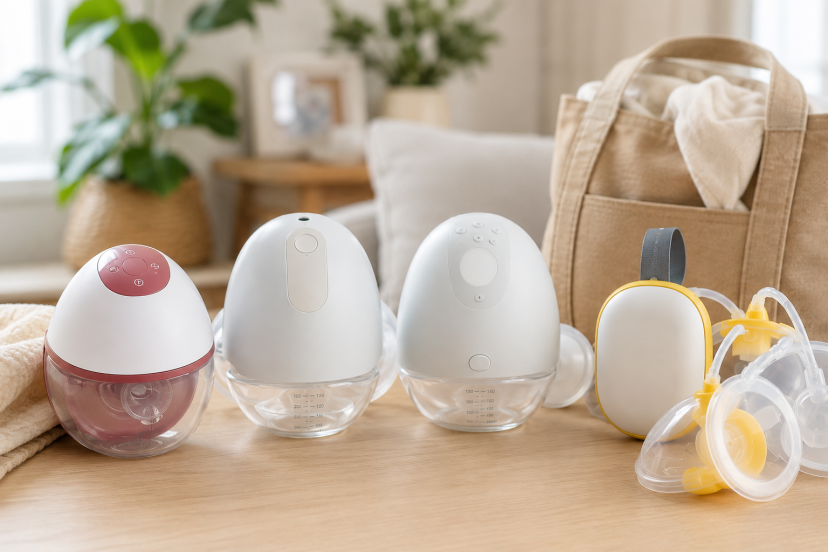
Wearable breast pumps have changed how many parents express milk. Instead of sitting beside an outlet while holding traditional collection bottles, a wearable pump fits inside a supportive bra and collects milk while the user works, travels, prepares meals, or cares for a baby.
The appeal is easy to understand. Pumping several times a day can be physically and mentally demanding, particularly for parents returning to work, exclusively pumping, or managing feeding alongside older children. A wearable pump cannot eliminate that workload, but it may make some sessions easier to fit into a busy schedule.
However, portability does not automatically make every wearable pump comfortable, effective, or suitable as a primary pump. Flange fit, suction pattern, collection capacity, cleaning requirements, battery life, and individual milk response all matter. The U.S. Food and Drug Administration recommends choosing a pump according to where, why, and how frequently it will be used rather than assuming one type works best for everyone.
“Maintaining milk supply depends largely on frequency of milk removal.”
— American College of Obstetricians and Gynecologists
Key Takeaways
- Wearable breast pumps sit inside the bra and allow hands-free milk expression with fewer external components than many traditional pumps.
- They are especially useful for commuting, workplace pumping, travel, multitasking, and occasional sessions away from a wall outlet.
- A wearable pump may not remove milk as effectively as a standard double-electric pump for every user.
- Correct flange sizing is essential for comfort, effective milk removal, and reducing nipple irritation.
- Stronger suction does not necessarily produce more milk and should never be painful.
- Pump parts that contact breast milk should be cleaned after every use.
- The best model depends on pumping frequency, breast shape, milk output, budget, preferred controls, and tolerance for cleaning multiple parts.
- Parents building or protecting milk supply may want to keep a conventional double-electric pump available even when using a wearable model.
Four Wearable Breast Pumps to Consider
Product availability can change, so buyers should confirm the current package contents, flange sizes, warranty, seller, and return conditions before ordering.
1. Momcozy M5 Smart Wearable Breast Pump


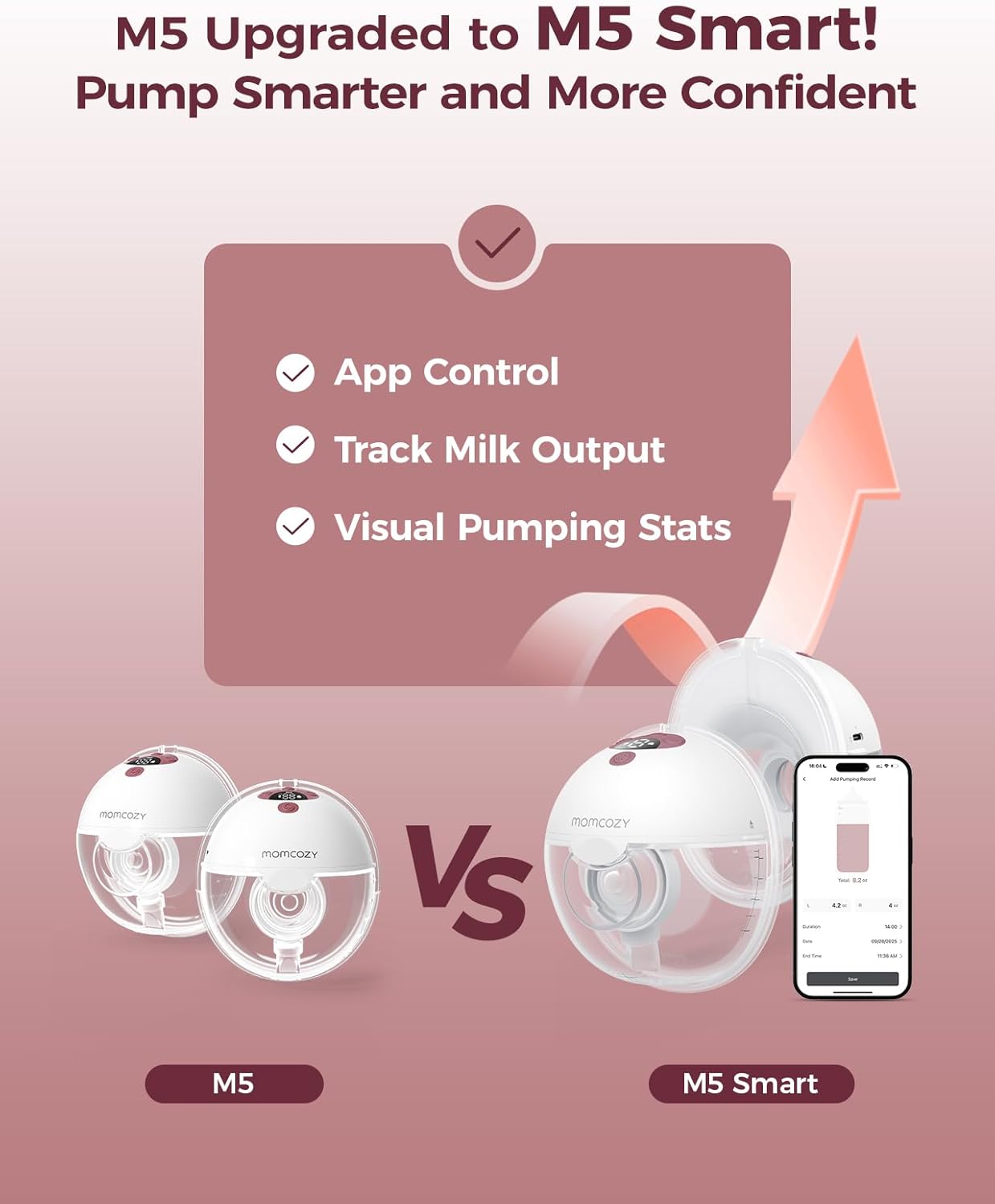
The Momcozy M5 Smart APP Controlled Wearable Breast Pump is a hands-free, cordless electric breast pump designed for parents who want greater flexibility while pumping. Its compact, lightweight design fits comfortably inside most nursing bras, allowing you to pump discreetly at home, at work, or while on the go. The upgraded smart app enables convenient control of pumping sessions, while three pumping modes and nine adjustable suction levels let you personalize your experience for comfort and efficiency.
- Hands-Free Design: Fits inside a nursing bra for discreet, cordless pumping while multitasking.
- Customizable Pumping: Three modes and nine suction levels allow users to personalize comfort and milk expression.
- Smart App Control: Easily start, pause, adjust settings, and monitor pumping sessions directly from a smartphone.
- Standard Flange Size: The included 24mm flange may require separately purchased inserts or shields for a more precise fit.
- Limited Milk Capacity: The wearable collection cups may need to be emptied during longer sessions for parents with higher milk output.
- Premium Price: Costs more than many conventional electric breast pumps, which may not suit every budget.
Best for: Value, app control, and straightforward cleaning
The Momcozy M5 Smart is a fully in-bra, cordless pump with three pumping modes and nine suction levels. The upgraded version allows users to control settings and review sessions through a smartphone app.
At approximately 8 ounces per pump, it is designed to be compact enough for routine hands-free use. Momcozy states that the washable system consists of four main parts, which may appeal to parents who want to minimize assembly and cleaning time. The pump uses food-grade, bisphenol A-free materials and offers multiple sizing options through shields or inserts.
The current product listing describes a 24-millimeter flange, three modes, nine suction settings, wireless operation, and a double-pump package.
Potential advantages
- Fully cordless design
- App-based control
- Multiple suction levels
- Relatively simple assembly
- More accessible price range than many premium pumps
- Compact in-bra motor and cup
Considerations
The motor sits directly on each cup, so the total weight is carried inside the bra. Parents with high output should also watch the fill level carefully and avoid exceeding the recommended collection amount.
2. Willow Go Wearable Breast Pump

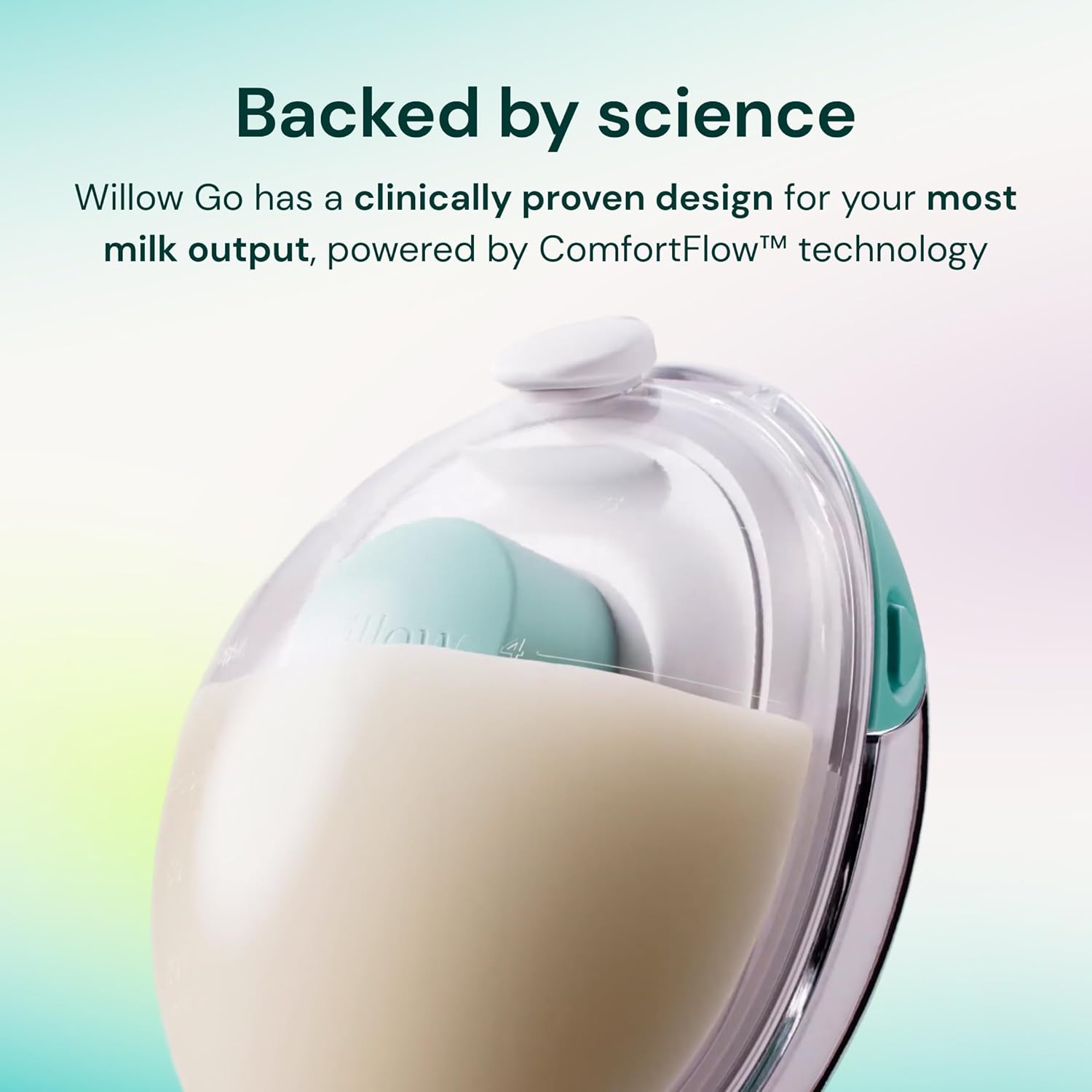
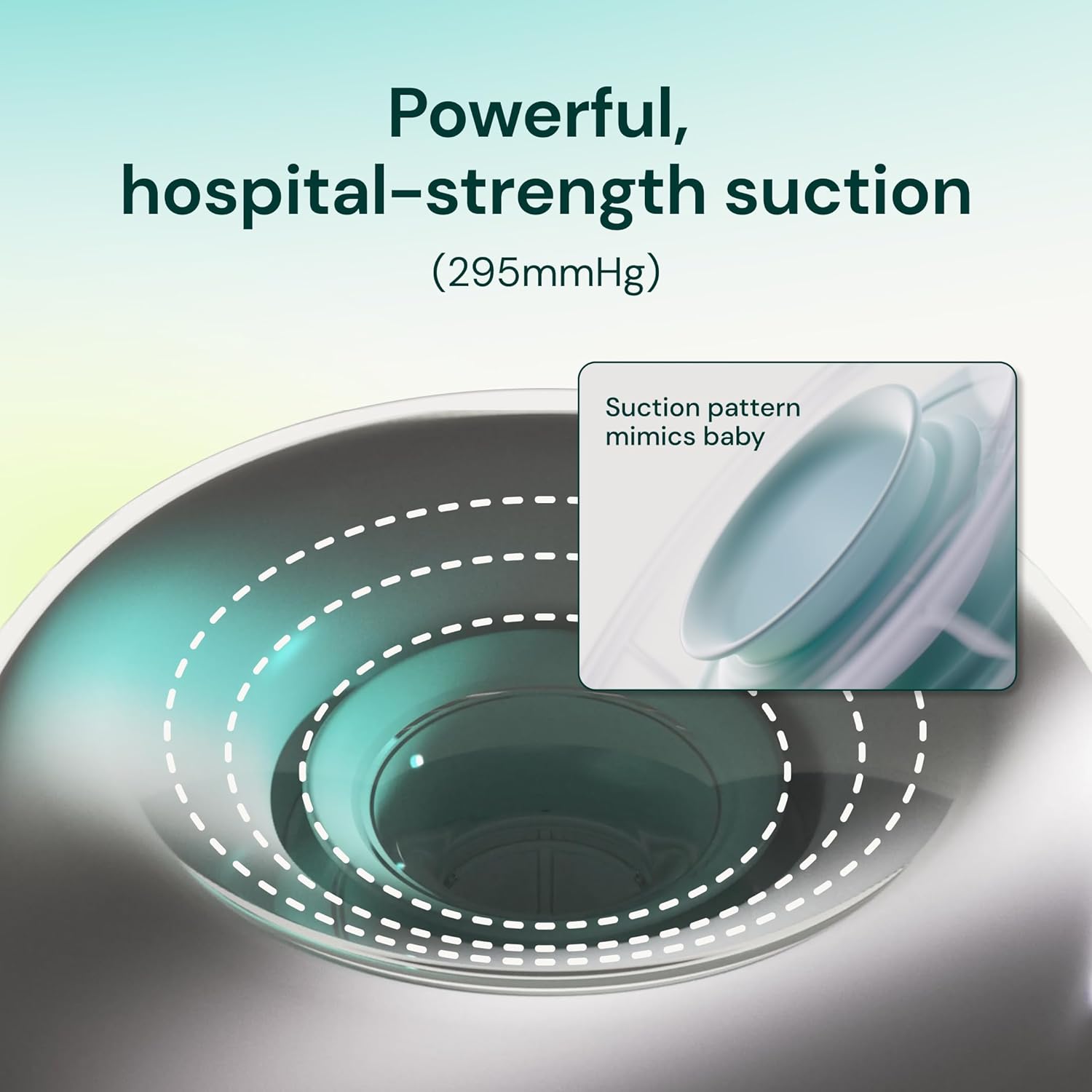
The Willow Go Wearable Breast Pump is a cordless, hands-free double electric breast pump designed for parents who want the flexibility to pump without being tethered to a wall outlet. Featuring a wireless in-bra design, it fits comfortably inside a nursing bra while delivering hospital-grade suction with 15 adjustable levels to help personalize each pumping session. The pump is app-enabled, allowing users to monitor sessions, adjust settings, and track pumping progress from their smartphone.
- Powerful Adjustable Suction: Offers 15 hospital-grade suction levels for a customized and efficient pumping experience.
- Wireless Hands-Free Design: Fits inside a nursing bra without external tubes or cords, allowing greater mobility during pumping sessions.
- App Connectivity: Syncs with the Willow app to track pumping sessions and conveniently adjust settings from a smartphone.
- Higher Price Point: Costs more than many wearable breast pumps, making it a larger upfront investment.
- Limited Container Capacity: The included 5-ounce reusable containers may require emptying during longer sessions for parents with higher milk output.
- Learning Curve: Proper assembly and flange positioning are important for achieving optimal suction and preventing leaks.
Best for: Strong adjustable suction and cordless pumping
The Willow Go is a fully wearable double-electric pump with no external motor or tubing. Its listing describes 15 adjustable suction levels, app connectivity, 5-ounce reusable containers, and included 21- and 24-millimeter flanges.
Because each side operates independently, users can pump one breast or both breasts at the same time. The app can be used to control settings and track sessions without reaching inside the bra.
Potential advantages
- Completely cordless
- Broad range of suction adjustments
- App-enabled controls
- Reusable collection containers
- Single- or double-pumping flexibility
- Two flange sizes included in the listed package
Considerations
The pump contains several pieces that must be correctly assembled to create a seal. It is also more noticeable beneath clothing than some slimmer wearable models. Although the cups are designed for mobility, users generally need to remain upright to help prevent spilling.
3. Elvie Pump

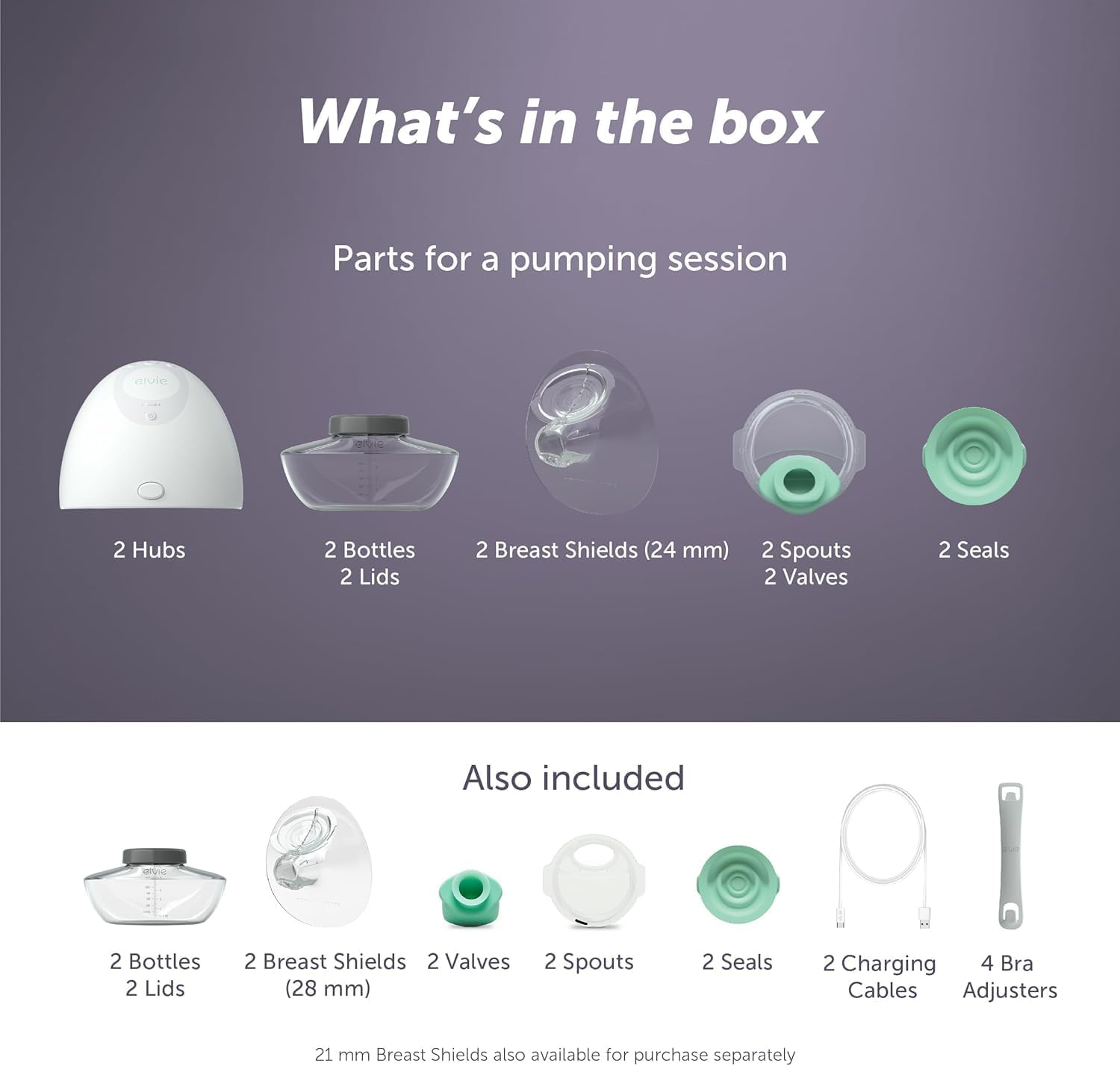
The Elvie Double Wearable Breast Pump is a premium hands-free electric breast pump designed for parents who want a discreet and portable pumping experience. Recognized for its compact, quiet design, the Elvie Pump fits comfortably inside a nursing bra without external tubes or dangling bottles, allowing users to pump more naturally throughout their day. The pump pairs with the Elvie app, providing real-time monitoring, pumping history, and personalized controls directly from a smartphone.
- Ultra-Quiet Design: One of the quietest wearable breast pumps available, making pumping more discreet in shared environments.
- Compact and Comfortable: Lightweight, tube-free design fits inside most nursing bras for hands-free mobility.
- Smart App Integration: Connects to the Elvie app for real-time monitoring, pumping history, and personalized pumping controls.
- Premium Price: One of the more expensive wearable breast pumps on the market.
- Limited Milk Capacity: The collection bottles may need to be emptied during longer sessions for parents with higher milk production.
- Replacement Parts Cost: Accessories such as breast shields, valves, and spouts may increase long-term maintenance costs.
Best for: Quiet operation and a slim, discreet profile
The Elvie Pump is a fully wireless wearable model designed to sit inside a standard nursing bra. It offers stimulation and expression modes with seven intensity settings. The current model includes app control and automated milk tracking.
Each cup can collect approximately 5 ounces. The standard package includes 24- and 28-millimeter breast shields, while other sizing accessories may be purchased separately.
Potential advantages
- Slim in-bra design
- No external tubing
- Quiet operation
- Automatic mode switching
- App-based controls and session tracking
- Suitable for parents prioritizing discretion
Considerations
The Elvie Pump is one of the more expensive choices. App-estimated milk volume should be treated as a convenience rather than a precise measurement. Users with smaller nipples may also need separate cushions or sizing accessories.
4. Medela Freestyle Hands-Free Breast Pump
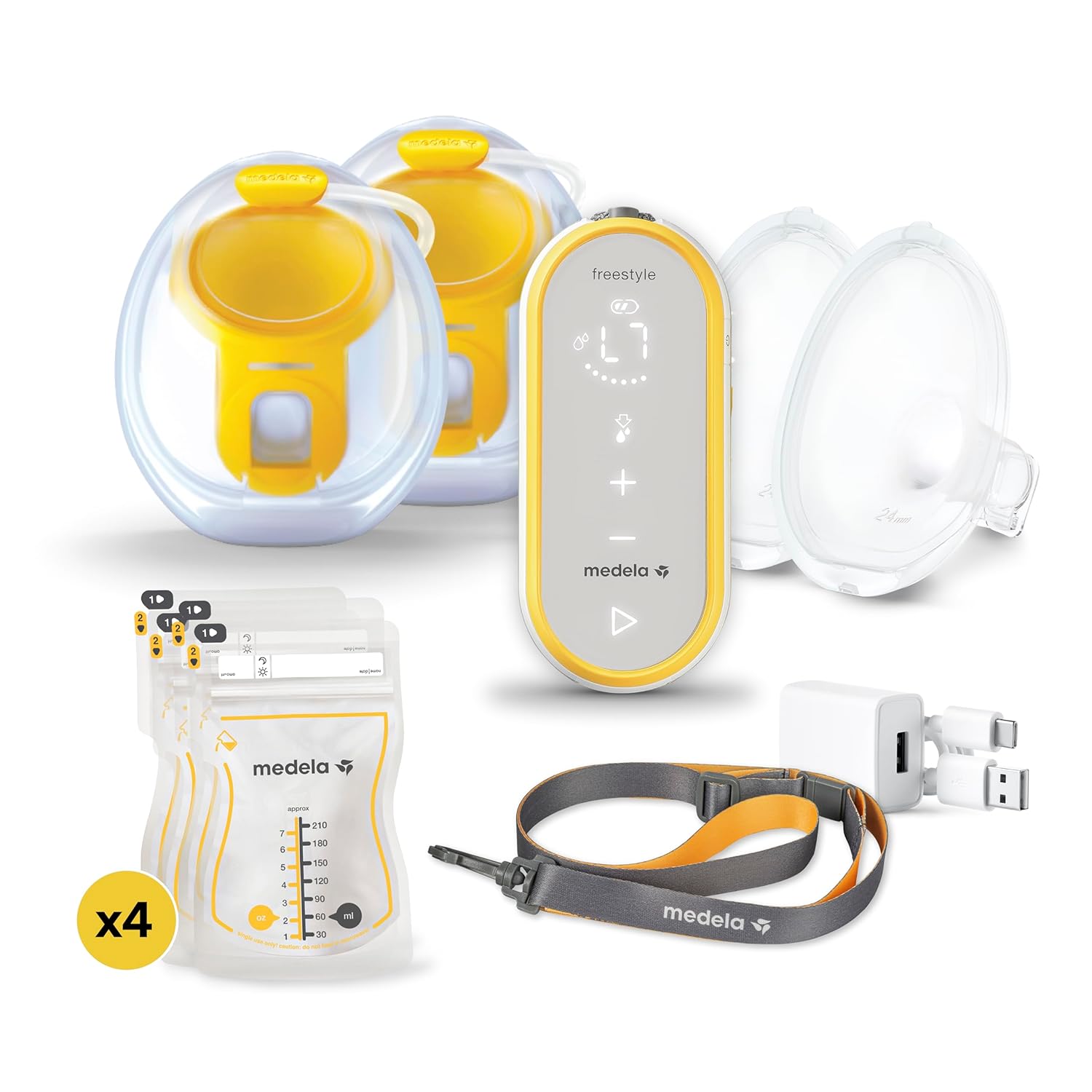
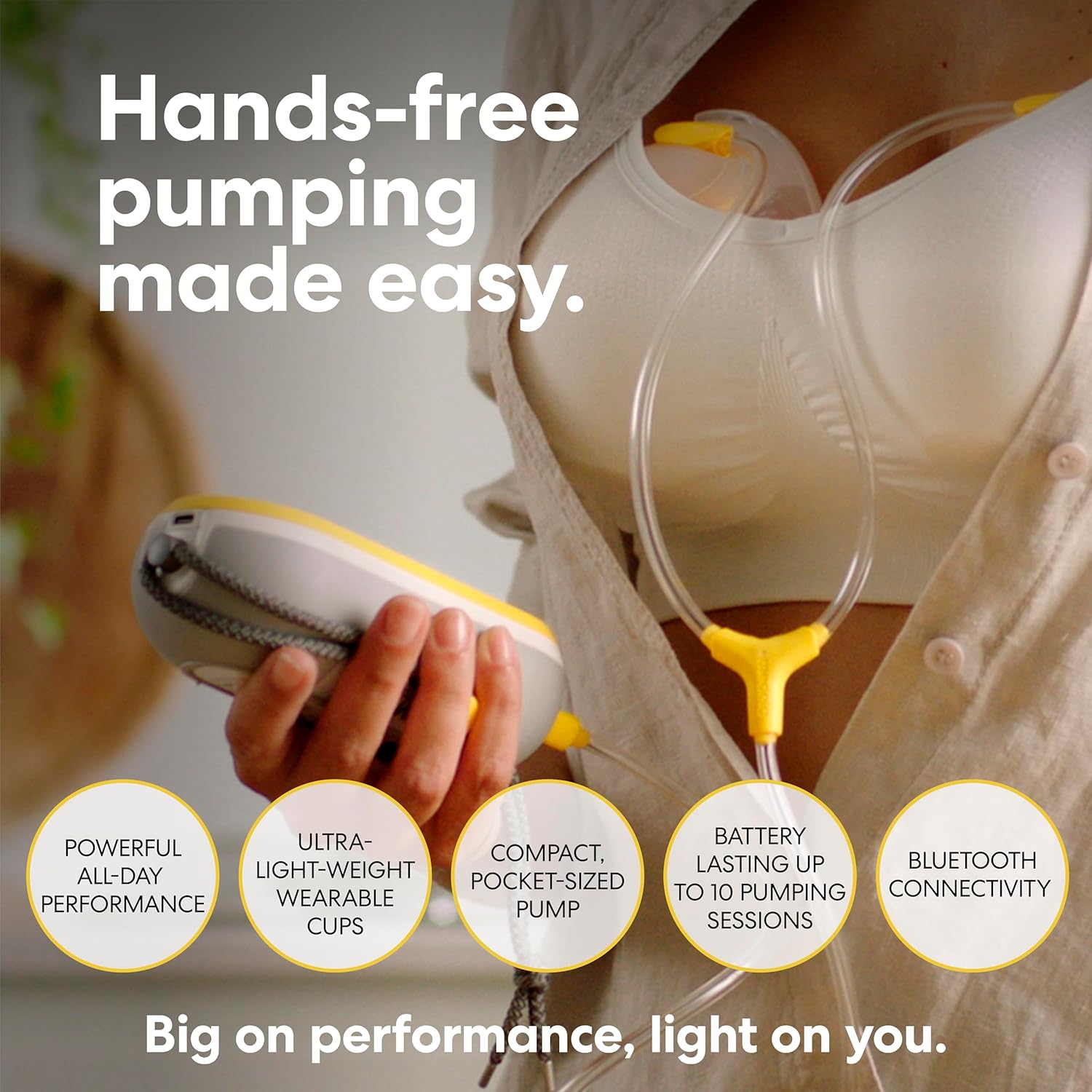

The Medela Freestyle Hands-Free Electric Breast Pump is a portable double electric breast pump designed to combine the trusted performance of a traditional pump with the convenience of wearable collection cups. Unlike fully self-contained wearable pumps, the Freestyle Hands-Free features lightweight in-bra collection cups connected by discreet tubing to a compact rechargeable motor, reducing the weight carried inside the bra while allowing greater freedom to move during pumping sessions.
- Lightweight Wearable Cups: Anatomically designed collection cups are lightweight and comfortable, reducing pressure inside the bra during pumping.
- Portable Rechargeable Motor: Compact external motor offers reliable double-electric pumping while remaining easy to carry throughout the day.
- Smart App Connectivity: Bluetooth pairing with the Medela Family app allows users to track pumping sessions and monitor progress.
- Tubing Required: Unlike fully cordless wearable pumps, the collection cups connect to an external motor with tubing.
- External Motor to Carry: The motor must be clipped to clothing or placed nearby, making it slightly less discreet than all-in-one wearable models.
- Learning Curve: Proper cup positioning and assembly are important to achieve consistent suction and minimize leaks.
Best for: Lightweight collection cups and a separate pocket-sized motor
The Medela Freestyle Hands-Free uses wearable collection cups connected by tubing to a rechargeable external motor. Unlike fully self-contained pumps, the weight of the motor is carried in a pocket or placed nearby rather than sitting entirely inside the bra.
Medela states that each collection cup weighs approximately 2.7 ounces and holds up to 5 ounces of milk. The package includes 21- and 24-millimeter breast shields, two cups, two membranes, tubing, a rechargeable motor, a power adapter, and a USB-C cable.
The current listing describes a rechargeable system with app connectivity and enough battery capacity for multiple pumping sessions.
Potential advantages
- Very lightweight in-bra cups
- Transparent containers for viewing milk flow
- Only a few cup components to assemble
- Two shield sizes included
- Rechargeable, portable motor
- App connectivity
Considerations
The Freestyle is hands-free but not completely cordless because tubing connects the cups to the external motor. Some users may prefer this lighter cup design, while others may want a system contained entirely within the bra.
What Is a Wearable Breast Pump?
A wearable breast pump is a compact electric pumping system designed to fit partially or completely inside a bra. Milk is usually collected in an integrated cup, container, or bag rather than in a bottle hanging outside the clothing.
Most models include:
- A breast shield or flange
- A silicone diaphragm or membrane
- One or more valves
- A milk collection cup
- A rechargeable motor
- Suction and expression controls
- A charging cable
- Optional smartphone connectivity
Some pumps are completely self-contained, meaning the motors sit directly on the collection cups. Others use lightweight in-bra cups connected by tubing to a small motor worn in a pocket or clipped to clothing.
Both styles can be considered hands-free. However, a fully in-bra model generally provides greater freedom from tubing, while a model with an external motor may offer lighter cups or a different suction experience.
How Do Wearable Breast Pumps Work?
Wearable pumps use rhythmic suction to draw the nipple into a tunnel in the breast shield. This suction is intended to stimulate milk release and then express milk into a sealed collection container.
Most electric models offer at least two phases:
Stimulation Mode
This phase uses quicker, lighter suction cycles intended to encourage the milk-ejection reflex, commonly called letdown.
Expression Mode
After milk begins flowing, the pump switches to slower, deeper suction cycles designed to collect milk efficiently.
Many pumps allow the user to adjust suction intensity. Some models also include mixed, massage, or personalized rhythm settings.
The highest setting is not automatically the most effective. Pumping should feel like firm, rhythmic pulling without pinching, scraping, or sharp pain. Excessive suction can cause swelling that restricts milk flow and makes later sessions uncomfortable.
Benefits of Wearable Breast Pumps
More Freedom to Move
Traditional pumps often require the user to remain close to a power outlet or carry bottles and tubing outside the bra. A wearable model can make it easier to walk around, answer emails, prepare food, commute, or complete light household tasks.
Movement may still need to be limited. Bending deeply, exercising, lying down, or lifting heavy objects can affect the pump’s seal and increase the risk of leaking.
Easier Workplace Pumping
Battery-powered pumps may be useful for parents who pump at work, particularly when they must transport equipment between locations. The FDA specifically identifies portability and battery power as useful considerations for people pumping away from home.
A wearable design may also reduce setup time, although users still need access to a private pumping space, clean hands, milk storage, and a suitable place to wash components.
Greater Discretion
Wearable pumps fit beneath clothing and are generally less visually noticeable than pumps with external bottles. Some are also designed to operate quietly.
They are not invisible, however. Collection cups can create additional fullness beneath a shirt, and the pump motor may be audible in a quiet office or meeting room.
Convenient Secondary Pump
A wearable model can work well as a secondary device for errands, travel, commuting, or sessions when using a full-size pump is inconvenient.
This allows parents to use a stronger or more familiar conventional pump for their main sessions while keeping the wearable option for flexibility.
App-Based Session Tracking
Some wearable pumps connect to a smartphone app that can record session length, suction settings, estimated milk volume, and pumping history.
These tools can be helpful, but milk-volume estimates may not always match the actual amount in the container. The collected milk should be checked directly before it is logged, stored, or divided into feeding portions.
Possible Limitations
Milk Output May Differ
Some users produce the same amount with a wearable pump as they do with a traditional system. Others notice lower output, slower milk removal, or less complete breast drainage.
This does not necessarily mean the pump is defective. Differences may result from flange size, nipple alignment, suction rhythm, bra pressure, breast anatomy, or an individual response to the motor.
Because regular milk removal plays an important role in maintaining supply, consistently incomplete pumping may be a concern for parents who exclusively pump or are establishing production.
Correct Placement Can Be Difficult
Once the pump is inside the bra, nipple alignment may be harder to see than with a transparent traditional flange. Poor alignment can cause friction, pain, reduced output, or swelling.
Transparent shields, alignment markers, mirrors, or phone flashlights may help during setup.
More Parts to Inspect
Wearable pumps often rely on several silicone seals, valves, membranes, and collection-cup connections. Even a small assembly error can lead to weak suction or leaking.
Worn valves and damaged membranes may also reduce performance over time.
Collection Capacity Is Limited
Many wearable cups hold around 5 ounces per side, although usable capacity varies. Parents with higher milk output may need to stop mid-session and empty the container.
The pump should not be filled beyond the manufacturer’s stated limit. Overfilling may cause leaks or allow milk to reach areas that are difficult to clean.
Wearable Does Not Mean Completely Unrestricted
Most wearable pumps are designed for upright, moderate activity. They may leak if the user lies down, bends forward significantly, runs, or makes abrupt movements.
How to Choose the Right Wearable Pump
Decide Whether It Will Be Your Primary Pump
Occasional users may prioritize portability, simple controls, and price. Exclusive pumpers may place greater importance on dependable milk removal, replacement-part availability, battery life, and the ability to complete several sessions each day.
A wearable pump can be a primary device for some people, but others achieve better results by combining it with a standard double-electric pump.
Check Flange and Insert Sizes
Flange size refers primarily to the tunnel surrounding the nipple, not overall breast size. A flange that is too small may cause rubbing or restrict nipple movement. A flange that is too large may pull excessive areola tissue into the tunnel.
Signs of a poor fit can include:
- Pinching or sharp discomfort
- Nipple whitening
- Excessive areola movement
- Swelling after pumping
- Repeated nipple damage
- Low output despite a full-feeling breast
- Loss of suction
Nipple size may also change during the postpartum period, so the original flange may not remain appropriate indefinitely.
Compare Cup Weight and Profile
Fully cordless pumps place both the motor and collected milk inside the bra. The cups become heavier as they fill.
A separate-motor system may feel lighter on the breasts, although it introduces tubing and requires somewhere to carry the motor.
Review Cleaning Requirements
Count the parts that must be disassembled, washed, dried, and reassembled. Pay attention to narrow channels, silicone creases, and areas where milk could become trapped.
The FDA advises cleaning every component that contacts breast milk after each use.
Consider Replacement Parts
Valves, membranes, seals, shields, and collection containers may need periodic replacement. Before choosing a pump, check whether these parts are easy to order and reasonably priced.
Check Insurance Coverage
Many health plans cover breast pumps and breastfeeding support, although the exact pump choices, upgrade fees, suppliers, and replacement schedules vary. ACOG notes that most insurance plans must provide breast-pump coverage under federal requirements.
Parents can contact their insurer or approved durable medical equipment supplier before paying the full retail price.
How to Use a Wearable Breast Pump Effectively
Start with clean hands and correctly assembled, dry components. Center the nipple in the flange tunnel before securing the bra.
The bra should hold the cups firmly enough to maintain a seal without compressing the breasts excessively. Begin with a low or moderate suction setting and increase it only to a comfortable level.
During the first few sessions:
- Pump in front of a mirror
- Check nipple alignment
- Remain upright
- Watch for leaks
- Compare output with your usual pump
- Inspect the nipple and breast afterward
- Confirm that both breasts feel softer
If output is repeatedly lower, try adjusting the flange size, bra tension, suction level, pumping duration, or nipple position.
Persistent pain, nipple damage, recurrent plugged areas, or concerns about milk supply should be discussed with a physician, pediatrician, or qualified lactation professional.
Cleaning and Sanitizing Wearable Pump Parts
After each session, transfer the milk into an appropriate feeding or storage container and separate every washable component.
The Centers for Disease Control and Prevention recommends cleaning pump parts after each use. Components should be rinsed and washed in a clean basin or dishwasher when permitted by the manufacturer, then allowed to air-dry completely.
The motor and charging components should never be submerged unless the manufacturer specifically states otherwise.
Daily sanitizing provides additional protection and is especially important when the baby is younger than 2 months, was born prematurely, or has a weakened immune system.
Never reassemble damp parts for storage. Trapped moisture can encourage microbial growth and may interfere with the pump’s seal.
Are Wearable Breast Pumps Worth It?
A wearable pump may be worth the investment when it removes a meaningful barrier to regular pumping. Parents who commute, travel, return to work, care for multiple children, or struggle to remain seated during sessions may benefit substantially from hands-free mobility.
However, wearability should not be the only deciding factor. A lower-cost traditional pump that fits well and removes milk effectively may provide better value than an expensive wearable model that is uncomfortable or produces inconsistent output.
For many families, the most practical arrangement is not choosing one pump for every situation. A standard double-electric pump can remain the dependable home or primary option, while a wearable pump handles commuting, errands, workplace sessions, and busy periods.
Frequently Asked Questions
1. Can a wearable breast pump be used as a primary pump?
Yes, some parents successfully use a wearable model as their main pump. Effectiveness varies, however. Parents exclusively pumping, establishing supply, or experiencing low output should monitor whether the pump consistently softens the breasts and produces expected volumes. A conventional double-electric pump may still be useful as a backup.
2. Do wearable pumps produce less milk?
They can produce less milk for some users, but not for everyone. Output depends on flange fit, suction rhythm, nipple placement, session length, bra pressure, milk supply, and the body’s response to the pump. Compare several similar sessions rather than judging performance from one attempt.
3. How long should a wearable pumping session last?
There is no universal session length. Many sessions last approximately 15 to 30 minutes, but individual needs vary. Follow the pump manufacturer’s instructions and stop if pumping becomes painful. Session frequency and effective milk removal are generally more important than extending an unproductive session.
4. Can a wearable pump be used while driving?
Manufacturers may advertise mobility, but placing, adjusting, emptying, or troubleshooting a pump while driving can be distracting. The safest approach is to position and start the pump before the vehicle moves and avoid touching it until safely parked. Local distracted-driving laws should also be followed.
5. Can wearable breast pump parts be refrigerated between sessions?
CDC and pump manufacturers recommend cleaning milk-contact parts after every use. Refrigerating used parts does not replace proper cleaning and may be especially inappropriate for young, premature, or medically vulnerable babies.
Final Thoughts
Wearable breast pumps can make milk expression more flexible, private, and manageable, but convenience should be balanced with comfort, hygiene, and effective milk removal.
The best pump is not necessarily the quietest, strongest, smallest, or most expensive model. It is the one that fits correctly, supports the parent’s pumping routine, removes milk comfortably, and can be cleaned and maintained consistently.
Before purchasing, compare flange sizes, cup weight, milk capacity, battery life, replacement-part costs, insurance eligibility, warranty coverage, and whether the device will serve as a primary or secondary pump. Parents experiencing pain, nipple injury, reduced output, or concerns about infant feeding should seek personalized support from a qualified healthcare or lactation professional.