How Much Should a Baby Eat? A Complete Feeding Guide by Age
*We may earn a commission for purchases made using our links. Please see our disclosure to learn more.
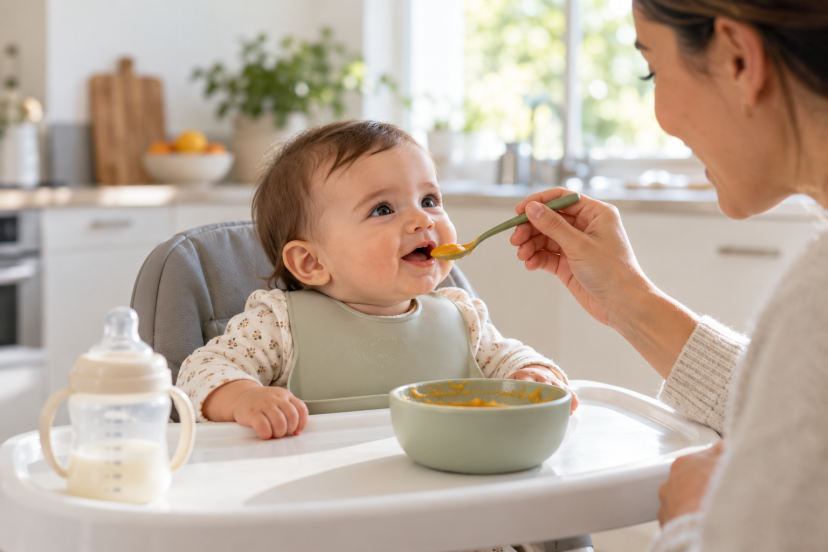
One of the biggest questions new parents have is simple: How much should a baby eat? Unfortunately, babies do not come with measuring lines on their stomachs, and the answer changes rapidly during the first year of life.
A newborn may eat every couple of hours, while an older baby may take larger milk feedings and gradually add breakfast, lunch, dinner, and snacks. Breastfed babies can also make intake especially difficult to measure because there is no bottle showing exactly how many ounces they consumed.
The reassuring part is that feeding does not have to revolve around hitting a perfect number. For most healthy, full-term babies, age-based feeding ranges are best viewed as a guide. Your baby’s hunger and fullness signals, growth pattern, diaper output, development, and pediatrician’s advice provide a more complete picture.
The CDC says breastfed newborns commonly feed 8 to 12 times in 24 hours, while formula-fed newborns may also eat 8 to 12 times daily during their first days. As babies grow, they generally take more milk at each feeding and can go longer between feedings.
“In general, babies should be fed whenever they seem hungry.”
— American Academy of Pediatrics, HealthyChildren.org
Key Takeaways
Newborns Eat Small Amounts Often
During the first days of life, babies typically need small, frequent feedings because their stomachs are still very small.
Feeding Frequency Changes With Age
Newborns may feed 8 to 12 times in 24 hours, while older babies generally take more milk at each feeding and eat less frequently.
Formula Amounts Gradually Increase
Formula-fed babies usually begin with smaller bottles and gradually take larger amounts as they grow and their feeding needs change.
Solids Usually Begin Around 6 Months
When a baby shows developmental readiness, small amounts of complementary foods can generally be introduced at around 6 months.
Milk Remains the Main Nutrition Source
Breast milk or infant formula continues to provide most of a baby’s nutrition as solid-food intake gradually increases during the first year.
Follow Hunger and Fullness Cues
Watch your baby’s signals instead of requiring them to finish every bottle or serving. Appetite naturally varies from feeding to feeding.
Growth Matters More Than a Perfect Number
Feeding charts are helpful reference points, but your baby’s growth, diaper output, development, hunger cues, and pediatrician’s guidance provide a better picture of whether they are eating enough.
Four Helpful Baby Feeding Products
Feeding equipment does not determine how much your baby needs to eat, but the right tools can make feeding easier.
Philips Avent Natural Response Baby Bottle


The Philips Avent Natural Baby Bottles, Slow Flow, 4 oz, 4-Pack are designed to support both breast and bottle feeding with a soft, breast-shaped nipple that encourages a natural latch. The baby-paced flow allows milk to release as your baby actively drinks, helping create a more natural feeding rhythm.
- Baby-Paced Flow: Milk releases as the baby actively drinks, supporting a more natural feeding pace.
- Breast-Shaped Nipple: Soft nipple design may make switching between breast and bottle easier for some babies.
- Easy to Clean: Simple bottle construction makes washing and reassembly straightforward.
- Small Capacity: The 4-ounce size may be outgrown quickly as a baby's feeding volume increases.
- Flow Preference Varies: Some babies may need a different nipple flow depending on their feeding style.
- Adjustment Period: Babies accustomed to faster-flow nipples may need time to adapt to the baby-paced design.
The Philips Avent Natural Response Baby Bottle is designed so milk flows when the baby actively drinks rather than continuously flowing from the nipple. That can make it useful for families combining breast and bottle feeding.
Different nipple-flow levels are available, so the appropriate flow should be based on the baby’s feeding ability rather than age alone. Philips advises letting the baby’s drinking pattern help determine the right flow.
Dr. Brown’s Natural Flow Anti-Colic Options+ Baby Bottles


The Dr. Brown's Anti-Colic Options+ Narrow Baby Bottle, 4 oz, 4-Pack is designed for newborn feeding with a slow-flow nipple and an internal vent system intended to help reduce air intake during feeding. Its anti-colic design may help minimize issues such as gas, spit-up, burping, and feeding discomfort for some babies.
- Anti-Colic Vent System: Designed to reduce air intake during feeding, which may help with gas, burping, and spit-up.
- Newborn-Friendly Flow: Includes Level 1 slow-flow nipples suitable for babies from birth.
- Flexible Design: Bottles can be used with or without the internal vent as your baby's feeding needs change.
- More Parts to Clean: The internal vent system adds extra components that require washing after use.
- Small Capacity: The 4-ounce size may become less practical as your baby begins taking larger feedings.
- Narrow Opening: Adding powdered formula or cleaning by hand may feel less convenient than with wider-neck bottles.
Dr. Brown’s Natural Flow Anti-Colic Options+ bottles are another practical option for bottle-fed babies. The system uses an internal vent and is designed for controlled feeding and reduced air intake.
The bottles come in different sizes and nipple-flow options, making it possible to adapt the setup as feeding needs change.
ezpz Mini Mat
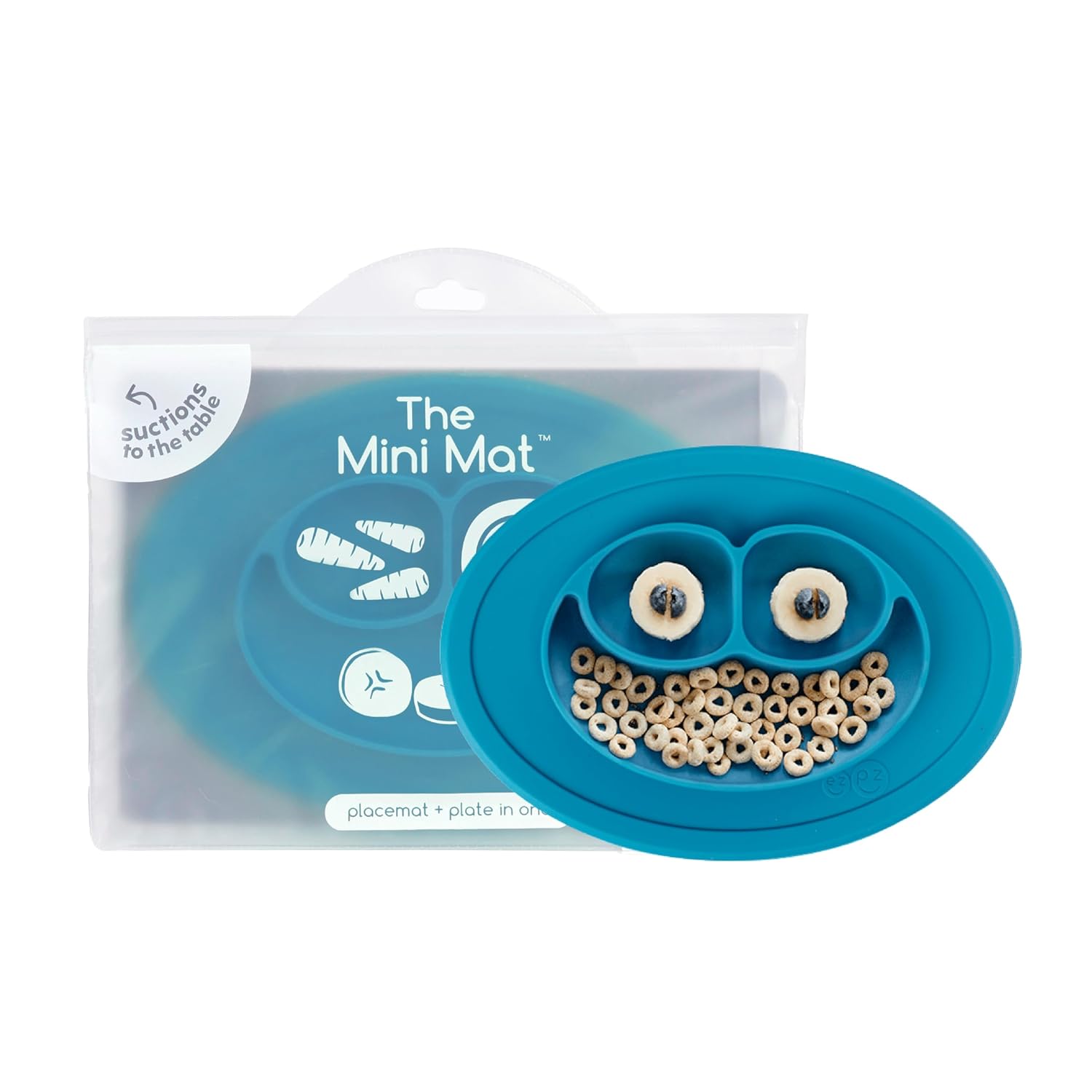
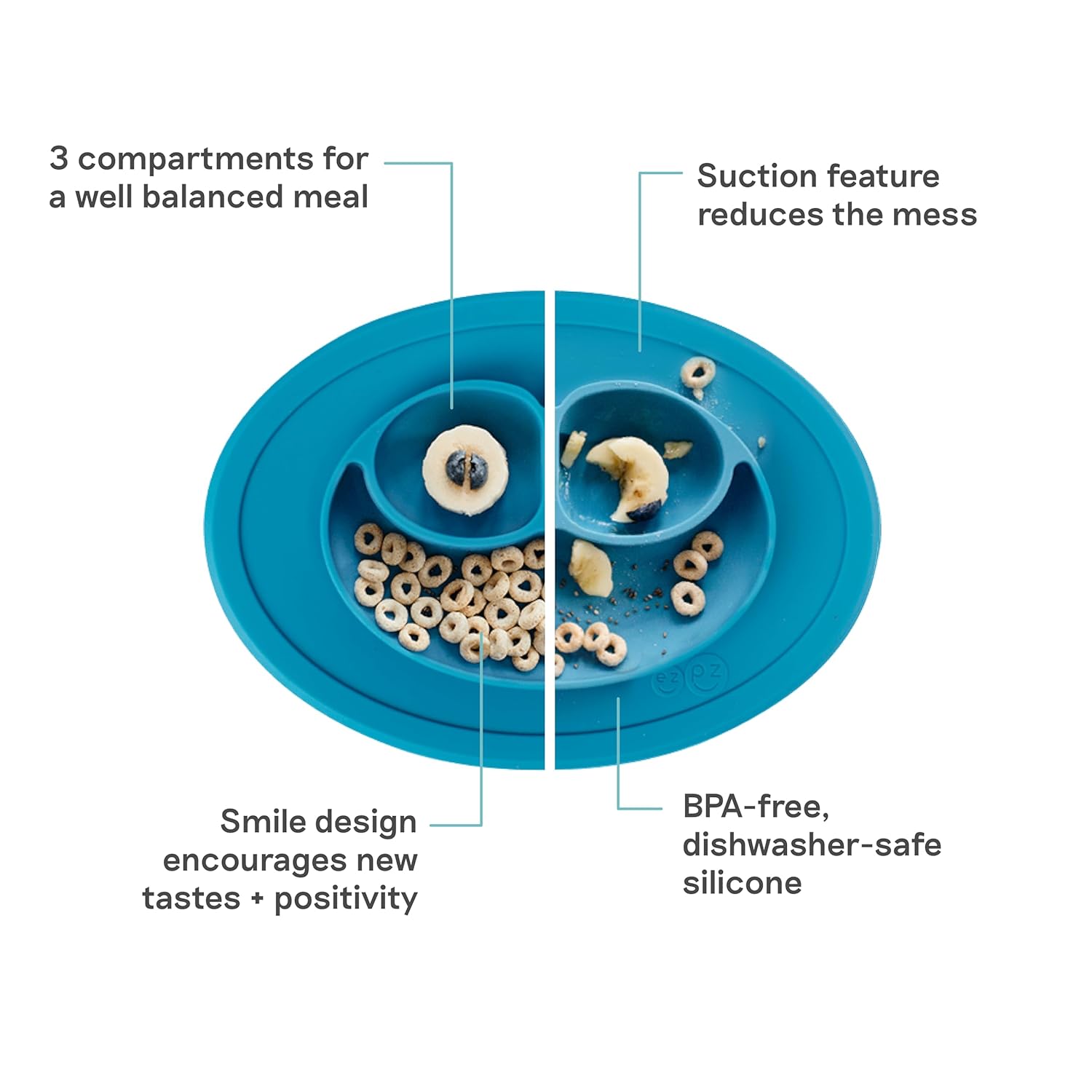
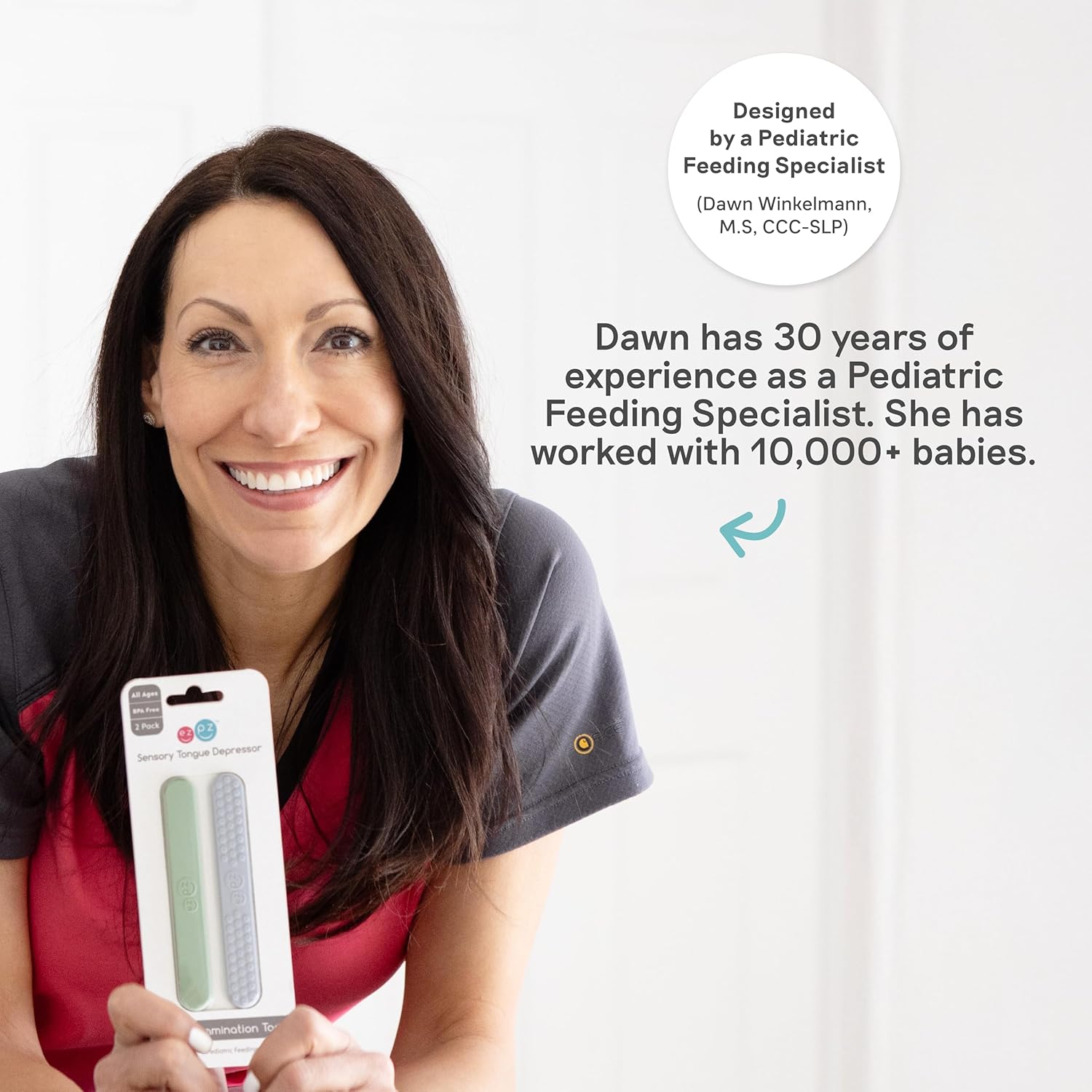
The ezpz Mini Mat is a silicone suction placemat and divided plate designed to make early self-feeding easier and less messy. Its all-in-one design helps keep the plate in place on compatible highchair trays and tables, which can be especially useful for babies learning to scoop, grab, and explore food independently.
- Strong Suction Base: Helps keep the plate in place and can reduce spills and plate tossing during meals.
- Three Compartments: Makes it easy to serve different foods and textures in one meal.
- Baby-Led Weaning Friendly: Designed to support independent eating and self-feeding skills.
- Surface Compatibility: Suction may work better on some smooth surfaces than on textured tables or highchair trays.
- Limited Capacity: The compact size may feel small as a child's appetite and portion sizes increase.
- Single-Piece Design: The attached mat takes up more storage space than a standard standalone plate.
Once solids begin, the ezpz Mini Mat provides a silicone divided plate integrated with a suction-style placemat.
It is designed for babies around the complementary-feeding stage and can be useful when babies begin experimenting with self-feeding. The separate food sections also make offering several textures or food groups straightforward.
Munchkin Miracle 360 Trainer Cup


The Munchkin Miracle 360 Trainer Sippy Cup with Handles, 7 oz, 2-Pack is designed to help babies transition from bottles to independent cup drinking. Its 360-degree drinking edge allows a child to sip from anywhere around the rim without needing a traditional spout.
- 360-Degree Drinking Rim: Allows babies to drink from any side of the cup while practicing an open-cup-style drinking motion.
- Spill-Resistant Design: The rim automatically seals after drinking to help minimize leaks and messes.
- Easy-Grip Handles: Dual handles give small hands a secure place to hold the cup while developing independent drinking skills.
- Learning Curve: Some babies may need time to understand how to press and drink from the 360-degree rim.
- Not Completely Leakproof: Liquid may still escape if the cup is dropped forcefully or handled roughly.
- Valve Requires Cleaning: The removable drinking valve should be taken apart and cleaned thoroughly to prevent residue buildup.
The Munchkin Miracle 360 Trainer Cup is a spoutless transition cup that allows drinking around the rim.
As babies become developmentally ready to practice drinking from a cup, a handled trainer cup can help them build independence. It should complement, not prematurely replace, the breast milk or formula that remains nutritionally important during the first year.
How Much Should a Newborn Eat?
Newborn stomachs are small, so frequent feeding is normal.
For a formula-fed newborn during the first few days, the CDC recommends starting by offering about 1 to 2 ounces of formula every 2 to 3 hours. Many newborns feed 8 to 12 times in a 24-hour period.
Breastfed newborns may want to nurse even more frequently at certain times. During the first days, breastfeeding may occur every 1 to 3 hours. Over the following weeks, many exclusively breastfed babies settle into feeds every 2 to 4 hours, although periods of cluster feeding, sometimes every hour, can occur.
Rather than expecting every feeding to look identical, watch the overall pattern. One feed may be long, while another may be short.
Newborns can also be sleepy. Your pediatrician may recommend waking a young baby for feeds, particularly before the baby has regained birth weight or if there are concerns about growth.
Baby Feeding Amounts by Age
The following feeding chart provides general reference points rather than rigid requirements.
| Baby’s Age | Typical Feeding Pattern |
|---|---|
| First days | Formula-fed babies may start with 1–2 oz every 2–3 hours; breastfed babies may nurse every 1–3 hours |
| First few weeks | Milk feedings remain frequent, usually 8–12 times per day for many newborns |
| Around 1 month | Many formula-fed babies take about 3–4 oz every 3–4 hours |
| 2–5 months | Feeding amounts generally increase while the number of daily feeds gradually decreases |
| Around 6 months | Many formula-fed babies take 6–8 oz at 4–5 feedings daily; solid foods can begin when developmentally ready |
| 6–9 months | Breast milk or formula remains the main nutrition source while solids gradually increase |
| 9–12 months | Milk remains important while babies increasingly participate in regular meals and eat a wider variety of appropriate solid foods |
The American Academy of Pediatrics notes that by approximately 6 months, formula-fed babies may consume 6 to 8 ounces at each of four or five feedings in 24 hours. However, a baby should not be pressured to finish those amounts if they are signaling fullness.
How Much Formula Should a Baby Eat?
Parents who formula-feed can see exactly how many ounces their baby takes, which can be both helpful and stressful.
The AAP provides a general formula estimate of approximately 2½ ounces of formula per pound of body weight per day. For example, that rough calculation would equal around 30 ounces for a 12-pound baby.
However, it is an average, not a prescription.
According to the AAP, babies generally should not regularly consume more than an average of about 32 ounces of formula per day unless their pediatrician recommends otherwise.
Growth spurts can temporarily change feeding patterns. A baby who normally finishes 4 ounces may suddenly seem hungry afterward, or may want bottles more frequently for several days.
Instead of automatically making dramatically larger bottles, increase gradually and watch the baby’s response.
How Much Breast Milk Should a Breastfed Baby Eat?
Direct breastfeeding works differently because parents cannot normally measure milk intake in ounces.
That does not mean you need to.
Feeding frequency, swallowing, contentment after feeds, appropriate wet diapers, and steady growth are often more useful indicators.
The CDC reports that most breastfed babies feed approximately 8 to 12 times per 24 hours during the early weeks and months. Some may feed every two to four hours, while others occasionally cluster-feed much more frequently.
If you are pumping breast milk, bottle amounts may differ from formula amounts. Avoid assuming your baby must consume the same volume simply because another similarly aged baby does.
If your baby’s weight gain, diaper output, latch, milk transfer, or feeding behavior concerns you, a pediatrician or qualified lactation professional can assess the situation more accurately than an online feeding chart.
How Much Should a 6-Month-Old Eat?
Six months is a major transition point because many babies are ready to begin complementary foods.
The CDC and AAP recommend introducing foods other than breast milk or infant formula at around 6 months. Starting solid foods before 4 months is not recommended.
Readiness matters just as much as the calendar. Signs include being able to control the head and neck, sitting alone or with support, opening the mouth when food is offered, swallowing rather than automatically pushing food out, and bringing objects toward the mouth.
For first foods, portions can be surprisingly small.
The CDC suggests beginning with approximately 1 or 2 tablespoons of food and watching the baby’s response.
A few spoonfuls may therefore be an entirely successful meal.
At this age, solids complement milk rather than immediately replacing it. Breast milk and/or infant formula continues to provide most of a baby’s nutrition.
How Much Should a 7- to 9-Month-Old Eat?
Between about 7 and 9 months, babies generally become more comfortable eating solids.
Some may eat two or three small meals per day while continuing their normal breast or formula feedings. Others need more time.
Food textures can gradually advance as the baby’s oral and motor skills develop. Meals can include appropriately prepared foods from multiple food groups rather than relying exclusively on purées.
Do not judge intake by whether the plate is clean.
Some days a baby may eagerly eat several tablespoons. On another day, they may take only a few bites. Teething, illness, distraction, growth changes, sleep, and activity can all affect appetite.
The important trend is the baby’s overall nutrition and growth, not one meal.
How Much Should a 9- to 12-Month-Old Eat?
Toward the end of the first year, many babies begin moving toward a more predictable meal routine.
They may have three meals along with milk feeds and eventually snacks. Breast milk or formula still matters during this period.
The CDC states that between 6 and 12 months, breast milk and/or infant formula remains the main source of nutrition, although solid foods gradually make up a larger percentage of the baby’s diet.
As babies become more experienced eaters, portions often grow naturally.
This is also an important period for learning self-feeding skills. Babies may practice picking up appropriately sized soft foods, drinking from a cup, using a spoon with help, and joining family meals.
How to Tell When Your Baby Is Hungry
Watching feeding cues is one of the best ways to answer “how much should a baby eat?” for your particular child.
For babies from birth through about 5 months, early hunger signals may include bringing hands toward the mouth, turning the head toward the breast or bottle, puckering or licking the lips, and keeping the hands clenched.
Crying can indicate hunger, but the CDC describes crying as a late hunger cue. Feeding while a baby is still calm can sometimes make nursing or bottle-feeding easier.
Older babies may reach toward food, open their mouths when food approaches, become excited when they see food, or use sounds and gestures to ask for more.
How to Tell When Your Baby Is Full
Knowing when to stop is just as important as knowing when to begin.
A younger infant may close their mouth, turn away from the breast or bottle, relax their hands, slow their sucking, or become distracted.
An older baby eating solids may push food away, refuse to open their mouth, turn their head, or signal that they are finished.
Respect these cues.
The CDC specifically advises allowing children to decide how much they want rather than requiring them to finish a bottle, jar, or plate.
Pressure can make feeding unnecessarily stressful for both parent and baby.
Can You Overfeed a Baby?
Overfeeding is possible, particularly with bottles because milk may flow faster and the caregiver can see how much remains.
The AAP recommends paying attention to fullness cues and avoiding pressure to finish a bottle. Babies who consume more than they need may experience increased spit-up, vomiting, gas, or abdominal discomfort.
Paced bottle feeding can help. Hold the baby upright, allow pauses, and give them opportunities to decide whether they want more.
Also remember that sucking can be comforting. A baby who wants to suck does not necessarily need another full feeding.
How Do You Know If Your Baby Is Eating Enough?
One feeding rarely tells the entire story.
Look at patterns over time.
A pediatrician evaluates growth using weight, length, head circumference, developmental progress, and other factors. Diaper output also provides useful information, particularly during the newborn period.
If your baby consistently refuses feeds, seems unusually sleepy or difficult to wake for feeds, has noticeably fewer wet diapers, is repeatedly vomiting, appears dehydrated, or is not gaining weight as expected, contact your pediatrician promptly.
Premature babies and babies with medical conditions may need individualized feeding schedules, calorie goals, or special formula. General feeding charts should not replace those instructions.
The Bottom Line
So, how much should a baby eat?
There is no single perfect number.
During the newborn stage, feeding is frequent and portions are small. Over the next several months, babies generally consume more milk per feeding while eating less frequently. At around 6 months, developmentally ready babies can begin small amounts of solid food, but breast milk or infant formula remains the primary nutrition source throughout the transition.
Use feeding charts to understand what is typical, not as a requirement your baby has to meet.
The most useful approach is responsive feeding: offer appropriate food or milk when your baby shows hunger, pause when needed, and stop when your baby signals fullness.
If your baby’s growth and development are on track, their diaper output is appropriate, and their pediatrician is satisfied with their progress, day-to-day variations in appetite are usually much less important than they seem.
Frequently Asked Questions
1. How many ounces should a baby eat at each feeding?
It depends on age and feeding method. During the first days, a formula-fed newborn may take only 1 to 2 ounces per feed. By the end of the first month, many take approximately 3 to 4 ounces. By around 6 months, many formula-fed babies take about 6 to 8 ounces at a feeding. Individual needs can differ significantly, so hunger and fullness cues matter more than forcing a specific amount.
2. How often should a newborn eat?
Many newborns eat 8 to 12 times every 24 hours. Breastfed newborns may feed every 1 to 3 hours during the first days, while formula-fed newborns may initially feed approximately every 2 to 3 hours. Feeding frequency gradually decreases as babies become able to take larger amounts.
3. Should I wake my newborn to eat?
Sometimes. Young newborns may need to be awakened for feeds, particularly if they have not regained their birth weight, are sleeping through scheduled feeds, were born prematurely, or have another medical concern. The AAP notes that during the first weeks, babies sleeping long enough to miss feedings may need to be awakened. Follow your baby’s pediatrician’s recommendations because the answer depends on age, weight gain, and health.
4. When should a baby start eating solid food?
Most babies can begin solid foods at around 6 months when they show developmental signs of readiness. The CDC notes that introducing solids before 4 months is not recommended. Readiness signs include adequate head and neck control, sitting with support, opening for offered food, and being able to swallow food instead of immediately pushing it out.
5. Should my baby finish every bottle?
No. A baby does not need to finish every bottle. Turning away, closing the mouth, relaxing the hands, slowing sucking, or losing interest can indicate fullness. The CDC recommends letting children determine how much they want to consume rather than requiring them to empty a bottle or plate. Responsive feeding helps parents recognize when their baby’s needs change from one feeding to the next.
This article provides general educational information and is not a substitute for individualized medical advice. Feeding needs may differ for premature babies, babies with medical conditions, or children with growth concerns. Discuss individualized feeding questions with your pediatrician.