The Essential Guide to Organic Baby Towels
*We may earn a commission for purchases made using our links. Please see our disclosure to learn more.
Bath time is one of the most cherished moments between parents and their little ones, and choosing the right towel can make all the difference. Organic baby towels have surged in popularity among health-conscious parents who prioritize gentle, chemical-free products for their children’s delicate skin. These specially crafted towels offer a combination of softness, absorbency, and safety that standard towels simply cannot match.
Made from certified organic materials like cotton or bamboo, these towels are cultivated without harmful pesticides, synthetic fertilizers, or toxic chemicals. This means fewer irritants touching a baby’s sensitive skin, which is up to 30% thinner than adult skin and far more susceptible to absorption of chemicals. Beyond health benefits, organic baby towels also represent an environmentally responsible choice, supporting sustainable farming practices and reducing the ecological footprint of everyday baby care products.
“Organic textiles for babies are not just a trend but a necessary step toward protecting our children from the chemical burden that conventional products can impose. The skin is the body’s largest organ, and what we put on it matters, especially during the critical early years of development.”
— Pediatric dermatology research, Journal of Clinical Pediatrics
Key Takeaways
- Organic baby towels are made from certified organic materials free from harmful chemicals, pesticides, and synthetic dyes
- These towels are hypoallergenic and ideal for babies with sensitive skin, eczema, or allergies
- Organic cotton and bamboo are the most common materials, each offering unique benefits in softness and absorbency
- Look for certifications like GOTS (Global Organic Textile Standard) or OEKO-TEX to ensure authentic organic quality
- Organic towels are more durable and become softer with each wash when properly cared for
- Though initially more expensive, organic towels offer better long-term value through durability and multi-child use
Recommended Organic Baby Products
Yoofoss Hooded Organic Baby Towels


The Yoofoss Organic Baby Towels are designed to keep your little one warm, dry, and comfortable after every bath. Made from 100% muslin organic cotton, these hooded baby towels are ultra-soft, breathable, and gentle on sensitive newborn skin. The generous 32 x 32 inch size makes them suitable for newborns, infants, toddlers, and growing kids. Lightweight yet highly absorbent, these organic baby towels dry quickly while staying plush wash after wash. With neutral Beige & Coffee tones and a cozy hooded design, they are a practical everyday essential and a thoughtful baby shower gift.
- Material: 100% muslin organic cotton that is gentle, breathable, and safe for sensitive skin
- Design: Hooded style helps retain warmth and dries baby’s head quickly
- Durability: Stays soft and absorbent even after multiple washes
- Thickness: Muslin fabric may feel thinner than traditional terry towels
- Color Options: Some designs are priced higher than neutral colors
- Absorbency Level: May require an extra pat dry for very wet toddlers
When it comes to bath essentials, organic baby towels are a must-have for parents who prioritize comfort and safety. The Yoofoss Hooded Baby Towels stand out with their 100% muslin organic cotton construction, offering a chemical-free and breathable option for delicate baby skin. Unlike standard towels, muslin fabric allows better airflow while still absorbing moisture efficiently, reducing the risk of skin irritation.
Burt’s Bees Baby Hooded Organic Baby Towels


The Burt’s Bees Baby Organic Baby Towels are a premium bath essential designed for newborns and growing babies. Made from 100% organic cotton, these hooded towels feature a soft single-ply knit terry fabric that is gentle, absorbent, and safe for delicate skin. Each towel measures 29 x 29 inches, offering cozy coverage without being bulky. The thoughtfully sized hood keeps your baby warm without slipping over the face, making bath time safer and more comfortable. With adorable unisex designs like Little Ducks, these organic baby towels are perfect for everyday use and make a beautiful newborn gift.
- Fabric Quality: 100% organic cotton that is soft, breathable, and chemical-free
- Hood Design: Perfectly sized hood that keeps baby warm without covering the face
- Versatility: Suitable for bath time, pool days, and beach outings
- Size: Slightly smaller than some oversized hooded baby towels
- Price: Higher price point compared to non-organic alternatives
- Thickness: Single-ply terry may feel lighter than plush towels
Choosing high-quality organic baby towels is essential for protecting your baby’s sensitive skin, and Burt’s Bees Baby delivers trusted comfort and durability. These hooded baby towels are crafted from premium organic cotton that is combed and ring-spun to prevent pilling while maintaining long-lasting softness. The dual-texture design—smooth on one side and loop-knit terry on the other—balances gentle comfort with reliable absorbency.
Channing & Yates Premium Organic Baby Towel Set


The Channing & Yates Organic Baby Towels set offers a luxurious and practical bath solution for newborns, babies, and toddlers. Crafted from premium viscose made from bamboo, this hooded towel and washcloth set is exceptionally soft, naturally hypoallergenic, and ideal for sensitive or eczema-prone skin. With a generous 40 x 28 inch size and a unique center-hood design, these organic baby towels provide superior coverage and warmth compared to standard square towels. Thicker and more absorbent than cotton, this set is designed for everyday comfort and long-term use, making it a standout baby shower or registry gift.
- Material: Viscose made from bamboo that is ultra-soft, hypoallergenic, and highly absorbent
- Size & Coverage: Extra-large towel with centered hood for better wrap and warmth
- Absorbency: Absorbs significantly more moisture than traditional cotton towels
- Drying Time: Thicker fabric may take longer to air dry
- Care Needs: Bamboo viscose may require gentler washing to maintain softness
- Price Point: Higher cost compared to basic cotton baby towels
For parents seeking premium organic baby towels, the Channing & Yates Bamboo Hooded Towel Set delivers both comfort and performance. Made from viscose derived from bamboo, these towels are naturally resistant to odors, incredibly soft to the touch, and highly absorbent—making them ideal for babies with sensitive skin. The fabric’s plush thickness provides a spa-like feel while still being gentle enough for daily use.
HardNok Muslin Hooded Baby Towel


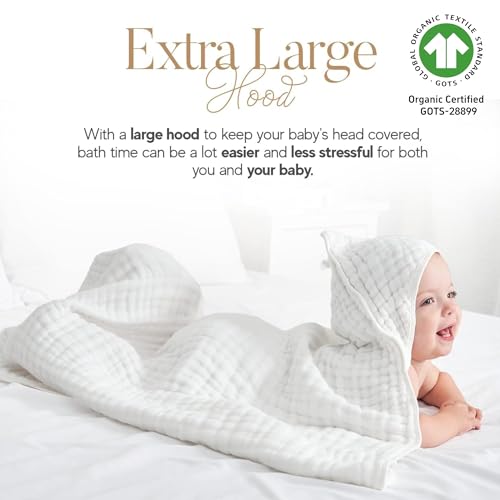
The HardNok Organic Baby Towels set is a thoughtfully designed bath essential made for newborns and infants with delicate skin. Crafted from 100% GOTS-certified organic cotton, these muslin hooded towels are breathable, lightweight, and exceptionally gentle—becoming softer with every wash. This 4-pack includes two 6-layer hooded bath towels (32 x 32 inches) and two matching washcloths, offering excellent absorbency without bulk. Ideal for bath time, travel, or everyday cleanups, these organic baby towels balance practicality, sustainability, and comfort in one beautifully simple set.
- Organic Material: 100% GOTS-certified organic cotton that is breathable and skin-safe
- Multi-Use Set: Includes hooded towels and washcloths for bath, play, and travel
- Softness Over Time: Muslin fabric becomes softer with each wash
- Plushness: Muslin texture is lighter than traditional thick terry towels
- Design Style: Minimalist look may feel plain to some parents
- Absorbency Speed: May require an extra moment to fully dry very wet babies
Parents looking for high-quality organic baby towels will appreciate the simplicity and versatility of the HardNok Muslin Hooded Towel Set. Made from 100% GOTS-certified organic cotton, these towels are naturally breathable and gentle, making them ideal for newborns and infants with sensitive skin. The 6-layer muslin construction enhances absorbency while remaining lightweight and quick-drying.
Understanding Organic Baby Towels
The term “organic” in baby towels refers to both the source materials and the production process. Certified organic towels come from plants grown without synthetic pesticides, herbicides, or fertilizers. The manufacturing process also excludes toxic chemicals, harsh dyes, and harmful finishing agents commonly used in conventional textile production.
For a towel to earn organic certification, it must meet strict standards throughout the entire supply chain. Organizations like the Global Organic Textile Standard (GOTS) verify that at least 95% of fibers are certified organic and that processing meets environmental and social criteria. This includes wastewater treatment, energy use, and fair labor practices.
Parents should understand that “natural” does not automatically mean organic. Natural fibers like conventional cotton can still be treated with chemicals during growing and processing. Only certified organic products guarantee the absence of these substances.
Materials Matter: Organic Cotton vs. Bamboo
Organic cotton remains the gold standard for baby towels. Grown without chemical pesticides, organic cotton is soft, breathable, and highly absorbent. It becomes even softer with repeated washing and maintains its integrity through years of use. Cotton’s natural breathability helps regulate temperature, keeping babies comfortable after bath time.
Bamboo towels have gained popularity for their exceptional softness and antibacterial properties. Bamboo viscose feels silky smooth against skin and absorbs moisture more efficiently than cotton. The plant itself grows rapidly without pesticides and requires minimal water, making it environmentally sustainable. However, parents should verify that bamboo towels use closed-loop processing methods that recycle chemicals rather than releasing them into the environment.
Some premium towels blend organic cotton with bamboo to combine the best properties of both materials. These blends offer superior absorbency, softness, and durability while maintaining organic standards.
Health Benefits for Sensitive Skin
Baby skin is remarkably different from adult skin in structure and function. It has a thinner epidermis, a less mature protective barrier, and higher permeability to chemicals. This makes babies particularly vulnerable to irritants, allergens, and toxins present in conventional textiles.
Organic baby towels eliminate exposure to residual pesticides, formaldehyde, azo dyes, and other chemicals linked to skin irritation and allergic reactions. For babies with eczema, atopic dermatitis, or general skin sensitivity, organic towels can significantly reduce flare-ups and discomfort.
The natural fibers in organic towels also allow better air circulation, reducing the risk of heat rash and fungal infections. Unlike synthetic materials that can trap moisture and heat against skin, organic fibers wick moisture away while maintaining breathability.
Studies have shown that chemical sensitivities developed in infancy can persist throughout life. By choosing organic textiles during the crucial early years, parents may help prevent the development of chronic skin conditions and chemical sensitivities.
Environmental Impact and Sustainability
Conventional cotton farming accounts for approximately 16% of global insecticide use despite occupying only 2.5% of agricultural land. These chemicals contaminate soil, waterways, and air, affecting ecosystems and farming communities. Organic cotton farming eliminates these toxic inputs, promoting biodiversity and soil health.
Water usage differs dramatically between conventional and organic cotton farming. While both require significant water, organic methods typically use rainwater and efficient irrigation rather than intensive water extraction. Organic practices also improve soil structure, increasing its water retention capacity and reducing overall irrigation needs.
The processing of organic towels uses natural or low-impact dyes and avoids chlorine bleaching, formaldehyde treatments, and flame retardants. This results in cleaner wastewater and reduced chemical pollution. Many organic textile manufacturers also prioritize renewable energy and carbon-neutral shipping.
By purchasing organic baby towels, parents support farming practices that protect the planet their children will inherit. This choice reinforces market demand for sustainable products, encouraging more manufacturers to adopt eco-friendly practices.
Certifications to Look For
GOTS certification is the most comprehensive and respected standard for organic textiles. It covers the entire production chain from harvesting through manufacturing, ensuring both organic fiber content and ethical production practices. GOTS-certified products must contain at least 70% organic fibers, with stricter requirements for products labeled “organic” versus “made with organic.”
OEKO-TEX Standard 100 certification tests for harmful substances in finished products, ensuring they contain no residues of chemicals harmful to human health. While not exclusively for organic products, this certification provides additional assurance that towels are safe for babies.
The USDA Organic seal applies to agricultural products, including cotton and other fibers. This certification verifies that farming practices meet federal organic standards, though it doesn’t address processing methods.
Some towels carry multiple certifications, offering parents the highest confidence in both material sourcing and manufacturing practices. These combined certifications ensure comprehensive safety from farm to nursery.
Care and Maintenance
Proper care extends the life of organic baby towels while maintaining their softness and absorbency. Before first use, wash new towels separately to remove any natural processing residues and improve absorbency. Use warm water and a gentle, fragrance-free detergent designed for sensitive skin.
Avoid fabric softeners, which coat fibers and reduce absorbency over time. Instead, add half a cup of white vinegar to the rinse cycle occasionally to naturally soften towels and remove detergent buildup. Vinegar also helps prevent mildew and keeps colors vibrant.
Tumble dry on low heat or line dry in the sun, which naturally brightens and disinfects. High heat can damage organic fibers and reduce towel longevity. If using a dryer, remove towels while slightly damp to minimize shrinkage and preserve softness.
Wash baby towels separately from heavily soiled items and adult laundry to prevent cross-contamination. Use a hot water wash periodically to sanitize without chemicals—organic towels tolerate high temperatures better than synthetic alternatives.
Store towels in a clean, dry location with good air circulation. Avoid damp bathroom environments where mildew can develop. With proper care, quality organic towels can serve multiple children and remain soft for years.
Cost Considerations and Value
Organic baby towels typically cost 30-50% more than conventional alternatives due to higher material costs, certification fees, and sustainable manufacturing practices. A premium organic hooded towel might range from twenty-five to forty-five dollars, while conventional versions cost fifteen to twenty-five dollars.
However, the higher upfront cost often translates to better long-term value. Organic towels are generally more durable, with stronger fibers that resist thinning and tearing. They maintain absorbency and softness through hundreds of washes, while conventional towels often become rough and less effective over time.
For families planning multiple children, organic towels represent a particularly smart investment. Their durability allows them to serve several children, effectively reducing the per-child cost. Many parents also find that organic towels have strong resale value in secondhand markets.
The health benefits may also reduce costs associated with treating skin conditions, rashes, and allergic reactions caused by chemical irritants in conventional textiles. While difficult to quantify, these preventive health benefits add real value to the organic choice.
Sizing and Practical Considerations
Baby towels come in various sizes to accommodate different ages and needs. Standard hooded towels measure between 30″ x 30″ and 35″ x 35″, large enough to wrap a newborn completely with room to grow. Oversized options extend to 40″ x 40″, providing coverage through the toddler years.
The hood serves both functional and comfort purposes. It keeps a baby’s head warm immediately after bath, prevents heat loss through the scalp, and makes drying hair easier. Some hoods feature cute animal ears or designs that babies enjoy, making bath time more playful.
Weight, measured in grams per square meter (GSM), indicates towel thickness and absorbency. Lighter towels (300-400 GSM) dry quickly and work well for warmer climates or travel. Medium-weight towels (400-500 GSM) offer balanced absorbency and drying time. Heavy towels (500-600+ GSM) provide maximum absorbency and luxurious softness but take longer to dry between uses.
Consider purchasing multiple towels to ensure clean ones are always available. Having at least three allows for rotation: one in use, one in the wash, and one clean and ready. This prevents the need for emergency washing and ensures towels dry completely between uses.
Beyond Bath Time: Versatile Uses
While designed for bath time, organic baby towels serve numerous purposes throughout daily life. They make excellent play mats for supervised tummy time, providing a clean, soft surface that’s gentle on knees and elbows. The absorbent material also catches drool and spit-up during floor play.
Many parents use organic towels as stroller or car seat covers, providing a chemical-free barrier between baby and potentially treated fabrics. The breathable material keeps babies comfortable during outings while protecting against germs on public surfaces.
Organic towels double as nursing covers for breastfeeding mothers who prefer privacy. The soft fabric won’t irritate baby’s skin during feeding, and the generous size provides ample coverage. After nursing, the towel can handle any spit-up or leakage.
At the beach or pool, organic towels offer a safer alternative to conventional beach towels, which often contain high levels of chemical treatments. The quick-drying properties of bamboo-blend organic towels make them particularly suitable for water activities.
As babies grow, these towels transition into beloved comfort objects. The familiar softness and scent can soothe toddlers during transitions, bedtime, or times of stress. Many children remain attached to their baby towels well into childhood, making the organic choice even more important.
Making the Switch: Transition Tips
For parents accustomed to conventional baby products, transitioning to organic towels requires minimal adjustment. Start by purchasing one or two organic towels to test quality and performance before investing in a complete set. This allows comparison with existing towels and helps identify preferred materials and brands.
Gradually replace conventional towels as they wear out rather than discarding functional items. This approach spreads the cost over time and reduces waste. Many parents find that once they experience the softness and quality of organic towels, they quickly replace their entire collection.
Involve older children in choosing organic towels with fun colors or designs they like. This increases enthusiasm for bath time and helps children understand the importance of making healthy, environmentally conscious choices.
Extend the organic approach to other bath time products as budget allows. Organic washcloths, bathrobes, and even bath mats can complete a chemical-free bathing environment. Each organic addition reduces overall chemical exposure and supports sustainable practices.
Conclusion
Organic baby towels represent more than a luxury—they’re an investment in children’s health and the planet’s future. By eliminating harmful chemicals, these towels protect delicate skin during its most vulnerable developmental stages. The superior softness, absorbency, and durability of organic materials ensure that these towels perform better and last longer than conventional alternatives.
While the initial cost may be higher, the long-term value becomes evident through years of use, reduced skin problems, and environmental benefits. As awareness grows about the impact of chemicals in everyday products, organic baby towels have transitioned from niche items to essential components of conscious parenting.
Choosing organic towels demonstrates a commitment to providing the safest, most nurturing environment for children while supporting agricultural practices that protect air, water, and soil. Every bath time becomes an opportunity to care for both baby and planet, wrapping little ones in softness that comes from responsibility and love.
For parents navigating the overwhelming world of baby products, organic towels offer clarity: a simple, effective choice that benefits health, quality, and sustainability. As children grow wrapped in these gentle fibers, they begin their lives surrounded by care, comfort, and the values their parents hold dear.
Frequently Asked Questions
Are organic baby towels really worth the extra cost?
Organic baby towels justify their higher price through multiple factors. They last significantly longer than conventional towels due to stronger, chemical-free fibers that resist breakdown. The health benefits include reduced risk of skin irritation, allergic reactions, and exposure to pesticide residues—particularly important for babies with sensitive skin or eczema. When considering use across multiple children, potential resale value, and reduced healthcare costs from fewer skin problems, organic towels often prove more economical over time. Parents consistently report that the superior softness and absorbency make daily bath time more pleasant, adding quality-of-life value that’s difficult to quantify but meaningful.
How can one tell if a baby towel is truly organic?
Authentic organic baby towels carry specific certifications from recognized organizations. The Global Organic Textile Standard (GOTS) is the most comprehensive, ensuring organic fiber content and ethical production practices. Look for the GOTS label with certification number on packaging or product tags. USDA Organic certification verifies organic agricultural practices for the raw materials. OEKO-TEX Standard 100 confirms the finished product contains no harmful substances. Be wary of vague terms like “natural,” “eco-friendly,” or “pure” without supporting certification. Reputable sellers provide certification details in product descriptions. When in doubt, contact the manufacturer directly to request certification documentation. Products from established organic brands typically maintain transparency about their certification status and supply chain.
Can organic towels be effectively sanitized without harsh chemicals?
Organic towels can be thoroughly sanitized using natural methods that preserve fiber integrity. Hot water washing at 140°F (60°C) kills most bacteria and viruses without chemicals—organic cotton tolerates high temperatures better than synthetic materials. Adding half a cup of white vinegar to the rinse cycle provides natural disinfection and removes detergent residue. For stubborn stains or extra sanitization, create a paste of baking soda and water, apply to affected areas, then wash normally. Sunlight offers natural bleaching and antibacterial properties when line-drying outdoors. For occasional deep cleaning, oxygen-based bleach (sodium percarbonate) is safer than chlorine bleach and won’t damage organic fibers. These methods maintain the chemical-free benefits of organic towels while ensuring proper hygiene for baby use.
Do organic baby towels require special washing instructions?
While organic towels don’t require drastically different care, following specific guidelines maximizes their longevity and performance. Wash before first use to improve absorbency and remove natural processing residues. Use fragrance-free, dye-free detergents designed for sensitive skin—harsh detergents can break down organic fibers faster. Avoid fabric softeners, which coat fibers and reduce absorbency; substitute with white vinegar in the rinse cycle for natural softening. Wash in warm or hot water with similar colors to prevent dye transfer. Tumble dry on low heat or line dry to prevent fiber damage from excessive heat. Avoid bleach, which weakens organic cotton fibers. Separate baby towels from heavily soiled adult laundry to prevent cross-contamination. These simple steps preserve the towels’ softness, absorbency, and structural integrity through hundreds of washes.
At what age should parents transition from organic baby towels to regular towels?
There’s no specific age requirement for transitioning from organic baby towels, and many families continue using them indefinitely. The decision depends more on size, preference, and skin sensitivity than age. Most hooded baby towels accommodate children through age four or five, depending on the child’s size and the towel’s dimensions. Children with ongoing skin sensitivities, eczema, or allergies benefit from continuing organic towels throughout childhood. Some families keep organic towels for bath time while introducing conventional towels for swimming or beach use as children grow. Others maintain organic textiles as a household standard for all family members. Since organic towels are highly durable, they often remain functional long past the baby years. Parents might choose to transition when towels show significant wear, when children express preferences for different designs, or when household needs change, rather than based on age alone.