Best Baby Walkers: A Complete Buying Guide
*We may earn a commission for purchases made using our links. Please see our disclosure to learn more.
Watching a baby take those first tentative steps is one of the most exciting milestones in early childhood. Baby walkers have long been a popular tool to support that journey, offering a blend of mobility, entertainment, and sensory stimulation. However, with so many models on the market today, finding the right one can feel overwhelming for new parents and caregivers.
A well-chosen baby walker does more than just help a child move around. It serves as an interactive play station, a confidence builder, and a tool that encourages core muscle development. From activity-packed seats to lightweight push walkers, the variety is wide and every product serves a slightly different purpose.
This guide breaks down everything needed to make a smart, safe, and informed purchase. Whether shopping for a newborn gift or looking to support a crawler who is getting closer to walking, the information below covers the top products, key features, safety considerations, and frequently asked questions to help navigate the decision with confidence.
“Sit-in walkers are not recommended by pediatricians because they can actually delay walking and put babies in positions that stress their developing hips and spine. Push walkers, on the other hand, allow babies to maintain proper posture and build the leg strength needed for independent walking.”
– American Academy of Pediatrics (AAP), Policy Statement on Infant Walkers
Key Takeaways
- Baby walkers come in two main types: sit-in activity walkers and push walkers, each designed for different stages of development.
- Safety is the top priority. Look for walkers with wide bases, anti-tip features, and non-slip grip pads.
- The American Academy of Pediatrics (AAP) recommends push walkers over sit-in walkers for developmental benefits.
- Activity walkers with music, lights, and toys provide sensory stimulation that supports cognitive growth.
- Adjustable height settings are important for growing babies and extended product usability.
- Always supervise babies in walkers and avoid use near stairs, pools, or uneven surfaces.
Top 4 Baby Walkers Available on Amazon
The following products have been selected based on customer reviews, safety ratings, developmental value, and overall popularity on Amazon.
1. VTech Sit-to-Stand Learning Walker
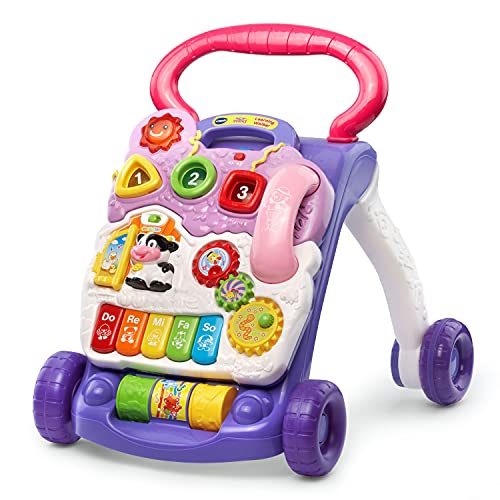
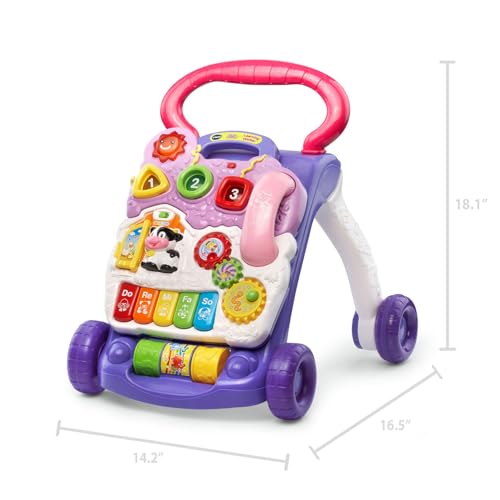

The VTech Sit-to-Stand Learning Walker is a popular choice among parents searching for the Best Baby Walkers that combine learning and mobility. Designed for growing infants and toddlers, this walker features a removable activity panel that can be used for floor play or attached for push-walking support. With interactive elements like piano keys, shape sorters, spinning rollers, and a pretend telephone, it keeps babies engaged while supporting early development.
This is one of the most recognized names in baby walkers, and for good reason. The VTech Sit-to-Stand Learning Walker is a two-in-one product that functions both as a sit-in activity center and a push walker. It features piano keys, spinning rollers, a telephone, shape sorter, and multiple light-up buttons that play songs and phrases. The detachable panel also allows babies to play with it on the floor before they are ready to walk.
- Developmental Features: Encourages motor skills, hand-eye coordination, and sensory learning through interactive play
- Adjustable Speed: Two-speed settings support different walking stages for safer progression
- Versatile Design: Removable activity panel allows both seated and on-the-go play
- Plastic Build: May feel less premium compared to wooden alternatives
- Sound Volume: Music and sounds can be loud for some parents
- Bulky Size: Takes up moderate space and may not be ideal for small rooms
2. Fisher-Price Laugh & Learn Smart Stages Walker
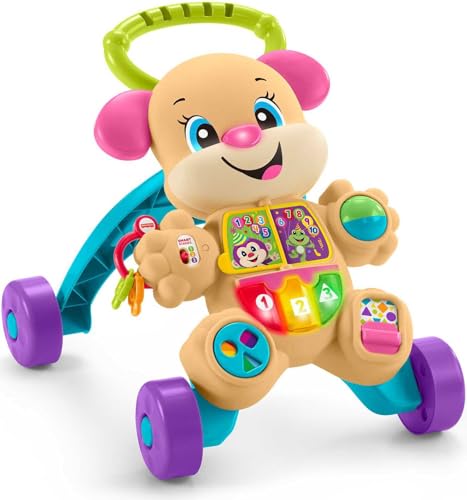


The Fisher-Price Laugh & Learn Smart Stages Sis Walker is a budget-friendly and engaging option for parents looking for the Best Baby Walkers that combine early learning with mobility support. Designed for infants 6 months and older, this walker features an interactive front panel filled with lights, sounds, and hands-on activities that introduce letters, numbers, shapes, and songs.
Fisher-Price is a household name in baby products, and this walker lives up to the brand’s reputation. The Laugh & Learn Smart Stages Walker features over 70 songs, sounds, and phrases that adapt to three stages of development. The large activity panel is filled with buttons, gears, and a mirror, keeping babies entertained while also building fine motor skills.
- Smart Stages Learning: Multiple levels introduce age-appropriate content as your baby grows
- Interactive Play Panel: Engaging lights, music, and activities promote sensory and cognitive skills
- Affordable Option: Offers strong value compared to other walkers in the same category
- Lightweight Frame: May slide too quickly on smooth floors for beginners
- Limited Speed Control: Lacks adjustable resistance compared to higher-end models
- Plastic Construction: Less durable feel than premium or wooden walkers
3. BABY JOY 4-in-1 Baby Walker


The BABY JOY 4-in-1 Baby Walker is a versatile and feature-rich option for parents searching for the Best Baby Walkers that grow with their child. Designed for babies aged 6 to 18 months, this multifunctional walker can be used as a seated walker, push walker, activity center, and even a feeding tray, making it a long-term investment.
When evaluating the Best Baby Walkers, versatility and safety are key factors that many parents prioritize. The BABY JOY 4-in-1 Baby Walker stands out by offering multiple functions in one product, making it suitable for different stages of your baby’s development.
- 4-in-1 Functionality: Combines walker, push walker, activity center, and tray for extended usability
- Adjustable Features: Height and speed settings adapt to your baby’s growth and walking pace
- Safety Design: Anti-rollover base provides added stability and peace of mind
- Higher Price Point: More expensive than basic baby walkers
- Bulkier Build: Takes up more space compared to simpler models
- Assembly Required: Initial setup may take extra time for parents
4. Joovy Spoon Walker

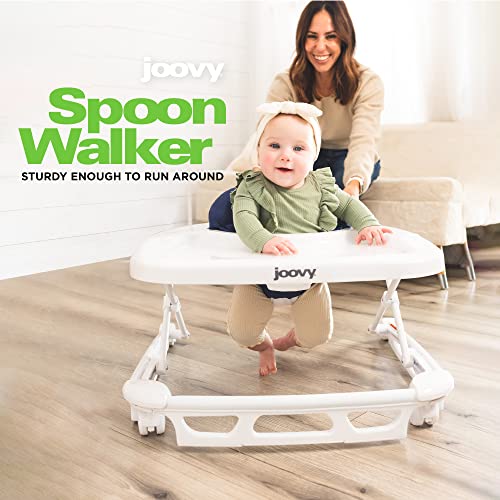
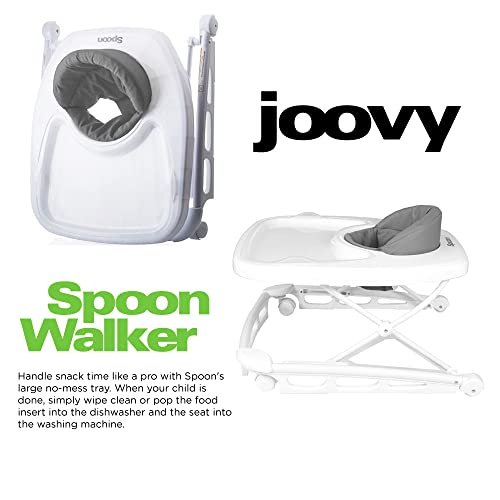
The Joovy Spoon Baby Walker & Activity Center is a premium option for parents looking for the Best Baby Walkers that combine simplicity, safety, and practicality. Designed with a sleek, modern look, this walker doubles as an activity center and feeding space thanks to its extra-large tray, making it highly functional for everyday use.
The Joovy Spoon Walker stands out for its minimalist design and extra-large tray. It is a sit-in style walker with a focus on simplicity and practicality. The oversized tray can hold snacks, toys, and books, making mealtime and playtime more convenient. It also has a UV-protective canopy and a breathable mesh seat, which is especially useful in warmer climates.
- Extra-Large Tray: Provides ample space for feeding, toys, and activities
- Strong Safety Features: Wide base, finger-safe design, and JPMA certification for peace of mind
- Easy Maintenance: Removable, washable seat and dishwasher-safe tray simplify cleaning
- Higher Price: More expensive than standard baby walkers
- Minimal Toys Included: Lacks built-in entertainment features compared to activity-heavy models
- Better on Hard Floors: Movement may be less smooth on thick carpets
What to Look for in a Baby Walker
Shopping for a baby walker is not just about picking the most popular option. There are several important features to evaluate before making a decision.
Safety Features
Safety should be the first and most critical filter when evaluating any baby walker. Look for a wide, stable base that reduces the risk of tipping. Anti-slip pads or rubber grips on the bottom are also essential, especially on smooth floors. Some models include a stair-edge braking system that automatically stops the walker if it rolls toward a drop.
Age and Weight Requirements
Most walkers list a minimum age of 6 months or when the baby can hold their head up unassisted. Always check weight limits as well. Exceeding the recommended weight can compromise the walker’s structural stability, putting the baby at risk.
Height Adjustability
Babies grow quickly, and a walker with multiple height settings will offer a longer useful life. Most quality walkers have at least three height positions. Proper height ensures the baby’s feet are flat on the floor, which is important for correct posture and leg muscle engagement.
Activity Features and Stimulation
The best baby walkers double as entertainment centers. Lights, music, sounds, buttons, and spinning toys all contribute to sensory development and keep babies engaged. Activity panels that can be removed and used on the floor extend the product’s value before a child is ready to use the walker upright.
Types of Baby Walkers Explained
Understanding the different categories of baby walkers helps narrow down the best choice for a specific baby’s developmental stage.
Sit-In Walkers
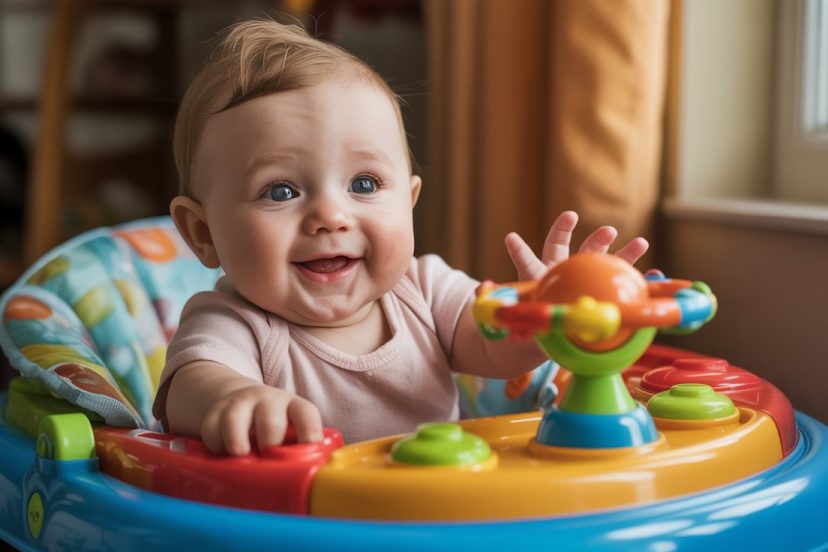
These are the classic ring-style walkers where the baby sits inside a suspended seat surrounded by a frame on wheels. They offer full 360-degree movement and typically come with a built-in activity tray. While popular for their entertainment value, they have received criticism from health professionals for potentially restricting natural movement patterns if overused.
Push Walkers
Push walkers are designed to be held and pushed from behind as the baby walks forward. These are generally preferred by pediatricians because they allow the baby to bear their own weight and develop core and leg muscles more naturally. Many models include activity panels that can be detached for floor play.
Convertible Walkers
Convertible or 2-in-1 walkers combine both functions. They start as sit-in activity centers and then transform into push walkers as the baby grows. These offer the best value for money since they serve multiple developmental stages with a single product.
Safety Considerations Every Parent Should Know
Even the safest walker on the market carries some risk if used improperly. Here are non-negotiable safety rules to follow:
- Never leave a baby unattended in a walker under any circumstances.
- Always block access to stairs, pools, fireplaces, and kitchen areas.
- Avoid use on uneven surfaces, outdoor terrain, or rugs that can cause tipping.
- Limit walker use to 20 minutes per session to avoid placing undue stress on developing muscles.
- Check for walker recalls on the Consumer Product Safety Commission (CPSC) website before purchasing second-hand.
- Do not use a walker if any part is broken, cracked, or missing non-slip grips.
Developmental Benefits of Push Walkers
When used correctly and in moderation, push walkers can offer meaningful developmental advantages. As babies grip the handle and push forward, they build upper body strength, improve balance, and develop spatial awareness. The act of navigating around furniture and walls also encourages problem-solving at a basic motor level.
Activity panels attached to walkers contribute to cognitive development through cause-and-effect play. When a baby presses a button and hears a sound or sees a light, they are learning that their actions produce a result. This type of interactive play lays the foundation for early learning and curiosity.
The social and emotional dimension should not be overlooked either. When a baby successfully moves from one side of the room to another in a walker, the sense of independence and accomplishment contributes positively to confidence and emotional development.
Conclusion
Choosing the best baby walker comes down to understanding what a specific child needs at their current developmental stage, how much space is available at home, and what safety features matter most. For younger babies who are not yet pulling themselves up, a sit-in activity walker may provide great entertainment. For babies who are already pulling to stand, a push walker is the more developmentally appropriate choice.
All four products recommended in this guide have strong track records on Amazon, with verified reviews and safety certifications. Regardless of which model is selected, consistent supervision and awareness of usage time are the most important factors in keeping babies safe.
Baby walkers, when chosen thoughtfully and used responsibly, can be a genuinely rewarding tool that supports one of the most joyful transitions in a child’s early life.
Frequently Asked Questions
1. At what age can a baby start using a walker?
Most baby walkers are designed for infants who are at least 6 months old and can hold their head up without support. However, every baby develops at a different pace. It is important to check the manufacturer’s recommended age and weight guidelines and consult with a pediatrician before introducing any walker.
2. Are baby walkers safe to use?
Baby walkers carry some risk if used near stairs, pools, or without supervision. However, modern walkers sold in the US are required to meet safety standards set by the ASTM International. Using walkers on flat, gated surfaces and always staying with the baby significantly reduces risk. Push walkers are generally considered safer and more developmentally appropriate than sit-in models.
3. Do baby walkers delay walking?
Research suggests that sit-in walkers may slightly delay walking if used excessively because they allow babies to move without developing the independent muscle control needed for walking. Push walkers, on the other hand, are generally associated with positive walking development because the baby bears their own weight. Limiting sit-in walker use to short sessions minimizes any developmental concerns.
4. What is the difference between a sit-in walker and a push walker?
A sit-in walker suspends the baby in a padded seat surrounded by a wheeled frame, allowing full directional movement while seated. A push walker is pushed from behind while the baby stands and walks. Sit-in walkers are typically used at an earlier stage, while push walkers are more suited to babies who are already pulling to stand. Convertible walkers offer both functions in one product.
5. How long should a baby use a walker each day?
Most pediatric guidelines suggest limiting walker use to no more than 20 minutes at a time. Babies need a variety of positions and movements throughout the day, including tummy time, floor crawling, and independent sitting. Over-reliance on a walker can limit the natural movement exploration that supports healthy muscle and bone development.