Flying With Baby: Safety, Packing, and Flight Tips
*We may earn a commission for purchases made using our links. Please see our disclosure to learn more.
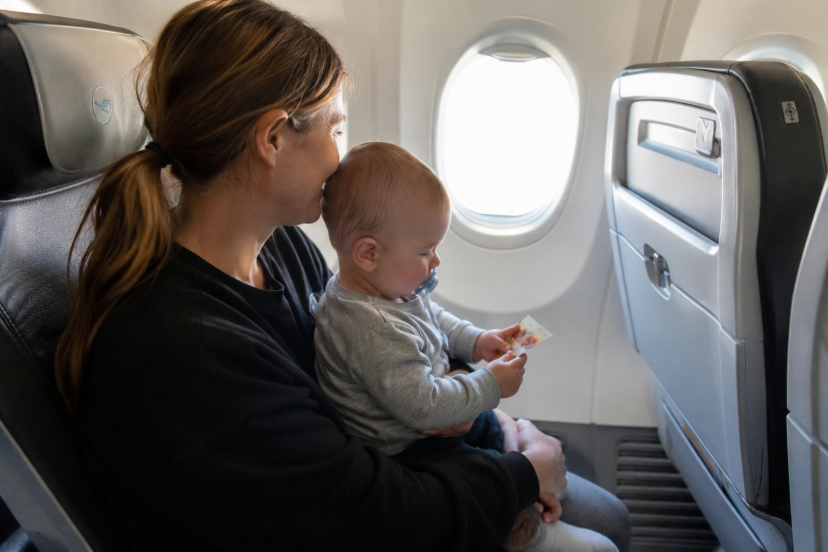
Flying with a baby is manageable when I plan around safety, feeding, sleep, documents, and quick access to essentials. The goal is not to create a perfect flight. The goal is to build a calm, flexible system that helps me handle the airport, the airplane, and the first hour after arrival without scrambling.
A baby changes the rhythm of air travel. Security takes longer. Boarding feels more physical. A diaper bag becomes a survival kit. A short delay can matter because feeding windows, naps, and blowouts do not follow airline schedules.
Still, flying with a baby does not have to be chaotic. I think of it as a sequence of small decisions: book the right flight, choose the safest seating option I can, pack by access level, feed strategically during pressure changes, and keep the baby’s most urgent needs within arm’s reach.
Key Takeaways
- The safest way for a baby to fly is in a purchased airplane seat using an approved child restraint system that fits the child’s age and size.
- Babies must be added to the airline reservation, even when they fly as lap infants.
- Formula, breast milk, toddler drinks, and baby food are allowed through TSA in quantities greater than 3.4 ounces.
- The diaper bag should stay under the seat and contain the items needed for feeding, diapering, soothing, and one full clothing emergency.
- Feeding, nursing, or offering a pacifier during takeoff and descent can help babies manage ear pressure.
“The safest place for your child under the age of two on a U.S. airplane is in an approved child restraint system or device, not in your lap.”
Source: Federal Aviation Administration
4 Helpful Baby Travel Products
When flying with a baby, the most useful products are the ones that reduce airport stress and keep essentials easy to reach. A lightweight infant car seat can support safer air travel when a baby has a separate seat. A compact stroller helps with long terminals and gate checking. A structured baby carrier keeps both hands free during security, boarding, and baggage claim. A well-organized diaper backpack makes it easier to separate feeding, diapering, clothing, and document essentials.
Recommended products to mention:
Graco SnugRide Lite LX Infant Car Seat


Keep your little one safe and snug with the GRACO SnugRide SnugFit 35 Elite Infant Car Seat, designed for infants from 4–30 lbs and up to 32" tall. This premium rear-facing car seat features advanced SnugRide technology for proven protection and an anti-rebound bar for added security during rear-end collisions. Installation is quick and secure in under a minute with SnugLock technology and InRight LATCH. The Simply Safe Adjust Harness System allows for no-rethread adjustments, keeping your baby comfortably supported as they grow. Designed with soft, all-weather materials and a 5-position adjustable base, the SnugFit 35 Elite provides a perfect fit for your car and your child’s needs.
- Easy Installation: SnugLock technology and 1-second InRight LATCH make setup fast and hassle-free.
- Enhanced Safety: Anti-rebound bar adds a vital layer of rear-facing crash protection.
- Comfort Features: All-weather boot and plush fabric ensure a cozy ride in any season.
- Higher Price Point: More expensive compared to some other infant car seat options.
- Rear-Facing Only: Not convertible, so your child will eventually need a new seat.
- Bulky Base: May take up more space in compact vehicles.
A lightweight infant car seat option for parents who plan to buy a separate airplane seat for their baby.
Delta Children Icon Ultra Compact Travel Stroller

The Delta Children Icon Ultra Compact Lightweight Everyday & Travel Stroller is a practical travel stroller for parents who want something light, compact, and easy to manage at the airport. Weighing only 15.6 pounds, it is designed for everyday errands and family trips, with a one-hand fold that makes it easier to collapse while holding a baby or managing luggage. Its compact folded size is intended to fit in many overhead compartments, making it a helpful option for parents who want to avoid gate-checking when airline rules allow.
- Lightweight Design: At only 15.6 pounds, it is easier to lift, carry, and manage during airport travel.
- One-Hand Fold: The fold system helps parents collapse the stroller quickly while handling bags or holding a child.
- Travel-Friendly Size: Its compact fold is designed to fit in many overhead compartments, depending on airline and aircraft rules.
- Airline Fit Can Vary: Overhead bin compatibility depends on the airline, aircraft, and available space.
- Not a Full-Size Stroller: It may not offer the same storage, suspension, or roomy feel as larger everyday strollers.
- Higher Price Than Basic Umbrella Strollers: It costs more than simpler lightweight stroller options.
A compact stroller option for airport travel, gate checking, and easier movement through terminals.
Ergobaby Omni 360 Cool Air Mesh Baby Carrier
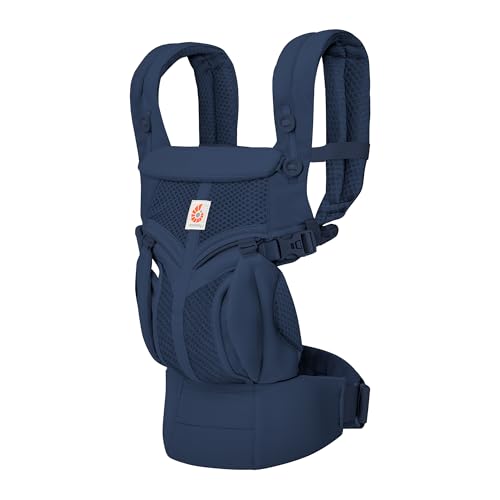
The Ergobaby Omni Classic Baby Carrier is a versatile baby carrier designed for newborns through toddlers, supporting children from 7 to 45 pounds and approximately 0 to 48 months. For parents flying with a baby, it offers one of the biggest travel advantages: hands-free movement through check-in, security, boarding, baggage claim, and busy airport terminals.
- Hands-Free Airport Travel: Keeps baby close while giving parents both hands free for bags, documents, and boarding tasks.
- Wide Age Range: Designed for newborns through toddlers, supporting 7 to 45 pounds.
- Breathable Mesh Fabric: Helps improve airflow during long travel days, warm weather, and crowded airport settings.
- Higher Price Point: It costs more than many basic baby carriers.
- Learning Curve: Adjusting straps and switching carry positions may take practice for first-time users.
- Can Feel Bulky: The structured design may feel less compact than a simple wrap or sling.
A structured carrier that helps parents move hands-free through check-in, security, boarding, and arrival.
Skip Hop Suite 6-in-1 Diaper Backpack Set
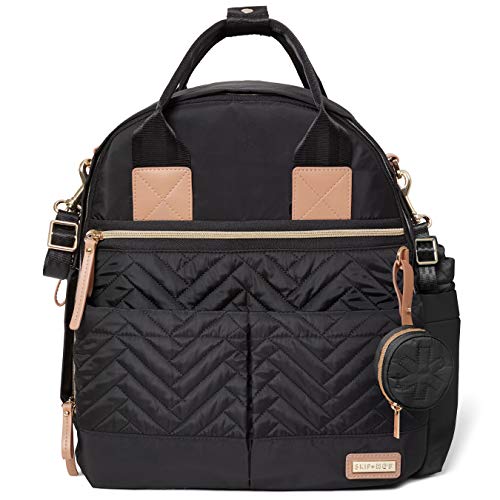
The Skip Hop Suite 6-in-1 Diaper Backpack Set is a multi-function baby travel bag designed to keep diapering, feeding, changing, and small essentials organized in one parent-friendly setup. It comes with a coordinated accessory set that includes a pacifier pocket, changing pad, stroller straps, insulated bottle bag, and packing cube, making it especially useful for airport days and longer outings.
- Complete Accessory Set: Includes a pacifier pocket, changing pad, stroller straps, insulated bottle bag, and packing cube.
- Organized Storage: Offers 9 pockets, including side bottle pockets and a personal zip pocket for easy access.
- Travel-Friendly Carry Options: Adjustable padded straps, grab handles, and stroller straps make it easy to carry through airports.
- Can Get Heavy When Fully Packed: The many compartments can encourage overpacking.
- Backpack Style May Not Suit Everyone: Some parents may prefer a tote-style diaper bag for faster open-top access.
- Limited Space for Bulkier Items: It is organized well, but may feel tight for parents carrying multiple outfits, toys, bottles, and extras for long-haul flights.
A diaper backpack option with organized compartments for diapers, bottles, wipes, spare clothes, and travel documents.
Is Flying With a Baby Safe?
Flying with a baby is generally safe for healthy infants, but the safest seating choice is a separate airplane seat with an approved child restraint system. The main in-flight safety concern for babies is not ordinary cruising altitude. It is being unrestrained during turbulence, sudden braking, or unexpected aircraft movement.
For many parents, the emotional question is simple: “Will my baby be okay?” In most cases, yes. Healthy babies fly every day. The bigger planning question is how to reduce avoidable stress and protect the baby during the parts of travel that are least predictable.
The plane itself is only one part of the journey. The hard parts are usually the transitions: leaving home, checking bags, passing through security, waiting at the gate, boarding with gear, feeding in a tight seat, managing a diaper change, and arriving tired.
What Is the Safest Way for a Baby to Fly?
The safest way for a baby to fly is in an approved child restraint system installed in a separate airplane seat. A child restraint system is usually a hard-backed car seat that is certified for use in aircraft, although some aviation-specific harnesses are approved for older babies and small children within specific size limits.
A lap infant is legally common on many flights, but a parent’s arms are not a restraint system. During turbulence or a sudden stop, even a strong adult may not be able to hold a baby securely. That is why aviation safety guidance consistently favors an approved restraint.
Before travel, I would check the car seat label. For a U.S. car seat, the wording to look for is: “This restraint is certified for use in motor vehicles and aircraft.” If that label is missing, a flight crew may not allow the seat to be used onboard.
When Should I Ask a Pediatrician Before Flying?
I would ask a pediatrician before flying with a baby who was born premature, has heart or lung disease, recently had surgery, has oxygen needs, has a fever, has a significant respiratory illness, or has a suspected ear infection.
Ear infections matter because pressure changes during takeoff and landing can be painful. Respiratory symptoms matter because cabin air is dry and travel can be tiring. A baby who is feeding poorly, breathing harder than usual, unusually sleepy, or recently hospitalized needs individualized medical advice before a flight.
Lap Infant vs Separate Seat: Which Should I Choose?
A lap infant is a child under two years old who travels on an adult’s lap instead of in a separate ticketed seat. A separate seat costs more, but it allows the baby to use an approved car seat, which is the safer and usually more manageable option for longer flights.
For domestic U.S. travel, many airlines allow children under two to fly as lap infants at no base fare, although taxes, fees, and airline rules vary. On many international itineraries, lap infants often cost a percentage of the adult fare plus taxes and fees. The exact rule is airline-specific, so I would never assume the baby is automatically included.
A baby must be added to the reservation even when the baby does not have a separate seat.
When a Lap Infant May Be Practical
A lap infant may be practical for a short direct flight, especially when the baby is young, not very mobile, and traveling with two adults. It can also be the only realistic choice when budget limits make an extra ticket difficult.
Even then, I would plan carefully. I would keep the baby in a carrier through the airport, keep the diaper bag under the seat, and avoid tight connections. I would also accept that lap travel is physically demanding because the adult becomes the baby’s seat, entertainment, feeding station, and nap surface.
When Buying a Seat Is Worth It
Buying a separate seat is often worth it for long flights, solo-parent travel, babies who sleep well in the car seat, routes with connections, or babies who are old enough to twist, stand, crawl, or fight being held.
A separate seat can also make the flight calmer. The baby has a familiar place to sleep. The parent gets more space to eat, adjust bags, use the restroom with help, or simply breathe. Safety is the main reason, but parent stamina is a real benefit.
The Practical Middle Ground
Some parents bring an approved car seat to the gate and ask whether an empty seat is available. This can work, but it is not a plan I would rely on. If the flight is full, the car seat may need to be gate checked.
The only reliable way to use a child restraint system onboard is to buy a seat for the baby.
What Documents Does a Baby Need to Fly?
A baby needs to be listed on the airline reservation, and international travel requires the baby’s own passport. For domestic U.S. flights, airlines may ask for proof of age for a lap infant, so I would bring a physical birth certificate or other accepted age document.
Documents are one of the easiest areas to underestimate because babies do not have wallets, IDs, or school records. The responsibility falls entirely on the adult.
Domestic Flights in the U.S.
For domestic U.S. flights, a baby typically does not need a government photo ID, but the airline may require proof that a lap infant is under two. A birth certificate, immunization record, or passport may be accepted depending on the airline, but policies vary.
I would do three things before travel:
- Add the baby to the reservation.
- Check the airline’s infant travel policy.
- Pack a physical copy of the baby’s age document in the personal item.
Digital copies are useful backups, but I would not rely on them as the only proof.
International Flights
For international air travel, babies need their own passports. A baby cannot travel internationally on a parent’s passport. Some destinations may also require a visa, entry form, vaccination document, or parental consent paperwork.
If one parent is traveling alone with the baby, I would bring a notarized consent letter from the non-traveling parent when applicable. Some countries require formal consent, and even when it is not required by the United States, destination rules can differ.
How to Book the Best Flight With a Baby
The best flight with a baby is usually direct, well-timed, and generous enough to avoid rushed connections. I would choose fewer transitions over the theoretically cheapest or shortest itinerary.
When flying with a baby, the “best” flight is not always the one with the lowest fare. It is the one with the lowest parent workload.
Best Time of Day to Fly With a Baby
The best time of day depends on the baby. For many families, morning flights work well because delays may be less accumulated and babies are often fresher. For reliable sleepers, a flight during nap time can work. For long-haul travel, an overnight flight may help if the baby sleeps well in motion.
I would not book around a fantasy version of the baby. I would book around the baby I actually have.
If the baby fights naps in new places, I would not count on an airplane nap. If the baby feeds calmly after waking, I might book after a normal wake window. If the baby melts down when overtired, I would avoid late departures.
Best Seat on the Plane With a Baby
The best seat depends on whether the baby has a car seat. If I am using a car seat onboard, a window seat is usually the best choice because it keeps the car seat from blocking another passenger’s path. Exit rows are not appropriate for babies or car seats.
If I am traveling with a lap infant, an aisle seat makes movement easier, while a window seat gives more privacy for feeding and more control over light. For two adults, a window-and-aisle booking can sometimes create more flexibility if the middle seat stays open, but that is never guaranteed.
Bulkhead seats can be useful for bassinets on long-haul flights, but they may have less under-seat storage. That matters because baby essentials often need to stay accessible.
Should I Reserve a Bassinet?
I would request a bassinet for long-haul or international flights when the baby fits the airline’s age, weight, and size rules. Bassinets are limited, usually tied to bulkhead seating, and often assigned by request rather than guaranteed.
A bassinet can help, but it should not be the only sleep plan. The baby may be too big, the seat may change, turbulence may require removing the baby, or the airline may have different equipment on the aircraft.
Baby Travel Gear: What to Bring and What to Leave Home
The best baby travel gear makes movement easier, keeps essentials accessible, and reduces the number of things I have to carry in my hands. Gear that looks useful at home can become a burden in an airport.
I would build the setup around three zones: airport, airplane, and arrival.
Must-Have Baby Travel Gear
The most useful baby travel gear usually includes:
- A comfortable baby carrier
- A lightweight stroller or travel stroller
- An FAA-approved car seat if the baby has a separate seat
- A diaper bag that fits under the airplane seat
- A portable changing pad
- Diapers, wipes, diaper cream, and disposal bags
- Feeding supplies
- Two baby outfits
- One spare shirt for the adult
- Pacifiers if the baby uses them
- A few quiet toys
- A thin layer for warmth
The baby carrier is often the highest-value item because it keeps both hands free. It helps during check-in, boarding, baggage claim, and moments when the stroller has already been checked.
Nice-to-Have Gear
Nice-to-have items include a stroller travel bag, car seat travel bag, compact sound machine, toy straps, disposable changing liners, sanitizer wipes, and a small wet bag.
These items are helpful only if they simplify the day. I would skip anything that adds setup time, needs charging constantly, or requires two hands to use.
Gear to Avoid
I would avoid bulky blankets, excessive toys, complicated bottle systems, large sleep gadgets, and anything not approved by the airline for use onboard. Some inflatable beds, seat extenders, hammocks, and sleep devices are not allowed by certain airlines.
A good rule is simple: if I cannot carry it while holding the baby, I should question whether it belongs on the trip.
The Best Packing System for Flying With Baby
The best packing system for flying with a baby is based on how quickly I need each item. Urgent items go under the seat. Backup items go overhead. Non-urgent items go in checked luggage.
The most common packing mistake is putting the right item in the wrong place. A diaper in the overhead bin is not helpful during taxi. A bottle buried in a roller bag is not helpful during descent.
On-Body Items
I would keep these items on my body or in the smallest outer pocket:
- Phone
- ID
- Boarding pass
- Credit card
- Pacifier
- Small burp cloth
- Lip balm
- A few wipes
- Any urgent medication
This prevents digging through the diaper bag while holding a baby.
Under-Seat Diaper Bag
The under-seat bag is the real flight kit. It should include:
- Diapers
- Wipes
- Changing pad
- Diaper cream
- Dirty diaper bags
- Baby outfit
- Parent shirt
- Bottles
- Formula or breast milk
- Burp cloths
- Pacifiers
- Snacks or baby food if age-appropriate
- Small toys
- Baby-safe medication if needed
- Lightweight layer
If I cannot reach it while seated, it is not part of the true in-flight kit.
Overhead Bag
The overhead bag is for backup supplies:
- Extra diapers
- Extra wipes
- Additional outfits
- More formula or feeding supplies
- Extra blanket
- Backup toys
- Extra parent clothing
- Non-urgent electronics
I would pack the overhead bag as if I might not open it until after landing.
Checked Bag
The checked bag should hold bulk supplies and destination items:
- Extra diapers
- Full-size baby toiletries
- Additional clothes
- Sleep sack
- Extra wipes
- Destination feeding items
- Non-urgent gear
I would never check all feeding supplies, all diapers, or all baby clothes. Delayed luggage happens.
What to Pack in a Baby Airplane Diaper Bag
A baby airplane diaper bag should contain enough supplies for the scheduled travel time plus delays. I would pack one diaper for every two to three hours of travel, then add several extras.
For a full flight day, I would pack:
- 6 to 10 diapers depending on trip length
- Travel wipes
- Changing pad
- Diaper cream
- Disposable bags
- Two baby outfits
- One parent shirt
- Burp cloths
- Bib
- Pacifiers
- Bottles
- Formula, breast milk, or nursing supplies
- Baby food or snacks if age-appropriate
- Small quiet toys
- Lightweight blanket or layer
- Hand sanitizer
- Sanitizing wipes
- Any needed medication
- Copy of baby documents
For long-haul travel, I would add pajamas, a sleep sack if normally used, more feeding supplies, and extra clothes for both baby and adult.
TSA Rules for Flying With Baby Formula, Breast Milk, and Baby Food
Formula, breast milk, toddler drinks, and baby food are allowed in carry-on bags in quantities greater than 3.4 ounces. These items may require additional screening, so I would separate them from the rest of the bag and tell the TSA officer before screening begins.
This is one of the most important rules for parents to know. Baby liquids are not treated the same way as ordinary toiletries.
Cooling accessories such as ice packs, freezer packs, and gel packs may also be allowed when used to keep baby food, formula, or breast milk cool. The process can take extra time, especially if bottles, pouches, or containers need separate inspection.
I would pack baby liquids in a way that makes screening easy: grouped together, easy to remove, and preferably in clear or translucent containers when possible.
Getting Through the Airport With a Baby
The easiest airport strategy is to keep the baby contained, the documents accessible, and the diaper bag organized before reaching security. The airport is where parents benefit most from preparation.
I would arrive earlier than I did before having a baby, but I would not arrive so early that the baby burns through every nap and feeding window before boarding.
Should I Babywear Through the Airport?
Babywearing is one of the most useful strategies for flying with a baby. It keeps my hands free for documents, bags, folding the stroller, and lifting items onto the security belt.
Security procedures can vary, so I would follow the officer’s instructions if asked to remove the baby from the carrier or adjust the carrier for screening.
Should I Gate Check the Stroller?
Gate checking the stroller is usually the best option if I need it in the airport. It allows me to use the stroller until boarding and retrieve it near the aircraft door or jet bridge after landing, depending on the airport.
Before gate checking, I would remove cup holders, toys, hooks, organizers, and anything that can snap off. I would also use a stroller bag if possible and take a quick photo of the stroller before handing it over.
Should I Board Early or Last?
If I need to install a car seat, I would board early. If the baby is a lap infant who hates sitting still, I might board later to reduce time confined on the plane.
When two adults travel together, the best strategy is often split boarding: one adult boards early with the gear and car seat, while the other waits near the gate with the baby until closer to the end of boarding.
How to Handle Takeoff and Landing With a Baby
Feeding, nursing, or offering a pacifier during takeoff and descent can help a baby manage ear pressure. The sucking motion encourages swallowing, which helps equalize pressure in the ears.
Timing matters. I would not start the bottle too early while the plane is still waiting in line. For takeoff, I would begin when the aircraft starts accelerating. For landing, I would begin when the descent becomes noticeable or when the crew announces preparation for landing.
If the baby is sleeping peacefully, I would not automatically wake the baby. A sleeping baby may already be swallowing or may not be bothered by pressure changes.
Feeding a Baby on a Plane
Feeding a baby on a plane works best when the supplies are ready before the baby is hungry. A hungry baby plus a crowded row plus a buried bottle is a preventable problem.
Breastfeeding on a Plane
For breastfeeding, I would choose clothing that allows easy access without complicated layers. A window seat can offer more privacy. A burp cloth should be within reach before feeding starts.
Hydration matters for the nursing parent, so I would buy or fill water after security and keep it accessible.
Formula Feeding on a Plane
For formula feeding, I would bring more than the exact amount needed. Travel delays, spills, rejected bottles, and unexpected hunger can change the plan.
Good options include pre-measured powder, ready-to-feed formula, clean bottles, and sterile water where appropriate. I would avoid relying on flight attendants for bottle washing or exact water temperature. They can often help, but the airplane galley is not a kitchen.
Feeding Solids on a Plane
For babies eating solids, I would choose low-mess, familiar foods. Pouches, soft snacks, and simple finger foods are easier than sticky, crumbly, or brand-new foods.
I would not introduce a new food during a flight. An airplane is not the place to discover a rash, stomach upset, or strong dislike.
Helping a Baby Sleep on a Plane
A baby sleeps best on a plane when I recreate a few familiar sleep cues without trying to recreate the whole nursery. Darkness, feeding, a sleep sack, a pacifier, white noise, and a calm adult can help.
The goal is not perfect sleep. The goal is rest.
A baby in an approved car seat may sleep more naturally because the position is familiar from car rides. A lap infant may sleep too, but the adult needs to stay alert and keep the baby’s face clear, uncovered, and positioned safely.
What Not to Do for Baby Sleep on a Plane
I would not use sedating medication unless a pediatrician specifically recommends it for that child. I would not cover the baby’s face with a blanket. I would not assume that every inflatable bed, hammock, or seat extender is allowed.
Airplane sleep is temporary. Safety matters more than a longer nap.
What to Do If Your Baby Cries on the Plane
If a baby cries on the plane, I would handle it as a needs checklist, not a public performance. Check pressure, hunger, diaper, temperature, tiredness, boredom, and overstimulation.
Babies cry. Most passengers understand, and the few who do not are not the priority. The priority is staying calm enough to troubleshoot.
When the seatbelt sign is off, walking the aisle may help. When the seatbelt sign is on, feeding, rocking in place, pacifier use, quiet songs, or a familiar toy may help. Sometimes the baby needs less stimulation, not more.
A calm parent is not magic, but it is useful. Babies often borrow the adult’s nervous system. Slower breathing, a lower voice, and fewer frantic movements can make the moment easier.
Diaper Changes and Blowouts in the Air
The best way to handle airplane diaper changes is to pack a small grab-and-go changing kit inside the diaper bag. It should include one diaper, wipes, a changing pad, diaper cream, and a disposal bag.
Many airplane lavatories have fold-down changing tables, but they are small. I would dress the baby in simple clothing with easy snaps or zippers. Overly complicated outfits make mid-flight changes harder.
For blowouts, I would use a sealed wet bag or plastic bag for dirty clothes and change the baby into the backup outfit. This is why the parent also needs a spare shirt. Babies do not respect outfit boundaries.
Flying With a Newborn vs Older Baby
Flying with a newborn is different from flying with a mobile baby. Newborns may sleep more and need fewer toys, but they feed often and may require more careful health planning. Older babies may be sturdier but harder to contain.
Newborns
Newborns need frequent feeding, careful temperature management, and pediatric guidance if they are premature, recently ill, or medically fragile. Some airlines also have minimum age rules for newborn travel.
Three to Six Months
This can be a manageable age for flying because many babies are still portable, not yet crawling, and comforted by feeding and holding. Sleep may still be unpredictable, but movement needs are usually lower.
Six to Twelve Months
This stage often requires more entertainment. Babies may want to sit, roll, crawl, grab, chew, and interact. Toy straps, snacks, and short activity rotations help.
Twelve to Twenty-Four Months
This can be the hardest stage for lap travel because the child is bigger, more mobile, and less interested in being held for long stretches. A separate seat often becomes much more valuable.
Flying With Baby Alone
Flying alone with a baby requires a lighter setup and stricter priorities. I would choose a direct flight when possible, babywear through the airport, keep the diaper bag under the seat, and avoid bringing anything I cannot manage with one hand.
Solo-parent travel is where overpacking becomes a problem. Every item must earn its place.
I would also accept help strategically. A flight attendant may help with small tasks when available. Another passenger may offer to lift a bag. TSA officers can give instructions if I need time to fold a stroller or manage bottles. I would not be shy about asking for a moment.
Long-Haul Flights With a Baby
Long-haul flying with a baby is less about one perfect trick and more about pacing. I would divide the flight into feeding, sleeping, changing, walking, and quiet play blocks.
For long-haul travel, I would request a bassinet early if the baby qualifies. I would bring more clothing than usual because long flights increase the chance of spills, leaks, and temperature changes. I would also prepare for the first day after arrival to be messy. Babies do not adjust to time zones instantly.
A long-haul baby plan should include:
- A realistic sleep routine
- Extra feeding supplies
- Multiple outfit changes
- Easy diaper access
- A few quiet toys
- Parent snacks
- A plan for arrival transportation
- A safe sleep setup at the destination
The arrival plan matters. A smooth flight can still fall apart if the car seat, stroller, or sleep space is not ready after landing.
Flying With Baby During Cold, Flu, or Ear Infection Season
During cold, flu, and respiratory virus season, I would be more cautious about flying with a baby who has fever, breathing symptoms, poor feeding, or an ear infection. Air travel can worsen discomfort from congestion and pressure changes.
For healthy babies, I would focus on hand hygiene, wiping high-touch surfaces, keeping pacifiers clean, and minimizing unnecessary contact with strangers. I would also pack extra wipes, a thermometer if the baby has been recently ill, and any pediatrician-approved medication.
I would not fly with a baby who seems seriously unwell unless travel is necessary and a clinician has advised me.
Common Mistakes Parents Make When Flying With Baby
The most common mistakes are not dramatic. They are small planning gaps that become stressful at 30,000 feet.
I would avoid these:
- Forgetting to add the baby to the reservation
- Assuming a lap infant never needs documentation
- Packing diapers in the overhead bin only
- Forgetting a spare shirt for the adult
- Checking all formula or feeding supplies
- Bringing a car seat without checking the aircraft approval label
- Booking a tight connection
- Bringing too much gear to carry comfortably
- Boarding too early with an active lap baby
- Trying brand-new gear for the first time at the airport
- Counting on airport stores to have the right diapers, formula, or pacifiers
- Forgetting that the destination also needs a safe car seat and sleep setup
Flying With Baby Checklist
Booking Checklist
- Add baby to the reservation
- Decide lap infant or separate seat
- Check airline infant policy
- Request bassinet if eligible
- Choose seats strategically
- Avoid tight layovers
- Confirm stroller and car seat rules
- Plan transportation at arrival
Document Checklist
- Baby birth certificate or age proof for domestic lap infant travel
- Baby passport for international travel
- Visa if required
- Consent letter if one parent travels alone and destination requires it
- Health insurance card
- Pediatrician contact
- Copies stored separately from originals
Diaper Bag Checklist
- Diapers
- Wipes
- Changing pad
- Diaper cream
- Dirty diaper bags
- Baby outfits
- Parent shirt
- Burp cloths
- Bottles
- Formula, breast milk, or feeding supplies
- Pacifiers
- Baby food or snacks
- Small toys
- Sanitizing wipes
- Medication if needed
Airport Checklist
- Babywear if helpful
- Keep documents accessible
- Separate baby liquids for screening
- Use stroller until gate if needed
- Get gate-check tags early
- Change diaper before boarding
- Prepare bottle, nursing setup, or pacifier before takeoff
In-Flight Checklist
- Keep diaper bag under the seat
- Feed or offer pacifier during pressure changes
- Change diapers before emergencies
- Rotate quiet toys slowly
- Watch baby temperature
- Keep baby’s face clear during sleep
- Stay calm if crying happens
Arrival Checklist
- Check stroller and car seat for damage
- Refill bottles or water if needed
- Change diaper before ground transportation
- Install car seat correctly
- Keep one feeding available for the ride
- Set up safe sleep space at destination
Frequently Asked Questions About Flying With a Baby
What is the best age to fly with a baby?
The best age to fly with a baby depends on health, temperament, feeding, and the reason for travel. Many parents find the three-to-six-month stage easier than the crawling stage because babies are still portable but may have more predictable feeding and sleep patterns.
Can a baby fly for free in the U.S.?
Many U.S. airlines allow children under two to fly as lap infants on domestic flights without a separate base fare, but the baby must still be added to the reservation. Fees, taxes, and rules vary by airline and itinerary.
Does a baby need a passport to fly?
A baby needs a passport for international air travel. For domestic U.S. flights, a passport is usually not required, but a birth certificate or other age proof may be needed for a lap infant.
Can I bring formula through TSA?
Yes. Formula is allowed in carry-on baggage in quantities greater than 3.4 ounces and does not need to fit inside the standard quart-size liquids bag. It may need additional screening.
Can I bring breast milk through TSA without my baby?
Yes. Breast milk is treated as a medically necessary liquid and can be brought through TSA screening even when the child is not present, subject to screening procedures.
Should I buy my baby a separate airplane seat?
Buying a separate seat is the safest choice because it allows the baby to fly in an approved child restraint system. It is especially helpful for long flights, solo-parent travel, and babies who sleep well in a car seat.
Can I bring a stroller and car seat on a plane?
Most airlines allow strollers and car seats to be checked or gate checked, often without counting them as standard baggage, but policies vary. If using a car seat onboard, the baby needs a separate seat and the car seat must be approved for aircraft use.
How do I help my baby’s ears during takeoff and landing?
Feeding, nursing, or offering a pacifier during takeoff and descent can help with ear pressure because sucking encourages swallowing.
Where should I sit on a plane with a baby?
If using a car seat, a window seat is usually best. If traveling with a lap infant, an aisle seat can make movement easier, while a window seat can offer more privacy for feeding.
Can I change a diaper on an airplane?
Yes. Many airplane lavatories have small fold-down changing tables. A compact changing kit makes the process easier.
What should my baby wear on a plane?
A baby should wear soft, breathable layers that are easy to change. Zippered sleepers, socks, and a light layer work well because airplane temperatures can shift.
How many diapers should I bring on a flight?
Bring more diapers than the scheduled flight requires. A practical rule is one diaper for every two to three hours of total travel time, plus several extras for delays.
Can I use a baby carrier on the plane?
A baby carrier is useful in the airport and during boarding, but airlines may require the baby to be removed from the carrier during takeoff, landing, or when the seatbelt sign is on. Follow crew instructions.
What if my baby cries the whole flight?
If a baby cries, check pressure, hunger, diaper, temperature, tiredness, and overstimulation. Stay calm, use feeding or soothing tools, and walk the aisle when allowed. Crying is normal and does not mean the flight is failing.
Is it better to board early or last with a baby?
Board early if installing a car seat or organizing gear. Board later if the baby is active and sitting longer will make the flight harder. With two adults, split boarding often works best.
Final Thoughts
Flying with a baby becomes easier when I stop thinking of it as one big event and start treating it as a series of manageable moments. The safest seat choice, the right documents, an accessible diaper bag, a flexible feeding plan, and calm expectations do most of the work.
A smooth flight is not a flight where the baby never cries, never wakes, and never needs a diaper change. A smooth flight is one where I can respond quickly because the plan already accounts for real baby behavior.