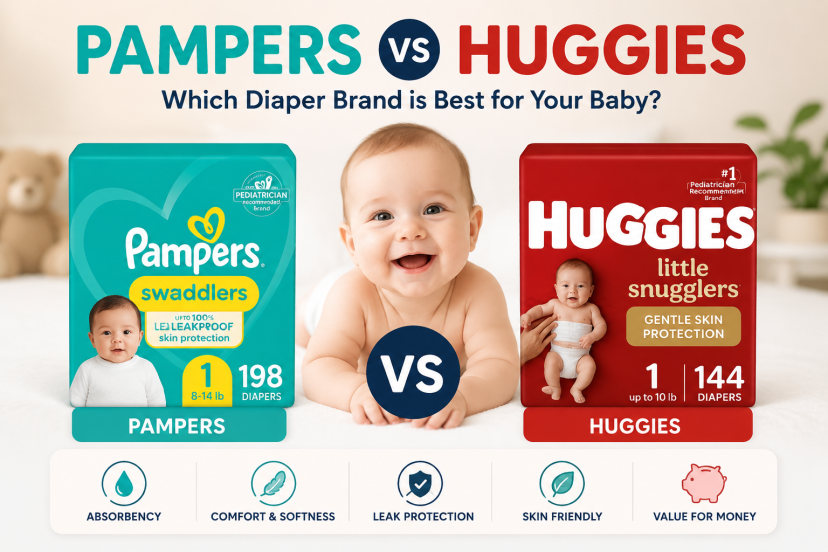
Pampers vs. Huggies: Which Diaper Brand Wins?
*We may earn a commission for purchases made using our links. Please see our disclosure to learn more.
Choosing the right diaper is one of the first important decisions new parents make. The wrong choice can lead to overnight leaks, morning diaper rash, and an unhappy baby.
For decades, Pampers and Huggies have led the diaper conversation. Both brands are trusted by millions of families worldwide. They also invest heavily in research and development and offer products for every stage of a baby’s growth. Still, the two brands are not exactly the same. Their differences in fit, absorbency, materials, and price can matter. The better choice often depends on the baby’s body type, skin sensitivity, and daily routine.
This article breaks down the key differences between Pampers and Huggies across the categories parents care about most. That way, choosing the right diaper becomes a little easier.
“The best diaper is the one that fits your baby well, keeps them dry, and works within your budget. No brand loyalty is worth a leaking diaper at 3 a.m.”
– Pediatric Nursing Practice Guidelines, American Academy of Pediatrics
Key Takeaways
- Pampers tends to run slightly slimmer and is often preferred for newborns due to its ultra-soft materials and snug fit.
- Huggies generally offers a more contoured, flexible fit that works well for active babies and toddlers.
- Both brands perform comparably in absorbency, but their core technologies differ in how they distribute and lock in moisture.
- Huggies uses stretchy side panels that mimic underwear; Pampers relies on a sleeker, tape-style closure system.
- Price points are similar, but Huggies tends to have a slight edge at discount retailers; Pampers often wins on subscription bundles.
- Neither brand is universally better. The right diaper depends on the individual baby.
Pampers vs. Huggies: Recommended Products
Before diving into the full comparison, here are four top-performing options from both brands currently available on Amazon:
Pampers Swaddlers Diapers


Pampers Swaddlers Diapers Size 1 are designed for babies weighing 8 to 14 pounds. This 198-count pack offers a convenient option for parents who want a soft, absorbent disposable diaper for daily use.
Pampers Swaddlers Diapers Size 1 are made for babies weighing 8 to 14 pounds and are designed to support comfort, dryness, and everyday leak protection. The soft feel makes them suitable for delicate baby skin, while the absorbent core helps pull moisture away to keep babies feeling dry between changes.
- Soft Comfort: The gentle material helps keep babies comfortable during daily wear.
- Strong Absorbency: The absorbent design helps keep moisture away from the baby’s skin.
- Bulk Pack Value: The 198-count pack is convenient for parents who go through several diapers a day.
- Higher Cost Than Some Store Brands: The price per diaper may be higher than budget alternatives.
- Packaging May Vary: Parents may receive packaging that looks different from the product image.
- Disposable Waste: Like most disposable diapers, they create more waste than reusable cloth options.
Huggies Little Snugglers Newborn Diapers
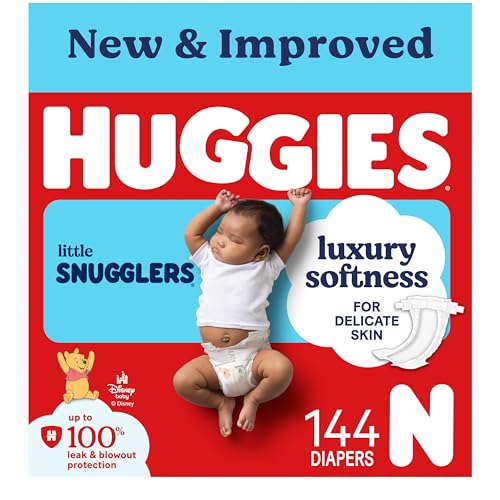


Huggies Little Snugglers Newborn Diapers are designed for newborn babies weighing up to 10 pounds. This 144-count pack gives parents a practical supply of soft disposable diapers for the earliest stage of diapering. These diapers are made to keep newborns dry, comfortable, and protected during frequent changes. They are especially suited for parents looking for a gentle diaper option from a well-known baby care brand.
Huggies Little Snugglers Newborn Diapers are made for babies weighing up to 10 pounds and are designed to provide softness, dryness, and everyday comfort during the newborn stage. Since newborns need frequent diaper changes, this 144-count pack gives parents a convenient supply to keep at home.
- Newborn-Friendly Fit: Designed for babies up to 10 pounds, making them suitable for the early newborn stage.
- Soft Comfort: The gentle materials help support delicate newborn skin.
- Reliable Everyday Use: The 144-count pack is practical for frequent newborn diaper changes.
- Short Size Window: Newborn babies may outgrow this size quickly.
- Packaging May Vary: The package design may look different from the product image.
- Disposable Waste: These diapers are convenient but create more waste than reusable cloth diapers.
Pampers Pure Baby Diapers Size 6

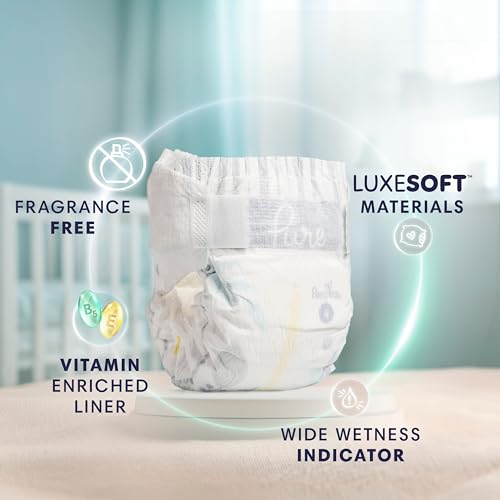

Pampers Pure Baby Diapers Size 6 are designed for babies and toddlers weighing 35 pounds and up. This 108-count pack offers a premium disposable diaper option for parents who want soft, hypoallergenic diapers with strong leak protection. These diapers are made to feel gentle on sensitive skin while helping keep babies dry and comfortable throughout the day or night. Pampers Pure is especially suited for parents who prefer a diaper that combines trusted absorbency with a softer, skin-conscious design.
Pampers Pure Baby Diapers Size 6 are made for babies and toddlers weighing 35 pounds and up. They are designed for parents who want a premium disposable diaper that feels soft, gentle, and comfortable while still offering reliable leak protection.
- Hypoallergenic Design: The soft, gentle materials make these diapers a good option for sensitive skin.
- Strong Leak Protection: The up to 100% leakproof design helps reduce leaks during active days or overnight use.
- Premium Comfort: The diapers are made to feel soft and comfortable for older babies and toddlers.
- Higher Price Per Diaper: At around $0.65 per diaper, they cost more than many standard disposable options.
- Limited Count for the Price: The 108-count pack may run out quickly for families who change diapers often.
- Not for Smaller Babies: Size 6 is only suitable for babies and toddlers weighing 35 pounds and up.
Huggies Skin Essentials Baby Diapers Size 1


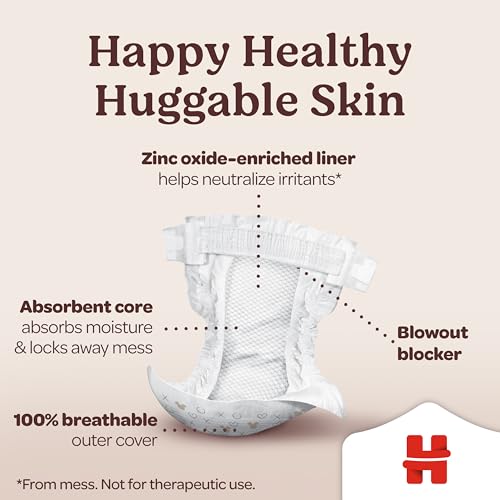
Huggies Skin Essentials Baby Diapers Size 1 are designed for babies weighing 8 to 14 pounds. This 84-count pack offers a practical diaper option for parents who want everyday absorbency, comfort, and skin-focused protection. These diapers are made for the early baby stage, when frequent changes are still part of the daily routine. They are a good option for parents looking for a trusted disposable diaper that helps keep babies dry while feeling gentle against delicate skin.
Huggies Skin Essentials Baby Diapers Size 1 are made for babies weighing 8 to 14 pounds and are designed to support dryness, comfort, and gentle skin protection. The Size 1 fit makes them suitable for young babies who have moved beyond newborn sizing but still need a soft and reliable diaper for daily use.
- Skin-Focused Comfort: Designed to feel gentle on delicate baby skin.
- Good Early-Stage Fit: Size 1 works well for babies weighing 8 to 14 pounds.
- Trusted Brand: Huggies is a well-known diaper brand for everyday baby care.
- Smaller Pack Size: The 84-count pack may run out quickly with frequent diaper changes.
- Packaging May Vary: The package may look different from the product listing image.
- Higher Cost Than Some Bulk Options: The price per diaper may be higher than larger-count packs.
Fit and Design
One of the most noticeable differences between Pampers and Huggies is how each diaper fits around a baby’s body. Pampers diapers tend to be cut slimmer through the middle, which gives a tighter, more snug fit. This works particularly well for smaller newborns and babies with a leaner build. The tape-closure system on Pampers creates a smooth, flat profile that makes it easier to layer clothing over the diaper without bulk.
Huggies takes a different approach. The brand’s signature stretchy side panels give diapers a more fitted, underwear-like feel. This design accommodates more movement and works especially well for babies who are beginning to crawl, stand, or walk. The waistband on Huggies tends to be more forgiving, reducing the likelihood of red marks and irritation around the belly.
For parents with babies at the extremes of any given size range, this difference can be significant. A baby on the smaller end of Size 2 may find Huggies slightly loose, while a baby on the larger end may appreciate that extra flexibility.
Absorbency and Leak Protection
Both Pampers and Huggies have invested substantially in their absorbency technology, and in independent testing, the two brands perform closely. That said, each takes a slightly different technical route to keep babies dry.
Pampers uses a multi-layered system that includes a top sheet designed to pull moisture quickly away from the skin, a distribution layer that spreads liquid evenly, and an absorbent core that locks it in. The result is a diaper that feels dry to the touch even after multiple wettings. This is one reason Pampers is particularly popular for overnight use.
Huggies relies on a similar layered approach but emphasizes its pocketed waistband as a key feature for blowout protection. The pocket at the back of the diaper is designed to catch and contain runny stool before it has a chance to escape up the back, which is a common concern with newborns. Many parents report that Huggies handles blowouts better in the early weeks.
For overnight diapers specifically, Pampers Overnight and Huggies OverNites both outperform their standard counterparts, and either is a solid choice for babies who sleep 10 to 12 hours at a stretch.
Skin Sensitivity and Materials
Skin sensitivity is a major consideration for parents of babies with eczema-prone or reactive skin. Both brands offer hypoallergenic and fragrance-free options, but the composition of their materials differs.
Pampers’ standard diapers include a light lotion with aloe that the brand says helps protect skin. For parents who prefer to avoid any additives, the Pampers Pure line eliminates fragrance, lotion, chlorine bleaching, and parabens, using plant-based and premium cotton materials instead.
Huggies’ standard diapers are free of fragrance by default in several of their product lines and use a GentleAbsorb liner. The Special Delivery line goes further, using plant-based materials, zero fragrance, and no elemental chlorine. Huggies Special Delivery has received certification from the Skin Health Alliance, which may carry weight for parents with particularly reactive babies.
Pediatric dermatologists generally note that the best diaper for sensitive skin is one that fits well, is changed frequently, and is paired with a gentle barrier cream. Brand alone rarely determines whether a baby develops diaper rash.
Wetness Indicators
Both brands include wetness indicators on their smaller sizes. Pampers uses a yellow stripe that turns blue when the diaper is wet, which is particularly visible and easy to spot even in a dimly lit room. Huggies uses a similar color-change strip.
The wetness indicator is most useful in the newborn stage when parents are tracking diaper output closely as part of monitoring feeding. Both brands’ indicators are functional and reliable; neither has a significant advantage here.
Price and Value
At full retail price, Pampers and Huggies tend to cost about the same per diaper when buying in bulk. The cost-per-diaper usually falls between $0.18 and $0.30 depending on the size, the retailer, and whether the box is purchased during a sale.
Huggies tends to perform slightly better at warehouse retailers like Costco and Sam’s Club, where the brand’s bulk packaging often delivers a lower per-unit cost. Pampers, on the other hand, competes well through Amazon’s Subscribe and Save program and through Target Circle offers.
Premium lines from both brands, such as Pampers Pure and Huggies Special Delivery, carry a price premium of roughly 20 to 40 percent over their standard counterparts. For families on a tighter budget, the standard lines offer comparable performance at a lower cost.
Store-brand diapers from retailers like Amazon, Kirkland (Costco), and Target’s Up and Up are often manufactured to compete directly with the two major brands and can deliver meaningful savings, though the fit and feel may differ.
Sizing Consistency
Both brands follow a standard sizing system from Newborn through Size 7, with weight ranges that are broadly similar. However, parents frequently note that Huggies runs slightly larger than Pampers within the same numbered size. A baby who is between sizes in Pampers may find a better fit in the same Huggies size rather than needing to move up.
This is worth keeping in mind, particularly during transitions between sizes. If leaks begin occurring at the waistband or the diaper seems too snug, trying the other brand in the same size before moving up a size is worth considering.
Environmental Considerations
Neither Pampers nor Huggies produces a fully biodegradable diaper in their mainstream lines. Both brands have made commitments to reducing their environmental footprint through sourcing, packaging, and manufacturing efficiencies, but the core product remains largely composed of plastics and synthetic materials that do not biodegrade in conventional landfills.
For parents prioritizing environmental impact, both brands’ plant-based premium lines represent a modest improvement. Truly eco-friendly alternatives, such as compostable diapers from smaller brands, exist but carry a significantly higher price point and are not always available in standard retail formats.
Which Brand Is Right for Your Baby?
There is no universal answer. Pampers tends to be the preferred starting point for newborns and for parents who value a slim profile and overnight dryness. Huggies tends to be the go-to for active older babies and toddlers, and for parents who want a more underwear-like fit or who have experienced blowout issues.
The most practical advice is to try both. Many hospitals send new parents home with sample packs, and both brands sell smaller count boxes for exactly this reason. A baby’s body shape, skin sensitivity, and reaction to each diaper’s materials will ultimately determine the winner.
Conclusion
Pampers and Huggies are both excellent products backed by decades of research and trusted by parents around the world. Pampers edges ahead for newborns and overnight use; Huggies holds its own for active babies and blowout protection. Price, materials, and environmental impact are broadly comparable, with premium lines from both brands available for families who want plant-based or hypoallergenic options. The choice ultimately comes down to individual fit and preference, and the best approach is to test both before committing to one brand.
Frequently Asked Questions
1. Are Pampers or Huggies better for newborns?
Pampers Swaddlers is consistently rated as one of the top choices for newborns due to its soft inner lining, wetness indicator, and umbilical cord notch. However, Huggies Little Snugglers is also a strong contender and is preferred by many parents for its blowout-containing pocketed waistband. Trying both in the first few weeks is the most reliable way to find the better fit for a specific baby.
2. Which diaper brand is better for overnight use?
Both brands offer dedicated overnight versions: Pampers Overnight and Huggies OverNites. Pampers Overnight is frequently cited by parents for keeping babies drier for longer stretches, though Huggies OverNites also performs well. Standard daytime versions of either brand are not designed for extended overnight wear.
3. Do Pampers and Huggies run the same size?
Not exactly. Huggies tends to run slightly larger than Pampers within the same numbered size. A baby at the high end of a Pampers size may fit comfortably in the equivalent Huggies size rather than needing to size up. It is worth checking the weight ranges printed on each package and comparing fit before making a bulk purchase.
4. Which brand is better for babies with sensitive skin?
Both brands offer hypoallergenic options: Pampers Pure and Huggies Special Delivery. Huggies Special Delivery has received certification from the Skin Health Alliance. For babies with documented skin sensitivity or eczema, consulting a pediatric dermatologist is advisable, as fit and frequency of changes often matter more than brand alone.
5. Is one brand significantly cheaper than the other?
Pricing between Pampers and Huggies is comparable when buying in bulk. Huggies tends to offer better value at warehouse retailers, while Pampers often competes more effectively through online subscription and loyalty programs. Comparing cost-per-diaper across current promotions before purchasing in bulk is always a worthwhile step.