Best Baby Monitors: A Complete Buying Guide
*We may earn a commission for purchases made using our links. Please see our disclosure to learn more.
Choosing the right baby monitor is one of the most important decisions a new parent will make. Whether it’s the first night home from the hospital or the transition to a separate nursery, having a reliable monitor provides peace of mind that is simply priceless. The market today offers an enormous range of options, from basic audio monitors to feature-rich video systems with two-way communication, temperature sensors, and sleep tracking. With so many choices, knowing what to look for can make all the difference.
This guide breaks down everything needed to find the best baby monitor, including key features to evaluate, top product picks, and answers to the most frequently asked questions.
“The best baby monitor is one that gives parents accurate, real-time information without adding unnecessary complexity or anxiety to the caregiving experience.”
— American Academy of Pediatrics (AAP), Safe Sleep Guidelines, 2023
Key Takeaways
- Video baby monitors offer the most comprehensive monitoring with real-time visual feedback.
- Wi-Fi-enabled monitors allow remote viewing from a smartphone, perfect for working parents.
- Audio-only monitors are budget-friendly and ideal for small homes or light sleepers.
- Look for features like night vision, two-way audio, temperature sensors, and long battery life.
- Always prioritize security, choose monitors with encrypted connections to protect privacy.
- Range and reliability matter most; always check the effective range for your home size.
Best Baby Monitors
After extensive research, the following four monitors stand out as the best options currently available on Amazon across different budgets and needs.
Infant Optics DXR-8 PRO Video Baby Monitor


The Infant Optics DXR-8 PRO is widely considered one of the best baby monitors for parents who want secure, reliable monitoring without relying on Wi-Fi. This video baby monitor features a 5-inch HD display with 720p resolution, delivering sharp daytime video and enhanced night vision so you can clearly see your baby at any time.
- Secure Non-WiFi Connection: Uses a closed-circuit FHSS system that prevents hacking and keeps the video feed private.
- Clear Video and Night Vision: 720p HD resolution and improved night vision make it easy to monitor your baby day or night.
- Advanced Audio Clarity: Patented Active Noise Reduction filters background sounds so you can hear your baby clearly.
- No Smartphone Connectivity: Because it doesn’t use Wi-Fi, you cannot view the camera remotely through a phone app.
- Wide-Angle Lens Sold Separately: The interchangeable lens system is useful, but the wide-angle lens requires an extra purchase.
- Limited Smart Features: Lacks app-based alerts, breathing tracking, or AI features found in some modern monitors.
The Infant Optics DXR-8 PRO consistently ranks as one of the best-selling and most trusted baby monitors on the market. It operates on a secure, interference-free 2.4GHz FHSS signal, entirely separate from the internet, which means there is no risk of hacking or signal interference from other Wi-Fi devices in the home.
Key features include an interchangeable optical lens system (wide-angle and zoom lenses sold separately), crystal-clear color video display, and reliable two-way audio. The 720p HD camera delivers sharp night vision up to 25 feet, and the parent unit offers a 5-inch screen with a battery life of up to 10 hours. The monitor also features a remote pan, tilt, and zoom function, giving parents full visual control without entering the nursery.
Best for: Parents who prioritize privacy and offline security over smart home integration.
Nanit Pro Smart Baby Monitor & Floor Stand

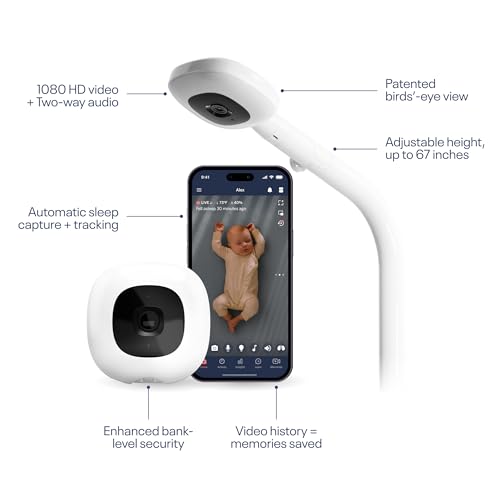

The Nanit Pro Smart Baby Monitor is a premium choice among the best baby monitors for parents who want advanced smart features and remote access. This monitor delivers crystal-clear 1080p HD video with night vision, allowing you to watch your baby from anywhere through the Nanit companion app on your smartphone, tablet, or computer.
- High-Quality HD Video: 1080p resolution with night vision provides clear, detailed monitoring day and night.
- Smart Notifications: Sound, motion, and cry alerts help parents respond quickly when their baby needs attention.
- Advanced App Features: Sleep tracking, insights, and remote viewing offer helpful data and convenience for parents.
- Requires Wi-Fi: The monitor depends on an internet connection, which may raise privacy concerns for some parents.
- Subscription for Full Features: Many advanced sleep insights require a Nanit Insights subscription after the trial period.
- Higher Price Point: More expensive than many basic baby monitors without smart features.
The Nanit Pro is a premium, Wi-Fi-connected baby monitor that doubles as a sleep tracker. It uses computer vision technology to monitor a baby’s breathing motion (via a separate Breathing Band accessory), sleep patterns, and environmental data including room temperature and humidity. The 1080p HD camera captures every detail, and the 130-degree wide-angle lens ensures the entire crib is always in view.
Parents can access the live feed directly from the Nanit app on their smartphone or tablet, and the app also provides personalized sleep insights, sound and motion alerts, and weekly sleep summaries. Two-way audio allows soothing a baby remotely, and the built-in night light and sound machine add extra functionality. The Nanit Pro Floor Stand bundle includes a sturdy stand for easy setup without wall mounting.
Best for: Tech-savvy parents who want detailed sleep analytics and remote monitoring on the go.
VTech VM350 No WiFi Video Baby Monitor
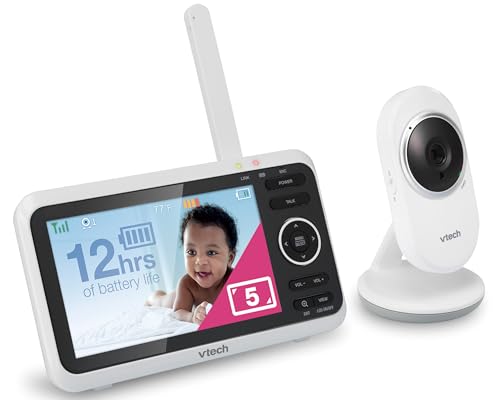


The VTech VM350 No WiFi Video Baby Monitor is a budget-friendly option that still delivers reliable performance, making it one of the best baby monitors for parents who want simple and secure monitoring without internet connectivity. It features a 5-inch high-resolution display that shows clear daytime video and automatic infrared night vision so you can monitor your baby even in low-light conditions.
- Affordable and Reliable: A great value option that provides essential features without the high price of smart monitors.
- Secure No-WiFi Connection: Uses FHSS technology for a private, hack-proof connection between camera and monitor.
- Long Range and Battery Life: Up to 1000 feet of range and extended battery performance for flexible monitoring around the home.
- Fixed Camera Position: The camera does not support pan or tilt, limiting viewing angles in the nursery.
- Basic Video Resolution: While clear enough for monitoring, the video quality is lower than HD smart monitors.
- No Smartphone App: Cannot be accessed remotely through a phone or tablet since it does not use Wi-Fi.
For parents looking for reliable, straightforward monitoring without a high price tag, the VTech VM350 is an excellent choice. It features a dedicated 5-inch color display with a simple interface, making it approachable for all levels of tech comfort. The 1000-foot range ensures coverage throughout most home layouts, and the 2.4GHz DECT 6.0 technology provides a secure, private signal.
The camera includes auto night vision that switches seamlessly in low light, along with a built-in temperature sensor so parents can monitor nursery conditions at a glance. Two-way talk, lullabies, and a sound-activated LED display on the parent unit add useful everyday features. The parent unit has up to 19 hours of battery life on power-save mode, one of the longest in its class.
Best for: Budget-conscious parents who want a solid, no-fuss video monitor with impressive battery life.
eufy Security Baby Monitor E20 with 2K HD Camera
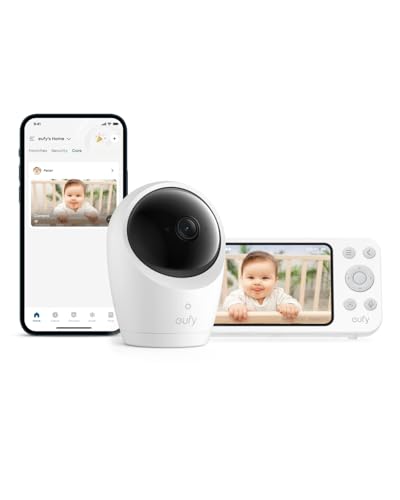


The eufy Security Baby Monitor E20 is a versatile option among the best baby monitors, offering both Wi-Fi and non-Wi-Fi monitoring in a single device. Parents can check on their baby locally through the included 5-inch 720p display or remotely through the smartphone app when connected to Wi-Fi. This hybrid setup provides flexibility while still maintaining strong privacy controls.
- Hybrid Wi-Fi and Non-WiFi Mode: Allows both local monitoring and remote viewing through the app when needed.
- High-Resolution 2K Camera: Sharp video quality with pan, tilt, and 4× zoom provides detailed coverage of the nursery.
- Portable Battery-Powered Camera: Built-in battery allows easy movement around the home or during travel.
- SD Card Not Included: Local recording requires purchasing a separate SD card.
- Display Lower Resolution: The monitor screen is 720p even though the camera captures video in 2K.
- Advanced Features Depend on App: Some monitoring and recording features require using the mobile app.
The Eufy SpaceView S stands out with its large 5-inch HD display and smooth 720p video quality. It uses a secure, private 2.4GHz signal with no Wi-Fi required, which means no app subscriptions, no data storage concerns, and no dependency on internet connectivity. The camera can pan 330 degrees and tilt 110 degrees remotely, offering excellent room coverage.
Additional highlights include crystal-clear night vision up to 16 feet, a two-way talk feature, room temperature display, and a lullaby player with five built-in songs. The monitor also supports connecting up to four cameras to a single parent unit, ideal for families with multiple children or those monitoring more than one room. Battery life on the parent unit reaches up to 20 hours on standby.
Best for: Multi-child families or those monitoring multiple rooms who want an offline, subscription-free experience.
What to Look for in a Baby Monitor
With dozens of models available, choosing among the best baby monitors can feel overwhelming. Understanding which features actually matter will help you narrow down the options and find a monitor that fits your home, lifestyle, and budget. While some parents prefer simple audio devices, others want smart monitors packed with advanced tracking and mobile connectivity. The key is focusing on the features that improve safety, convenience, and reliability.
Below are the most important factors to consider before choosing a baby monitor.
Video vs. Audio-Only
One of the first decisions parents make when shopping for the best baby monitors is whether they need video monitoring or just audio.
Audio-only monitors are the most basic option. They function like a walkie-talkie system that lets you hear when your baby cries or makes noise. These monitors are usually affordable, easy to use, and ideal for small homes or apartments where you’re never far from the nursery. Because they use fewer components, they also tend to have longer battery life and fewer technical issues.
Video baby monitors, on the other hand, provide an extra layer of reassurance. With a camera in the nursery and a display or smartphone app for viewing, parents can visually check on their baby without opening the door and risking waking them. This can be particularly helpful when determining whether a baby is actually awake or simply moving around during sleep.
Most modern families prefer video monitors because they offer more peace of mind. Features like zoom, pan, and wide-angle viewing also allow parents to see the entire crib and surrounding area.
Wi-Fi vs. Closed-Circuit Monitors
Another major consideration when choosing among the best baby monitors is whether the device uses Wi-Fi or a closed-circuit connection.
Wi-Fi baby monitors connect to your home internet network and allow you to view the camera through a smartphone app. This makes it possible to check on your baby from anywhere, whether you’re in another room, at work, or traveling. Many Wi-Fi models also include smart features such as sleep tracking, motion alerts, or temperature monitoring.
However, because Wi-Fi monitors rely on internet connectivity, they also introduce potential security concerns. While most reputable brands use encryption and two-factor authentication, some parents still prefer a more private system.
Closed-circuit baby monitors use radio frequencies such as FHSS technology to connect the camera directly to a dedicated parent unit. Since they don’t rely on internet connections, they are typically considered more secure and less vulnerable to hacking. The trade-off is that they only work within a limited range of the home and cannot be accessed remotely.
Parents who prioritize convenience and remote access often choose Wi-Fi monitors, while those focused on privacy tend to prefer closed-circuit systems.
Night Vision
Babies spend a large portion of their time sleeping, often in dim or dark rooms. That’s why night vision is one of the most essential features in the best baby monitors.
Most video monitors include infrared night vision that automatically activates when lighting conditions drop. Instead of visible light, infrared LEDs illuminate the room in a way that the camera can detect but your baby cannot see. This allows parents to monitor their baby without disrupting sleep.
Higher-quality monitors provide sharper contrast and better detail in night mode. This makes it easier to see subtle movements like breathing or rolling. Some premium monitors even offer color night vision or enhanced low-light sensors.
When evaluating monitors, check sample footage or reviews to ensure the night vision remains clear and stable without excessive graininess.
Battery Life and Range
Battery life and signal range directly affect how practical a baby monitor is during everyday use.
The best baby monitors should provide enough battery life to last through long naps or overnight monitoring. Parent units with video displays typically consume more power, so a battery life of 8 to 12 hours is generally considered a good baseline. Some monitors also include power-saving modes where the screen turns off until sound is detected.
Signal range is equally important, especially in larger homes. Manufacturers often advertise ranges of 900 to 1,000 feet, but these measurements are usually taken in open outdoor spaces. Inside a home, walls, furniture, and electronic interference can reduce the effective range significantly.
For most households, a reliable indoor range of 200 to 300 feet is more realistic. Reading real-world reviews can help confirm whether a monitor maintains a stable connection throughout the house.
Two-Way Audio
Two-way audio allows parents to both hear and speak through the baby monitor, functioning similarly to an intercom.
This feature can be surprisingly helpful during nighttime routines or brief wake-ups. Instead of entering the nursery and potentially waking the baby fully, parents can speak through the monitor to offer reassurance. Often, hearing a familiar voice is enough to help a baby settle back to sleep.
Two-way talk is also useful when a baby is transitioning to independent sleep or when parents want to comfort them quickly without leaving another room.
Many of the best baby monitors include high-quality microphones and speakers designed to minimize background noise while delivering clear audio. Some even incorporate noise reduction technology to filter out sounds like fans, air purifiers, or air conditioners.
Smart Alerts and Additional Features
Modern baby monitors often include additional smart features designed to give parents deeper insights into their baby’s environment and sleep patterns.
Some models provide motion detection, cry detection, and sound alerts, notifying parents immediately when the baby wakes or moves significantly. Others track temperature and humidity levels in the nursery to help maintain a comfortable sleep environment.
More advanced smart monitors even analyze sleep patterns and provide personalized insights through companion apps. While these features are not essential for every family, they can be useful for parents who want a more data-driven approach to monitoring.
Ultimately, the best baby monitors balance reliability, safety, and convenience. By focusing on the features that matter most for your household, you can choose a monitor that offers peace of mind and helps keep your baby safe while they sleep.
Baby Monitor Safety Tips
Baby monitors can provide reassurance and convenience, but they should always be used responsibly. Even the best baby monitors are only tools to assist parents, not replacements for attentive caregiving. Following basic safety practices ensures that your monitoring setup keeps your baby safe while minimizing potential risks.
Below are important safety tips every parent should keep in mind when using a baby monitor.
Keep Cords and Cables Away from the Crib
One of the most important safety rules is keeping all cords and cables at least three feet away from the crib. Many baby monitors require power cords or camera cables, and if these are within reach, they can create a strangulation hazard.
To avoid this risk, mount the camera on a wall or place it on a shelf well outside the baby’s reach. If the monitor includes cables for power or charging, route them along the wall and secure them with cord clips or cable covers so they cannot dangle near the crib.
Even if your baby is still very young, it’s best to follow this rule early. As babies grow and begin pulling themselves up or grabbing nearby objects, cords can quickly become accessible.
Place the Camera Safely Out of Reach
The camera should never be placed inside the crib or directly attached to it. While it might seem convenient to mount a camera on the crib rail, this creates a risk if the device or mount becomes loose.
Instead, position the camera several feet away from the crib while still providing a clear view of your baby. Wall-mounted cameras or high shelves are often the safest placement options. Many of the best baby monitors also include adjustable mounts or wide-angle lenses that allow you to capture the entire crib from a safe distance.
Always double-check that the camera is securely installed and cannot fall into the crib.
Keep Software and Firmware Updated
If you’re using a Wi-Fi baby monitor, keeping the device’s software updated is an important security step. Manufacturers regularly release firmware updates that fix bugs, improve performance, and patch potential security vulnerabilities.
Ignoring updates can leave devices exposed to unauthorized access. Check the monitor’s companion app or manufacturer website periodically to ensure your device is running the latest version of its firmware.
Most modern smart monitors also allow automatic updates, which can simplify the process and keep your device secure without requiring manual action.
Use Strong Passwords and Secure Network Settings
Another key safety measure is protecting your baby monitor accounts with strong, unique passwords. Avoid using simple passwords or the same login credentials that you use for other accounts.
Whenever possible, enable two-factor authentication (2FA) for the baby monitor app. This adds an extra layer of protection by requiring a verification code in addition to your password.
It’s also important to secure your home Wi-Fi network by using modern encryption such as WPA2 or WPA3. A well-protected network helps prevent unauthorized users from accessing connected devices, including baby monitors.
Avoid Relying Solely on the Monitor
Even when using one of the best baby monitors, it’s important to remember that these devices are meant to assist parents, not replace direct supervision.
A baby monitor can help you check on your child from another room, but it cannot replace physically checking in on your baby when needed. Parents should still follow safe sleep guidelines and regularly check the nursery environment.
Monitors are most effective when used as an additional layer of awareness rather than the primary method of monitoring a child.
Check Equipment Regularly
Baby monitors should be inspected regularly to ensure they are functioning correctly. Test the camera, microphone, and parent unit periodically to confirm that the video feed, sound alerts, and connection remain reliable.
Make sure batteries are charged, power cords are secure, and mounts remain stable. Over time, normal household movement or accidental bumps can shift camera angles or loosen mounting hardware.
Routine checks help ensure the monitor continues to perform as expected.
Maintain a Safe Sleep Environment
Finally, remember that baby monitor safety works best alongside safe sleep practices. Always place babies on their backs to sleep in a crib with a firm mattress and fitted sheet. Avoid loose blankets, pillows, stuffed animals, or other items that could pose suffocation risks.
When combined with a safe sleep setup, the best baby monitors provide an extra layer of reassurance that allows parents to keep an eye on their baby while giving them the space they need to rest.
By following these simple precautions, parents can enjoy the convenience of modern baby monitoring technology while keeping safety the top priority.
Conclusion
Finding the best baby monitor ultimately comes down to a family’s individual lifestyle, home size, and priorities. Parents who value privacy and simplicity will find closed-circuit models like the Infant Optics DXR-8 PRO or the Eufy SpaceView S to be excellent choices. Those who prefer remote access and sleep data analytics will appreciate the capabilities of the Nanit Pro. And families working with a tighter budget will find genuine value in the VTech VM350.
No matter which model is chosen, the goal is the same: giving both baby and parent the safest, most restful nights possible. Investing time in choosing the right monitor is always time well spent.
FAQs
1. Are baby monitors safe to use?
Yes, baby monitors are generally safe when used according to manufacturer guidelines. The primary safety concern is physical, keeping cords and the camera unit away from the crib. For Wi-Fi-connected models, it is important to use strong passwords and keep firmware updated to prevent unauthorized access.
2. Do baby monitors need Wi-Fi to work?
No. Many popular models operate on a dedicated, closed-circuit radio frequency that transmits directly between the camera and the parent unit without requiring any internet connection. Wi-Fi is only needed for smart monitors that offer remote viewing through a smartphone app.
3. What is the best range for a baby monitor?
For most homes, a monitor with a rated outdoor range of at least 800 to 1,000 feet should provide sufficient indoor coverage throughout the house. However, walls, floors, and other electronic devices can reduce the effective range significantly. For larger homes or properties, look for monitors with extended-range claims and check user reviews for real-world performance.
4. At what age should a baby monitor stop being used?
There is no universal rule, but most pediatricians suggest that baby monitors are most essential during the first two years of life. Many parents continue using them until the child is 3 to 4 years old or until the child is old enough to call out or come to the parent’s room independently. The transition can be gradual and should be guided by the child’s individual development.
5. Can a baby monitor interfere with other home devices?
Older analog monitors operating on the 900MHz or 2.4GHz band could sometimes interfere with cordless phones or Wi-Fi routers. Modern DECT or FHSS digital monitors are designed to minimize interference. Wi-Fi monitors that operate on the 5GHz band tend to experience less congestion and interference than those using the more crowded 2.4GHz spectrum.