How to Babyproof Your Home: Complete Room-by-Room Safety Guide
*We may earn a commission for purchases made using our links. Please see our disclosure to learn more.
To babyproof your home, secure furniture and TVs, install proper safety gates, lock dangerous cabinets and drawers, cover outlets, control cords, remove choking hazards, and recheck every room as your baby learns to crawl, pull up, walk, and climb.
Babyproofing is not about turning your home into an empty, padded space. I think of it as building a safer environment around the way babies actually move. A baby sees the world from floor level. They pull, chew, climb, twist, open, drop, splash, and grab before they understand danger. The goal is to reduce preventable risks while still giving your baby room to explore.
“The most effective babyproofing starts with the hazards that can cause the fastest serious injuries: furniture tip-overs, stairs, poisons, electrical access, cords, burns, choking hazards, and water.”
This approach aligns with CPSC guidance on anchoring furniture, using safety gates, securing cabinets, covering outlets, and controlling strangulation hazards from window covering cords.
Key Takeaways
- Anchor dressers, bookcases, TV stands, changing tables, and TVs before your baby starts pulling up.
- Use hardware-mounted gates at the top of stairs, not pressure-mounted gates.
- Lock medicines, cleaners, laundry pods, sharp objects, batteries, and cosmetics out of reach.
- Replace loose outlet caps with safer outlet plates, outlet shields, or covers that cannot be easily removed.
- Recheck babyproofing every month because babies quickly learn new ways to reach, climb, and open things.
4 Helpful Babyproofing Products
These are practical product types to consider when building a basic babyproofing kit. Always confirm the latest price, dimensions, installation requirements, and safety instructions before buying.
Safety 1st OutSmart Outlet Shield

The Safety 1st OutSmart Outlet Shield is a simple babyproofing product designed to cover unused electrical outlets and reduce a baby’s access to exposed sockets. Instead of using small removable outlet caps, this shield covers the outlet with a larger panel that is harder for young children to remove. It is a practical option for nurseries, living rooms, bedrooms, and play areas where babies may crawl, reach, or explore at floor level.
A full outlet shield can be more practical than loose plug caps because it covers unused outlets and fits over an existing outlet. The Amazon listing describes a decoy panel that covers unused outlets and can be painted to match the wall.
- Larger Cover Design: The shield covers the outlet area instead of relying on small plug caps.
- Budget-Friendly: It is an affordable babyproofing item for multiple rooms.
- Easy Everyday Use: The simple design works well for unused outlets in common baby areas.
- Limited Use: It is best for outlets that are not used often.
- Fit May Vary: It may not work perfectly with every outlet style or wall plate.
- Not a Full Electrical Solution: Parents may still need cord covers or power strip covers for active outlets.
Skyla Homes Magnetic Cabinet Locks

The Skyla Homes Magnetic Cabinet Locks are adhesive child safety latches designed to keep babies and toddlers from opening cabinets and drawers. This 12-pack includes locks and magnetic keys, making it a practical option for kitchens, bathrooms, laundry areas, and storage spaces where parents want to block access to cleaners, sharp tools, medications, or other household hazards. Since the locks use 3M adhesive, they can be installed without screws or tools, which makes them especially useful for renters or parents who do not want to drill into cabinets.
Magnetic locks are useful for lower kitchen and bathroom cabinets that store cleaning supplies, sharp tools, or toiletries. The Amazon listing describes a 12-pack of adhesive magnetic child safety locks for cabinets and drawers.
- No-Drill Installation: The adhesive design avoids screws, tools, and permanent cabinet damage.
- Hidden Appearance: The locks stay inside cabinets and drawers for a cleaner look.
- Useful Multi-Pack: The 12-pack works well for babyproofing several cabinets or drawers at once.
- Not for Metal Surfaces: The lock is not compatible with metal surfaces.
- Adhesive Depends on Surface: The hold may vary depending on cabinet material, texture, and installation.
- Key Required: Adults need the magnetic key nearby to open locked cabinets quickly.
Regalo Top of Stairs Baby Gate

The Regalo Safety 36" Extra Tall Baby Gate is a pressure-mounted walk-through gate designed for doorways, hallways, and the bottom of stairs. Its extra-tall 36-inch height gives parents an added barrier for babies, toddlers, and small to medium pets, while the walk-through door makes daily use more convenient. This gate fits openings from 29 to 36.5 inches wide, but it should be installed exactly as directed and should never be used at the top of stairs.
A hardware-mounted gate is the safer choice for stair openings because it screws into the structure instead of relying only on pressure. The Amazon listing describes a hardware-mounted Regalo gate for top or bottom of stairs.
- Extra-Tall Design: The 36-inch height adds more coverage than many standard baby gates.
- Walk-Through Convenience: The built-in door makes it easier for adults to pass through without removing the gate.
- Good for Doorways and Bottom of Stairs: It works well for blocking lower-risk areas, hallways, and stair bottoms.
- Not for Top of Stairs: Pressure-mounted gates should never be used at the top of stairs.
- Limited Fit Range: It does not fit openings between 31.5 and 34 inches.
- Requires Wall Cups: Wall cups must be used to keep the gate securely in place.
Booda Brand Furniture Anchors

The Booda Brand Furniture Anchors are anti-tip furniture straps designed to secure heavy or tall furniture to the wall and reduce the risk of tip-over accidents. This 10-pack includes hardware for anchoring items such as dressers, bookshelves, cabinets, wardrobes, TV stands, and other large furniture pieces that babies or toddlers may try to climb or pull on. Made with metal straps and brackets, these anchors are a practical babyproofing option for nurseries, bedrooms, living rooms, and play areas.
Furniture anchor straps help secure dressers, bookshelves, cabinets, and other tip-over risks to the wall. The Amazon listing describes a 10-pack of anti-tip furniture straps for babyproofing.
- Heavy-Duty Support: The metal strap design is made to help secure large or top-heavy furniture.
- Multi-Room Use: The 10-pack can be used on dressers, bookcases, cabinets, wardrobes, and TV stands.
- Detachable Design: The straps can be released when furniture needs to be moved or cleaned behind.
- Requires Drilling: Installation needs screws and wall mounting, so it may not be ideal for every renter.
- Proper Placement Matters: The anchors must be installed correctly into a secure wall surface to work as intended.
- Visible Hardware: Depending on furniture placement, parts of the straps or brackets may be noticeable.
What Does Babyproofing Mean?
Babyproofing means modifying a home to reduce common injury risks for babies and toddlers. This includes securing unstable furniture, blocking stairs, locking hazardous products, covering electrical access, controlling cords, preventing falls, reducing choking risks, and making water, heat, and poison hazards harder to reach.
Babyproofing does not replace supervision. It gives supervision a safer margin.
A good babyproofing plan assumes that your baby will become mobile faster than expected. A baby who only rolls today may crawl next month. A crawling baby may pull up tomorrow. A toddler who could not open a drawer last week may suddenly open three in a row.
When Should I Start Babyproofing?
Start babyproofing before your baby crawls, and complete the highest-risk tasks even earlier. Furniture anchors, crib safety, cord control, stair gates, smoke alarms, carbon monoxide alarms, and medication storage should be handled before mobility begins.
I would not wait for crawling to start. Many hazards matter before that stage, especially cords near the crib, unsafe sleep items, changing table falls, and heavy furniture in the nursery. Consumer Reports’ 2025 babyproofing guidance also emphasizes anchoring furniture, securing cords, covering outlets, and using gates as babies become mobile.
A simple timeline looks like this:
| Baby Stage | Main Babyproofing Focus |
|---|---|
| Before birth | Crib safety, smoke alarms, carbon monoxide alarms, furniture anchors, cords near nursery |
| Rolling | Changing table safety, floor hazards, reachable cords |
| Crawling | Outlets, cabinets, choking hazards, stairs, pet areas |
| Pulling up | Furniture anchors, TV straps, table corners, unstable decor |
| Walking | Doors, drawers, stove knobs, windows, bathroom access |
| Climbing | Bookshelves, dressers, counters, gates, balcony furniture, windows |
The Baby’s-Eye View Method
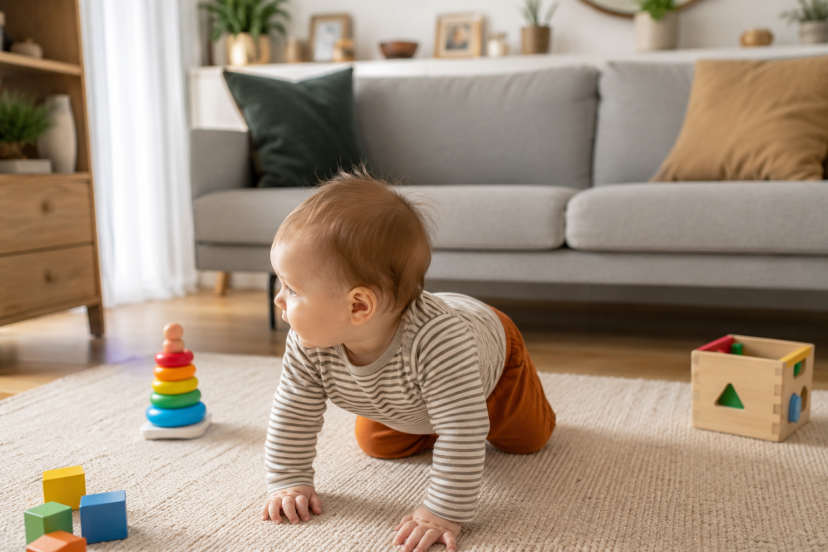
The best way to start babyproofing is to get down on your hands and knees and look at your home from your baby’s height. This changes what you notice.
From the floor, you will see outlet plates, dangling cords, loose rugs, pet bowls, floor plants, remote controls, table corners, cabinet handles, unstable lamps, and small objects under furniture. The hazards that adults overlook are often the hazards babies find first.
Use five tests in every room:
- The reach test: What can a baby touch from the floor?
- The pull test: What could fall if pulled?
- The climb test: What could be used as a step?
- The mouth test: What could fit in a baby’s mouth?
- The open test: What cabinets, drawers, doors, bins, or containers can be opened?
This method works because babyproofing is not just about buying products. It is about predicting behavior.
The Core Babyproofing Priorities
Anchor Furniture and TVs
Furniture and TV tip-overs are among the most urgent babyproofing risks because they can happen quickly and cause severe injury. Anchor dressers, bookcases, shelves, TV stands, changing tables, wardrobes, and any tall or unstable storage unit to the wall.
The CPSC warns that furniture, TVs, and ranges can tip over when children climb, pull themselves up, or fall against them, and recommends anchoring these products to the floor or wall.
Do not assume heavy furniture is safe. Heavy furniture can still tip when drawers are opened and used like stairs. Do not assume newer furniture is risk-free either. The STURDY Act created mandatory stability requirements for certain clothing storage furniture manufactured after September 1, 2023, but older, secondhand, imported, modified, or unanchored furniture can still be dangerous.
Babyproof these items first:
- Dressers
- Chests
- Wardrobes
- Bookcases
- TV stands
- Freestanding shelves
- Changing tables
- Storage cabinets
- Floor mirrors
- Ranges and stoves with anti-tip brackets
For TVs, wall mounting is usually the safest option. If wall mounting is not possible, use anti-tip straps designed for the TV and furniture surface.
Install Safety Gates Correctly
Safety gates are essential around stairs, kitchens, bathrooms, fireplaces, utility rooms, and other zones you cannot fully babyproof.
Use hardware-mounted gates at the top of stairs. These gates screw into the wall, banister, or proper mounting surface. Do not use pressure-mounted gates at the top of stairs because they can loosen or be pushed out of place.
Pressure-mounted gates can be useful for doorways, hallways, and low-risk areas where a fall down stairs is not possible. Even then, follow the manufacturer’s instructions and check tension regularly.
Use gates for:
- Top of stairs
- Bottom of stairs
- Kitchen entry
- Bathroom entry
- Laundry room
- Fireplace area
- Home office
- Pet feeding area
- Open floor plans
A gate is only helpful if it is installed correctly, latched every time, and tall enough for the child’s stage.
Lock Cabinets and Drawers
A babyproofed cabinet is not just closed. It is locked, and the dangerous items inside it are also stored intelligently.
Lock lower cabinets and drawers that contain:
- Cleaning products
- Dishwasher tablets
- Laundry pods
- Medications
- Vitamins
- Alcohol
- Knives
- Scissors
- Plastic bags
- Trash
- Batteries
- Tools
- Cosmetics
- Hair products
- Razors
- Pet medications
- Pest control products
The American Academy of Pediatrics advises families to keep harmful items out of reach, out of sight, and ideally in a locked cabinet or behind a safety latch before or as soon as a child begins crawling or walking.
For the kitchen and bathroom, I prefer a two-layer approach: move the most dangerous items high and lock the remaining cabinet. A cabinet lock is helpful, but it should not be the only barrier between a baby and a toxic product.
Cover Outlets and Control Cords
Electrical safety includes both outlets and cords. Babies can poke outlets, chew cords, pull lamps, tug chargers, and wrap cords around the neck.
The CPSC recommends outlet covers and outlet plates to help prevent electrical shock and notes that outlet protectors should not be easy for children to remove or small enough to become a choking hazard. If replacing receptacles, tamper-resistant types are recommended.
Safer options include:
- Sliding outlet plates
- Full outlet shields
- Outlet boxes for plugged-in cords
- Power strip covers
- Cord shorteners
- Cord channels
- Cable boxes
- Cordless window coverings
Blind and curtain cords deserve special attention. The CPSC advises going cordless with window coverings to reduce strangulation risks, and federal safety action has addressed hazardous window covering cords.
Remove Choking, Battery, and Magnet Hazards
Choking hazards are not limited to toys. Many dangerous objects are ordinary household items.
Check floors, drawers, couch cushions, nightstands, bags, and low shelves for:
- Coins
- Buttons
- Jewelry
- Pen caps
- Small toy parts
- Hair clips
- Screws
- Batteries
- Magnets
- Earbuds
- Bottle caps
- Rubber bands
- Balloons
- Pet kibble
- Remote controls
Button batteries and coin batteries are especially dangerous. Reese’s Law mandates federal safety requirements for button cell or coin batteries and consumer products that contain or use them, including performance, labeling, and certification requirements.
Look closely at remotes, key fobs, thermometers, watches, flameless candles, hearing aids, bathroom scales, greeting cards, AirTags, toys, and small electronics.
Room-by-Room Babyproofing Checklist
Living Room
The living room often looks harmless, but it usually contains several baby-level hazards: TV cords, low tables, remotes, decor, fireplaces, unstable furniture, and climbable shelves.
Babyproof the living room by doing the following:
- Anchor the TV and TV stand.
- Anchor bookcases, cabinets, and shelves.
- Add corner guards to coffee tables and hearths.
- Move breakables off low shelves.
- Cover outlets.
- Hide or shorten cords.
- Use a fireplace gate or fireplace barrier.
- Remove small decor, stones, candles, and remote controls from reach.
- Secure floor lamps behind furniture or remove them.
- Keep recliner mechanisms away from small hands.
The CPSC recommends corner and edge bumpers for sharp furniture or fireplace edges, as long as the bumpers stay securely attached.
Kitchen
The kitchen is one of the most important rooms to babyproof because it combines heat, sharp objects, breakables, choking hazards, cleaning products, and heavy appliances.
Babyproof the kitchen by doing the following:
- Lock lower cabinets and drawers.
- Move cleaning supplies high and locked.
- Store dishwasher pods out of reach and locked.
- Keep knives in a locked drawer or high storage block.
- Use stove knob covers if your stove design needs them.
- Turn pot handles inward while cooking.
- Keep hot drinks away from counter and table edges.
- Lock the trash can or place it behind a latched cabinet.
- Unplug small appliances when not in use.
- Keep appliance cords away from edges.
- Do not hold or wear a baby while handling hot liquids or cooking at the stove.
Safe Kids Worldwide highlights burns and scalds as a commonly overlooked childproofing risk and advises keeping hot foods and liquids away from counter and table edges.
Nursery
The nursery should be calm, but it also needs to be structurally safe.
Babyproof the nursery by doing the following:
- Anchor the dresser and changing table.
- Keep the crib away from windows, cords, blinds, curtains, shelves, and wall decor.
- Keep monitor cords at least several feet away from the crib.
- Use a crib that meets current safety standards.
- Keep loose blankets, pillows, bumpers, stuffed animals, and soft bedding out of the crib for infants.
- Store diaper creams, medicines, nail clippers, and thermometers out of reach.
- Use a changing pad strap, but keep one hand on baby at all times.
- Keep small objects off the changing table.
- Place a soft rug or mat near the changing area if appropriate, but secure it to prevent slipping.
The nursery is also a good place to check smoke alarms, carbon monoxide alarms, and night lighting.
Bathroom
Bathrooms are high-risk because they combine water, slippery surfaces, medications, razors, cosmetics, cleaning products, toilets, and hard surfaces.
Babyproof the bathroom by doing the following:
- Use a toilet lock.
- Add non-slip mats inside and outside the tub.
- Lock medications, vitamins, and supplements.
- Store razors, nail scissors, cosmetics, and hair tools out of reach.
- Unplug hair dryers and styling tools.
- Lock cleaning products.
- Keep trash inaccessible.
- Close the bathroom door when not in use.
- Never leave a baby unattended in or near water.
Drowning can happen quickly and quietly. A toilet, bathtub, bucket, or even a small amount of standing water can become a hazard for a mobile baby or toddler.
Bedrooms
Adult bedrooms often contain hidden hazards because they are not designed as play spaces.
Babyproof bedrooms by doing the following:
- Anchor dressers, wardrobes, and nightstands.
- Keep medications out of nightstands.
- Move coins, jewelry, and small objects out of reach.
- Hide cords from lamps, chargers, and electronics.
- Secure or remove floor mirrors.
- Keep cosmetics, perfumes, and hair products locked away.
- Check under the bed for small items.
- Keep laundry pods, garment bags, and plastic bags inaccessible.
Guest bedrooms should be checked too, especially if relatives visit or if the room doubles as storage.
Laundry Room
Laundry rooms are often overlooked because babies may not spend much time there. That is exactly why they can become risky.
Babyproof the laundry room by doing the following:
- Store detergent, stain removers, bleach, and laundry pods high and locked.
- Keep appliance doors closed.
- Lock the room or use a gate.
- Keep ironing boards folded and stored.
- Keep hangers, plastic bags, and small items away from the floor.
- Secure heavy shelving.
- Keep pet supplies and cleaning products locked.
Laundry pods are attractive to young children because they are colorful and small, but they can be dangerous if bitten or swallowed.
Stairs and Hallways
Falls are one of the most common home injury risks for young children. Stair safety should be handled before crawling begins.
Babyproof stairs and hallways by doing the following:
- Install hardware-mounted gates at the top of stairs.
- Install a gate at the bottom of stairs.
- Keep stairs free of toys, shoes, and laundry.
- Secure loose carpet and rugs.
- Add non-slip stair treads if needed.
- Check handrails and banisters.
- Use night lights in dark hallways.
- Keep doors to stairways closed when possible.
Do not step over baby gates while holding a baby. Open the gate, walk through, and latch it behind you.
Doors, Windows, and Balconies
Windows and doors become more important as babies become toddlers.
Babyproof doors and windows by doing the following:
- Use window stops or guards.
- Keep furniture away from windows.
- Choose cordless blinds or secure cords fully out of reach.
- Use door pinch guards.
- Use doorknob covers where appropriate.
- Keep balcony doors locked.
- Move climbable furniture away from balcony railings.
- Do not rely on window screens to prevent falls.
The CPSC has specifically warned about window covering cord strangulation risks and encourages cordless window coverings in homes with young children.
Garage, Basement, and Utility Areas
These areas should usually be blocked off entirely.
Babyproof garages, basements, and utility rooms by doing the following:
- Lock doors or use high-quality gates.
- Store tools in locked cabinets.
- Store paint, chemicals, pesticides, and automotive fluids high and locked.
- Secure ladders horizontally or behind locks.
- Anchor heavy shelving.
- Keep small hardware off the floor.
- Lock freezers, refrigerators, and storage chests if a child could access them.
- Keep sharp garden tools inaccessible.
If an area cannot be made safe, make it inaccessible.
Outdoor Areas
Outdoor babyproofing depends on your home, but every family should check water, heat, falls, plants, tools, and traffic.
Babyproof outdoor areas by doing the following:
- Use a four-sided pool fence with a self-closing, self-latching gate where applicable.
- Keep grills covered and inaccessible.
- Store garden tools locked away.
- Remove toxic plants from reach.
- Secure patio furniture that can tip.
- Keep buckets empty and upside down.
- Lock sheds.
- Keep fertilizers, pesticides, and pool chemicals locked.
- Watch for small rocks, mulch, and choking hazards.
Outdoor areas change with seasons, storms, parties, and gardening, so inspect them often.
Babyproofing by Developmental Stage
Newborn to Rolling
At this stage, focus on safe sleep, changing table safety, and the nursery setup.
Important tasks include:
- Use a safe crib.
- Keep loose bedding out of the crib.
- Keep cords away from the crib.
- Anchor nursery furniture.
- Never leave baby unattended on a changing table.
- Check smoke and carbon monoxide alarms.
Crawling Baby
Once your baby crawls, the floor becomes the main safety zone.
Important tasks include:
- Cover outlets.
- Hide cords.
- Lock cabinets.
- Remove choking hazards.
- Install gates.
- Secure rugs.
- Move pet bowls.
- Keep trash inaccessible.
Pulling Up and Cruising
This stage makes furniture stability urgent.
Important tasks include:
- Anchor dressers and shelves.
- Secure TVs.
- Add corner guards.
- Remove tablecloths.
- Move lamps and decor.
- Lock drawers that can be used as climbing steps.
Walking Toddler
A walking toddler can reach farther, move faster, and open more things.
Important tasks include:
- Recheck cabinet locks.
- Add door locks or knob covers.
- Secure stove knobs.
- Use toilet locks.
- Keep windows locked.
- Move items farther back from counter edges.
Climbing Toddler
A climbing toddler changes the entire risk map.
Important tasks include:
- Move furniture away from windows.
- Remove climbable objects near counters.
- Reassess gate height.
- Anchor everything tall or unstable.
- Keep keys, bags, medicines, and electronics out of reach.
- Watch for chairs pushed toward counters or doors.
Hidden Babyproofing Risks Parents Often Miss
Some of the most common risks are not obvious babyproofing checklist items.
Purses, Backpacks, and Guest Bags
Bags may contain medications, coins, gum, cosmetics, keys, batteries, or small objects. Keep all bags high and closed away from children.
Grandparents’ Homes
Grandparents may have medications in easy-open containers, older furniture, corded blinds, small decor, unsecured TVs, or cleaning supplies under sinks. Babyproof any home where your baby spends time.
Button Batteries
Check remotes, thermometers, hearing aids, key fobs, watches, bathroom scales, flameless candles, and small electronics. Reese’s Law has strengthened requirements for products with button or coin batteries, but older products in the home still need attention.
Laundry Pods
Keep them high, locked, and in original packaging. Do not leave pods on top of the washer, in baskets, or in low cabinets.
Pet Areas
Pet food, water bowls, litter boxes, chew toys, leashes, and pet medications can all become baby hazards. Create a separate pet zone if possible.
Recalled Products
Check baby products, furniture, gates, cribs, sleepers, toys, and accessories for recalls. This matters especially for hand-me-downs and secondhand items.
Old Furniture
Older furniture may not meet newer stability standards. Anchor it anyway. The STURDY Act applies to certain clothing storage units manufactured after September 1, 2023, so older pieces need extra scrutiny.
Babyproofing for Renters
Renters can still babyproof effectively. The key is knowing which safety devices can be temporary and which ones should be installed securely even if they require small holes.
Renter-friendly babyproofing options include:
- Adhesive cabinet locks
- Sliding outlet plates
- Door pinch guards
- Cord covers
- Cord boxes
- Pressure-mounted gates for doorways
- Freestanding play yards
- Window stops where allowed
- Removable corner guards
For top-of-stairs gates and furniture anchors, do not choose convenience over safety. Ask the landlord for permission when needed. Small screw holes can be patched, but a serious fall or furniture tip-over is not worth the risk.
Babyproofing Mistakes to Avoid
Waiting Until the Baby Crawls
Start before crawling. Babies can surprise you with sudden mobility.
Using Pressure-Mounted Gates at the Top of Stairs
Use hardware-mounted gates at the top of stairs. Pressure-mounted gates are better reserved for doorways and low-risk barriers.
Relying Only on “Out of Reach”
Out of reach changes as babies grow. High and locked is safer for medicines, chemicals, batteries, and sharp items.
Forgetting Furniture Anchors
Furniture anchors are one of the most important babyproofing steps. Anchor furniture even if it feels heavy.
Leaving Medicines in Nightstands or Bags
Many accidental poison risks come from ordinary routines. Lock medicine after every use.
Using Loose Outlet Caps Without Checking Fit
Loose outlet caps can be removed and may become choking hazards. The CPSC says outlet protectors should not be easy for children to remove and should be large enough not to become choking hazards.
Forgetting to Recheck
A lock that worked last month may fail this month. A baby who ignored drawers yesterday may open them today.
How Often Should You Recheck Babyproofing?
Recheck babyproofing at least once a month and after every major developmental change.
Do another safety scan when:
- Your baby starts rolling
- Your baby starts crawling
- Your baby pulls up
- Your baby starts walking
- Your toddler starts climbing
- You move furniture
- You host guests
- You return from travel
- You bring in secondhand baby gear
- You buy new furniture
- A product recall is announced
Babyproofing is not a one-time project. It is a routine.
Emergency Preparedness Matters Too
Even the best babyproofing plan cannot prevent every accident. Emergency readiness makes your home safer.
Add these steps:
- Save Poison Control in your phone: 1-800-222-1222 in the United States.
- Keep a first aid kit accessible to adults.
- Learn infant and child CPR.
- Test smoke alarms monthly.
- Test carbon monoxide alarms monthly.
- Keep emergency numbers visible for babysitters.
- Know the fastest route to urgent care or the emergency room.
- Keep small flashlights accessible during power outages.
- Check product recalls regularly.
Final Babyproofing Checklist
Use this as a quick room-by-room review.
Whole Home
- Anchor furniture and TVs.
- Cover outlets.
- Hide cords.
- Remove choking hazards.
- Secure rugs.
- Install smoke and carbon monoxide alarms.
- Check recalls.
- Keep emergency numbers accessible.
Living Room
- Anchor TV and furniture.
- Cover sharp corners.
- Secure cords.
- Remove breakables.
- Block fireplace.
- Keep remotes and batteries away.
Kitchen
- Lock cabinets and drawers.
- Store cleaners high and locked.
- Secure sharp tools.
- Move hot items away from edges.
- Lock trash.
- Secure stove knobs if needed.
Nursery
- Use a safe crib.
- Anchor dresser and changing table.
- Keep cords away from crib.
- Store creams and medicines out of reach.
- Keep small objects off the changing table.
Bathroom
- Lock toilet.
- Lock medicine.
- Store razors and cosmetics high.
- Use non-slip mats.
- Never leave baby alone near water.
Stairs
- Install hardware-mounted gate at top.
- Install gate at bottom.
- Keep stairs clear.
- Secure rugs and railings.
Windows and Doors
- Use window stops or guards.
- Choose cordless blinds.
- Move furniture away from windows.
- Add door pinch guards.
- Lock balcony access.
Laundry, Garage, and Utility Areas
- Lock detergents and chemicals.
- Secure tools.
- Anchor shelving.
- Block access when possible.
Frequently Asked Questions
What age should you babyproof your house?
You should babyproof your house before your baby starts crawling, usually around the middle of the first year, but high-risk tasks should be done earlier. Furniture anchoring, safe sleep setup, cord control, stair gates, outlet protection, and poison storage should be handled before mobility begins.
What is the first thing to babyproof?
The first thing to babyproof is anything that can cause a severe injury quickly. Start with furniture and TV anchors, stair gates, locked medicines and cleaning supplies, outlet protection, cords, and choking hazards.
Do I need to babyproof before my baby crawls?
Yes. Babyproofing before crawling gives you time to fix hazards before your baby becomes mobile. Some risks, including crib cords, changing table falls, unstable nursery furniture, and unsafe sleep items, matter before crawling.
Are outlet covers safe?
Outlet covers can help when they are secure, correctly fitted, and not easy for children to remove. Sliding outlet plates, full outlet shields, and tamper-resistant receptacles are often better than loose plastic caps that may become choking hazards.
Are pressure-mounted baby gates safe for stairs?
Pressure-mounted gates should not be used at the top of stairs. Use hardware-mounted gates at the top of stairs because they are secured with screws. Pressure-mounted gates are better for doorways, hallways, and low-risk areas.
How do I babyproof a kitchen?
Babyproof a kitchen by locking lower cabinets, moving cleaners and dishwasher pods high and locked, securing knives, keeping hot drinks and pot handles away from edges, locking trash, unplugging small appliances, and using a gate if the kitchen cannot be fully secured.
How do I babyproof a bathroom?
Babyproof a bathroom by locking medications, using a toilet lock, adding non-slip mats, storing razors and cosmetics out of reach, locking cleaning products, unplugging hair tools, and never leaving a baby alone near water.
How do I babyproof furniture?
Babyproof furniture by anchoring dressers, bookcases, wardrobes, TV stands, changing tables, shelves, and floor mirrors to the wall. Remove heavy objects from high shelves, keep drawers closed, and do not place tempting items on top of furniture.
How do I babyproof a rental?
Babyproof a rental with adhesive cabinet locks, outlet plates, cord covers, door pinch guards, window stops, and pressure-mounted gates for safe doorways. For top-of-stairs gates and furniture anchors, ask for permission to use hardware because those installations are safety-critical.
What babyproofing products are actually necessary?
The most useful babyproofing products are furniture anchors, hardware-mounted stair gates, cabinet locks, drawer latches, outlet covers or plates, cord covers, corner guards, toilet locks, door pinch guards, and window stops or guards. The exact list depends on your home layout and your baby’s stage.
Final Verdict
Babyproofing works best when it starts early, focuses on the highest-risk hazards first, and changes as your baby develops. I would begin with furniture anchors, stair gates, locked poisons, outlet protection, cord control, and choking hazards, then move room by room until every space has been checked from a baby’s-eye view.
The safest home is not the one with the most babyproofing products. It is the one where the biggest risks have been identified, secured, and rechecked before a curious baby finds them first.